
Marcie Hume’s newly released documentary Corey Feldman vs. The World is reigniting conversations in the United States about child stardom, power, and protection in Hollywood. The film centers on Corey Feldman, one of the most recognizable faces of 1980s cinema, as he reflects on his early fame and the darker realities he says accompanied it.
Feldman and the late Corey Haim became household names after the 1987 vampire hit The Lost Boys, followed by teen favorites like License to Drive and Dream a Little Dream. To American audiences, they represented a golden era of youth-driven blockbusters. Behind the scenes, Feldman now alleges, the environment was deeply troubling.
In the documentary, Feldman tells Hume that during the making of The Lost Boys, Haim allegedly made a sexual advance toward him, framing it as something normalized within the industry. Feldman says he was frightened, confused, and attempting to protect himself as a minor navigating an adult world. Haim, who died in 2010 at age 38, is not alive to respond to these claims.
Why These Allegations Are Emerging Now
The timing of Feldman’s statements is significant. Hume notes that the interview occurred during the height of the #MeToo movement, when Feldman was under intense public pressure to speak openly about abuse in Hollywood. Feldman had previously stated that both he and Haim were victims of sexual exploitation but had not accused Haim himself in earlier projects, including his 2020 documentary My Truth: The Rape of Two Coreys.
Hume describes the moment as emotionally charged, saying Feldman appeared to be reliving a hypersexualized environment that was normalized for child actors at the time. She emphasizes that the film does not attempt to resolve every contradiction but instead presents Feldman as a complex figure shaped by trauma.
Inside “Corey’s Angels” and the Documentary’s Uncomfortable Turn
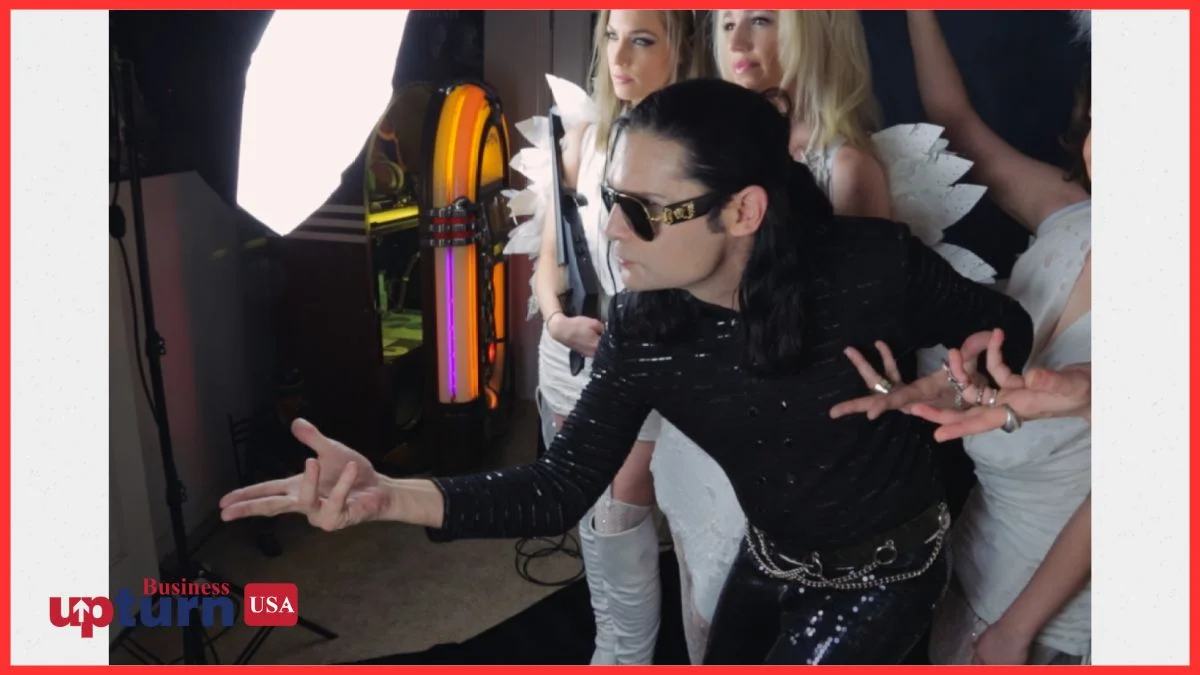
Originally envisioned as a comeback story, Corey Feldman vs. The World follows Feldman’s 2017 tour with his all-female band, Corey’s Angels. Feldman has said the group was meant to uplift female performers, but the documentary captures a more unsettling dynamic. Cameras show a highly sexualized atmosphere, including revealing costumes and blurred boundaries with fans.
Former band members later tell Hume that conditions off-camera were even more restrictive, alleging control over food, clothing, personal routines, and payment. One former Angel characterizes the group as resembling a “sex cult,” a claim presented as her perspective rather than an established fact.
