
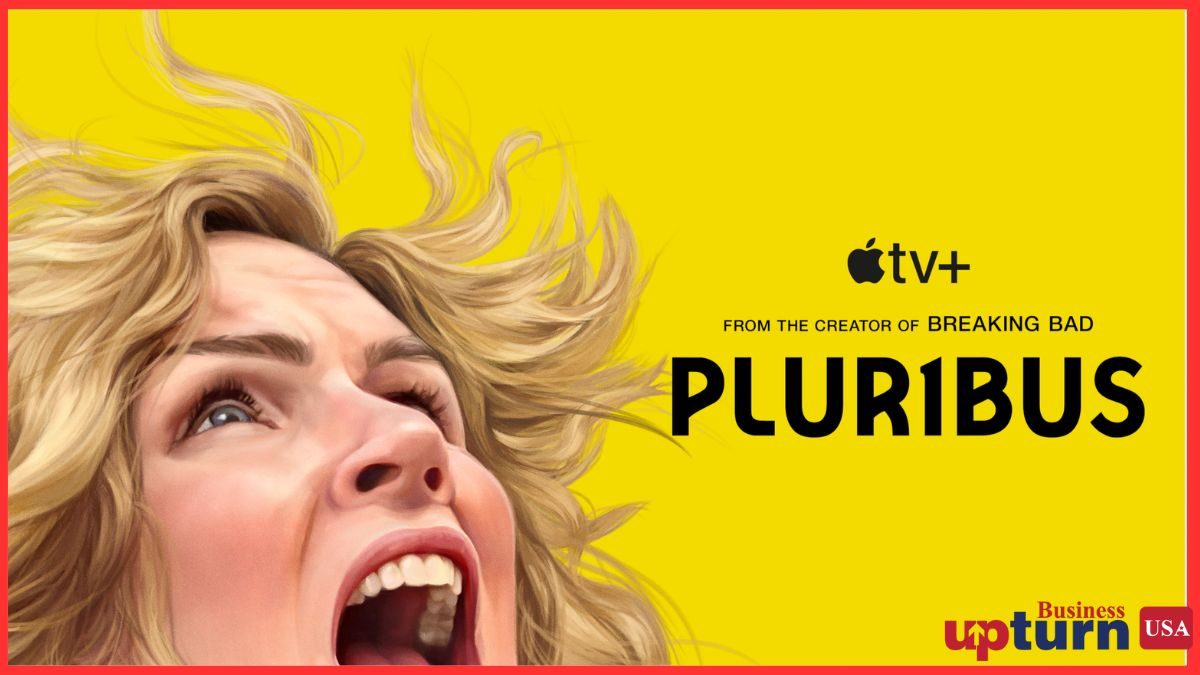
Vince Gilligan, the creator of Breaking Bad and Better Call Saul, has done it again — only this time, he’s swapped meth labs for mind labs. His new Apple TV+ series, Pluribus, has exploded onto the streaming scene with a 100% critic score on Rotten Tomatoes, making it one of the most universally acclaimed debuts of the year.
Starring Better Call Saul breakout Rhea Seehorn in the lead, Pluribus dropped with a two-episode premiere that immediately grabbed global attention. The series isn’t just a hit among critics — it’s also connecting deeply with fans, holding an 86% audience score and generating waves of social media chatter across the U.S. and beyond. For Apple TV+, which has been pushing to expand its prestige lineup, Pluribus may just be its biggest sci-fi success story since Severance.
A Virus That Connects Minds — and Divides Humanity
At the heart of Pluribus lies a mind-bending premise that feels eerily close to home. The story follows Carol Sturka, played by Rhea Seehorn, a disillusioned best-selling author of pirate-themed speculative novels. Her life takes a surreal turn when an alien RNA virus sweeps across Earth, binding nearly every human being into a hive-mind collective consciousness — except for 13 individuals who remain immune.
The twist? These unconnected humans now stand outside a seemingly “perfect” world where everyone shares the same thoughts, emotions, and happiness — but at the cost of individuality. As the series unfolds, Pluribus explores what it truly means to be human in an age when connection and conformity have merged into one.
In the show’s opening moments, two astronomers detect an extraterrestrial signal emanating from 600 light-years away. The encoded message contains a mysterious genetic blueprint — the RNA sequence that starts it all. What follows isn’t a typical alien invasion, but something far subtler: an intellectual and emotional takeover of the human race itself.
Rhea Seehorn Shines and Vince Gilligan Redefines Sci-Fi Storytelling
Seehorn, long celebrated for her nuanced portrayal of Kim Wexler in Better Call Saul, brings an astonishing emotional range to Carol Sturka. Her performance is equal parts tender, defiant, and haunting — perfectly anchoring a story that questions whether happiness without freedom is truly happiness at all.
Critics have hailed Pluribus as “Black Mirror meets The Leftovers”, with Gilligan’s trademark character-driven storytelling giving the show its emotional weight. Unlike most science fiction series that rely on flashy effects, Pluribus thrives on silence, dialogue, and internal conflict — a storytelling style that U.S. audiences, long drawn to Gilligan’s psychologically rich narratives, are finding deeply refreshing.
This marks Vince Gilligan’s first major project outside the Breaking Bad universe in over a decade, and fans couldn’t be more thrilled. His ability to reinvent himself — shifting from crime dramas to cerebral sci-fi — shows the same creative fearlessness that made Breaking Bad an American television landmark.
Social Media Reaction: From Hideo Kojima to Sci-Fi Fans Everywhere
Even before Episode 3 drops, Pluribus is trending across platforms. Game designer Hideo Kojima called the series “incredible,” describing Gilligan as “a genius who understands fear, humanity, and the illusion of control.” Other fans have compared the show’s eerie premise to Invasion of the Body Snatchers, reimagined for a post-social-media era.
On X (formerly Twitter), U.S. viewers have praised Pluribus for its grounded sci-fi tone and emotional storytelling — a rare balance between concept and character. Many have noted how the show seems to mirror America’s own debates about identity, privacy, and collective behavior in the age of AI and algorithms.
A Unique Angle: ‘Pluribus’ Isn’t Just Sci-Fi — It’s a Mirror to Modern America
What makes Pluribus stand out isn’t just its flawless execution — it’s how uncomfortably relevant it feels to U.S. viewers in 2025. In an era of constant digital connectivity, social echo chambers, and AI-driven personalization, the idea of a world where everyone thinks the same doesn’t sound so alien after all.
Gilligan’s new world may be set in a fictional, virus-stricken Earth — but its pulse beats with today’s anxieties. What happens when individuality becomes the ultimate rebellion? When is happiness mandatory?
If Breaking Bad was about control, Pluribus is about surrender — and what we lose when we mistake collective comfort for genuine freedom. That’s the show’s most haunting truth, and perhaps the reason it’s resonating so deeply with audiences across America.
