
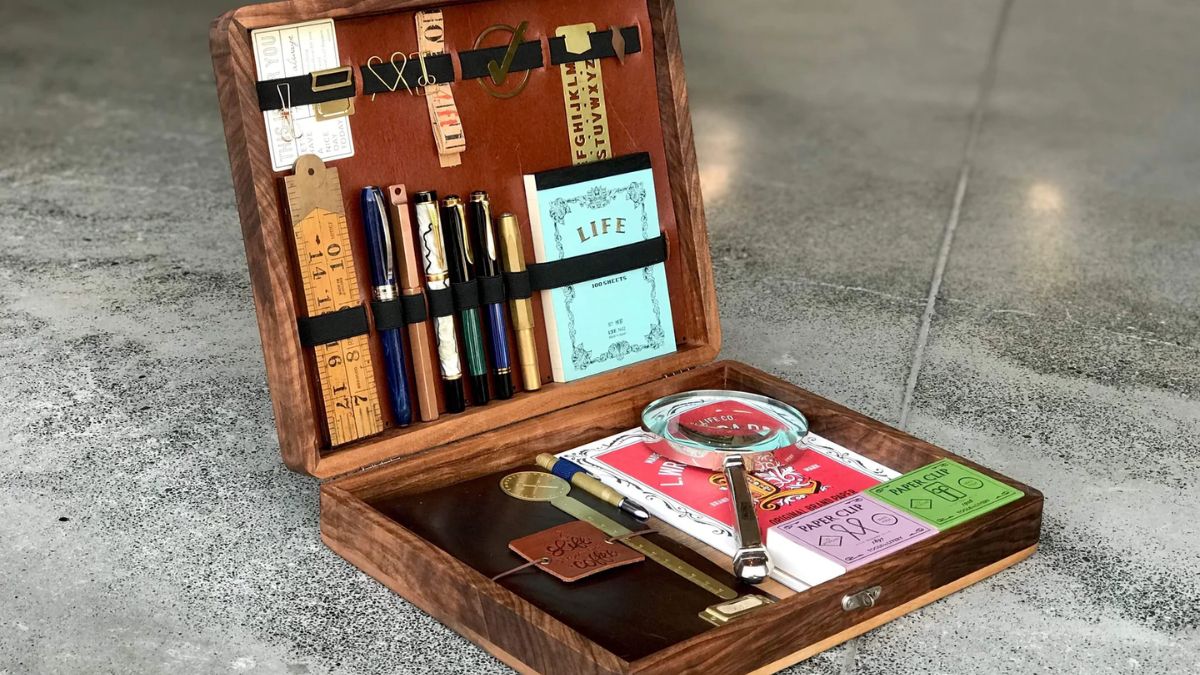
Luxury stationery has evolved far beyond being just functional tools for writing. Over the years, notebooks, pens, and other stationery items have transformed into symbols of style, taste, and personal expression. What was once purely practical has become a statement about identity and lifestyle. People no longer buy notebooks just to take notes or pens to sign papers; they choose pieces that reflect their personality, values, and aesthetic sensibility. Luxury stationery now sits at the intersection of utility and elegance, making ordinary tasks feel deliberate, beautiful, and satisfying.
The shift began with an emphasis on quality and craftsmanship. Brands started creating notebooks with thicker, smoother paper, pens that wrote effortlessly, and accessories that were built to last. These products were designed not only to perform well but also to feel exquisite in the hand. Attention to detail, from embossed covers to precise stitching and elegant ink flow, made stationery more than a tool — it became an experience. People realized that investing in high-quality stationery added a sense of pride and pleasure to everyday writing.
As society’s tastes evolved, stationery began to carry cultural and social significance. Luxury pens, journals, and planners became associated with sophistication, professionalism, and creativity. Owning a beautiful pen or notebook signaled that the person valued refinement and cared about presentation. Stationery became a form of self-expression, a way to communicate personal style quietly yet powerfully. Even in professional settings, these items could subtly convey discipline, attention to detail, and a sense of success.
Design trends also played a major role in making stationery fashionable. Minimalist leather-bound notebooks, sleek metallic pens, and aesthetically coordinated desk accessories made it easy to integrate stationery into personal style. Limited editions, collaborations with artists, and bespoke options elevated stationery from mere office supplies to collectible pieces. People began to treat their notebooks and pens like accessories, curating their collections to match their homes, offices, and lifestyles.
Ultimately, the rise of luxury stationery reflects a broader cultural shift toward valuing experiences, aesthetics, and personal expression. Writing with beautiful tools transforms ordinary tasks into mindful rituals. It encourages creativity, reflection, and enjoyment, turning functional acts into opportunities for elegance and style. Today, luxury stationery is no longer just practical; it is fashionable, desirable, and deeply personal, bridging the gap between art, function, and identity.
