
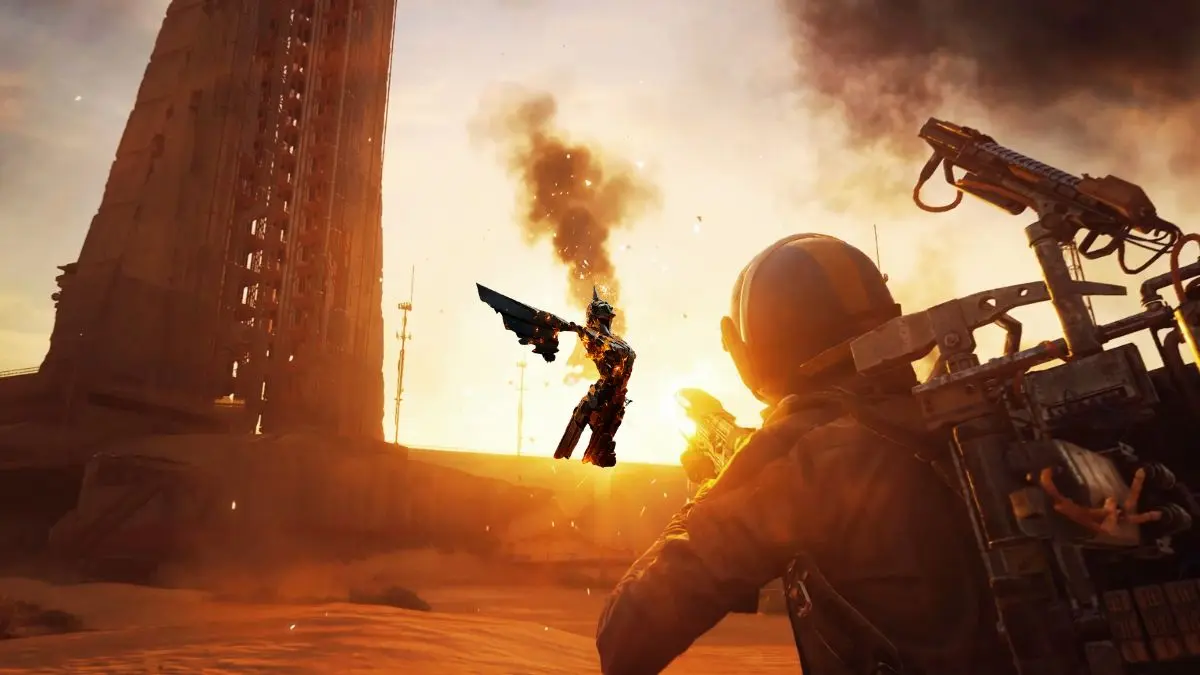
Arc Raiders came out this year like a sudden meteor. It landed on every platform and grabbed a lot of attention. That alone should have made it a clear pick for the Game Awards 2025. But when the Game of the Year list came out, Arc Raiders was nowhere to be seen. It felt like the biggest snub of the year. Fans of multiplayer games have seen this happen before. Critics rarely care about how many people actually play a game. They treat those player numbers like they do not matter. This creates a strange gap. Millions of people spend their time on a game every single day, but critics act like that impact does not count at all.
Arc Raiders did not need to win the trophy. But it did deserve a place among the nominees. The game is growing more and more every day. Its rise feels like the beginning of something big. Ignoring that is a mistake, especially when the numbers tell a very clear story.
Arc Raiders did not just do well. It dominated. On Steam and other platforms, its player counts tower over most nominees. While other games show small bumps, Arc Raiders looks like a giant mountain. It stays above three hundred thousand players at almost any time of the day. It also crosses four hundred thousand players like it is nothing. And this is consistent. Not just during launch week. It behaves like a huge blockbuster that refuses to slow down.
If you compare this with some of the GOTY 2025 picks, the difference becomes obvious. Clair Obscur: Expedition 33 never went above two hundred thousand players at its peak on Steam. That does not mean it is a bad game. But it shows how small the overall reach is. Other nominees like Death Stranding 2 and Donkey Kong Bananza are locked to specific platforms, which means most of the world cannot even try them. Every year, The Game Awards finds a way to add its usual Kojima game, its usual Nintendo game, or at least something that is exclusive to PlayStation.
There are rare single-player hits like Elden Ring and Baldur’s Gate 3 that break this trend. They had huge player counts. Elden Ring had more than nine hundred thousand players at once. Baldur’s Gate 3 crossed eight hundred thousand. Numbers on that level tell you something about how deeply a game connects with people.
Even today, Baldur’s Gate 3 brings in more players than newer nominees like Expedition 33 or Kingdom Come: Deliverance II. That shows how much these numbers actually matter.
Arc Raiders reached this kind of scale without any big advantages. It did not have a famous director behind it. It did not come from a big old franchise. It did not launch as a protected exclusive. It grew because people played it and told others. It grew because its systems were strong enough to pull people in again and again.
Players came back because the game offered something fresh. It gave them an experience they could not find anywhere else. That kind of influence is usually what award shows claim to celebrate. Just not this time.
If the Game of the Year list is supposed to highlight the most important games of the year, then skipping the game with the strongest daily presence feels completely backwards. Arc Raiders reached massive audiences. It held those players day after day. It built a community that could shape its entire genre. If critics think player count does not matter at all, then at some point we need to ask what actually does. A script written in a meeting room for a game that feels more like a TV show than a game?
Ignoring multiplayer games has become a pattern at The Game Awards. As soon as a game is built around PvP, PvPvE, or big co-op experiences, it starts at a disadvantage. It does not matter how many people are playing it. It does not matter how much influence it has. Critics keep leaning toward single-player games with heavy stories, almost like they want gaming to act like Hollywood movies instead of interactive experiences.
Multiplayer games end up pushed into side categories. They are treated as niche even when they have more players than every nominee combined. Arc Raiders suffered the same treatment. Critics saw a third-person extraction shooter and thought they already understood it. They reduced it to a label instead of judging the actual work.
But Arc Raiders does something fresh. It brings a new type of teamwork. It blends AI threats with human threats so smoothly that nothing feels forced. It changes how extraction games usually work. Instead of encouraging a mindless sprint to the exit, it pushes players to think and plan. These things matter. They move multiplayer forward.
A single-player game can create a big moment with a cutscene. A multiplayer game has to create that moment through people, systems, and chaos. When Arc Raiders creates a desperate escape or a dramatic last stand, it feels like the whole world reacts to the choices of many players at once. That is its own type of storytelling, and it deserves recognition.
The huge player numbers show that people want this kind of design. Critics ignoring it does not erase that truth. Arc Raiders pushed multiplayer gaming forward in 2025. Calling it unworthy while celebrating smaller titles with less impact feels odd.
Arc Raiders will be fine. Its community is strong enough to go on with or without a trophy. But the snub says something bigger. It shows how critics still see multiplayer games as lesser, even when players keep proving otherwise.
