
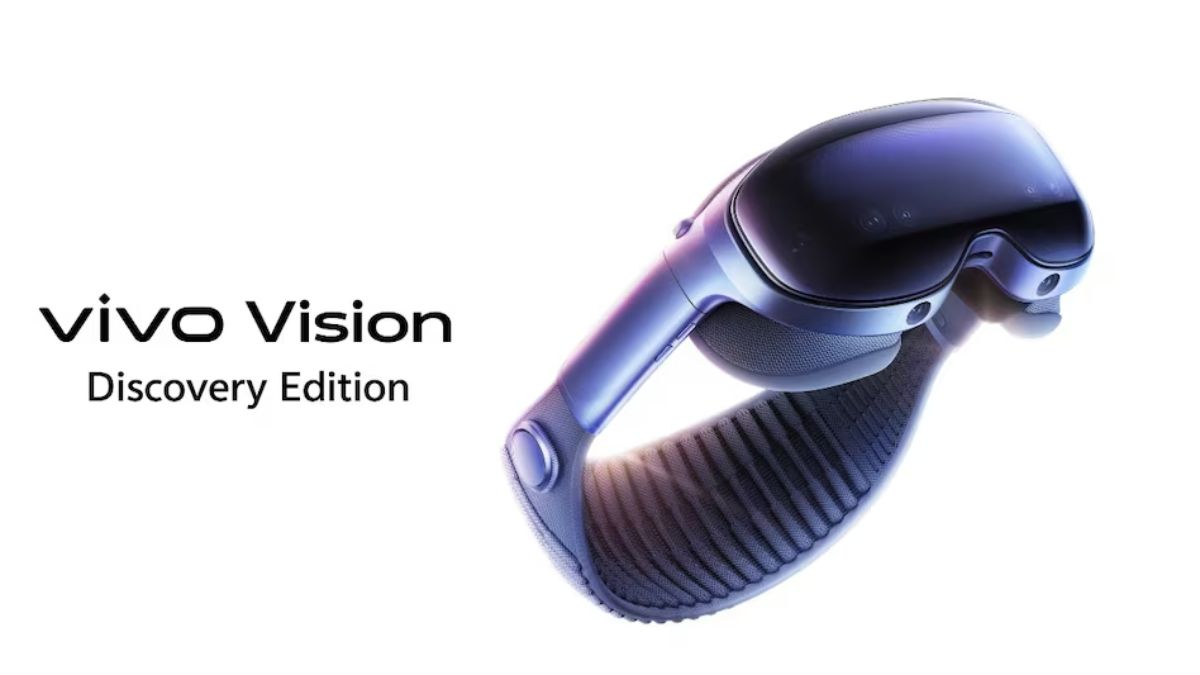
Chinese smartphone brand vivo has stepped into the world of mixed reality with the launch of its first MR headset, called the Vivo Vision Discovery Edition. The device was revealed at an event in Dongguan, China, as part of the company’s 30th anniversary celebrations.
This marks vivo’s first move into spatial computing and makes it the first Chinese smartphone maker to also produce an MR headset. The launch shows how the company is expanding beyond phones, building on its strength in imaging and display technologies.
The Vision Discovery Edition took four years to develop. It weighs 398 grams and is designed to be smaller and lighter than most competing headsets, with Vivo claiming a 26% reduction in size compared to the industry average. To make long use more comfortable, the headset comes with adjustable light seals and foam padding.
It runs on OriginOS Vision and uses hand and eye tracking instead of traditional controllers or touchscreens. The headset supports 1.5-degree high-precision eye tracking and detailed gesture recognition. Visuals are powered by dual Micro-OLED displays that deliver 8K resolution and cover 94% of the DCI-P3 colour spectrum, aiming to match cinema-quality screens.
Under the hood, the headset uses Qualcomm’s Snapdragon XR2+ Gen 2.1 chip, which vivo says offers 2.5 times more GPU power and up to eight times better AI performance than the previous version. This boost is expected to make applications across gaming, entertainment, and productivity much smoother.
The headset is designed for a wide range of experiences, from panoramic video and multi-angle sports streaming to a virtual cinema mode with the feel of a 120-inch screen.
The launch event also included updates to vivo’s imaging strategy and an awards ceremony for its VISION+ Mobile PhotoAwards 2025. Hu Baishan, Vivo’s Executive Vice President and COO, said the company wants to combine innovation with long-term value for users, describing the move into mixed reality as part of a bigger push into future consumer technologies.
