
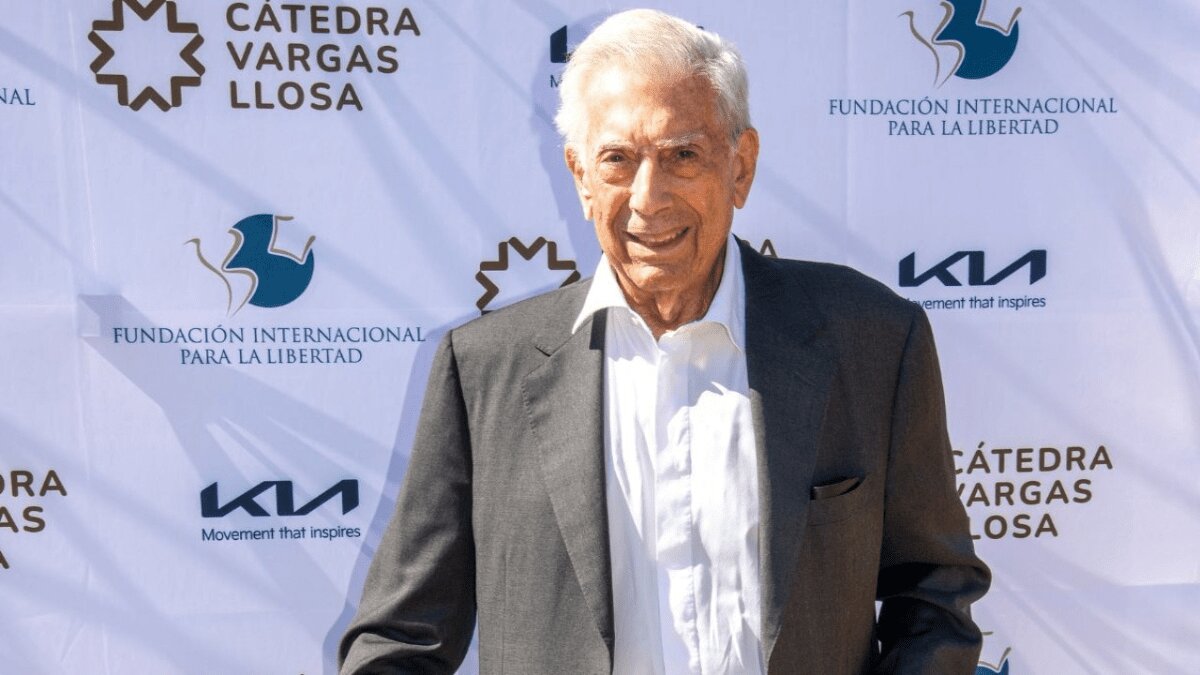
Mario Vargas Llosa, the Nobel Prize-winning author and literary giant of Latin America, has passed away at the age of 89. Known for his monumental contributions to 20th-century literature, he died peacefully, surrounded by his family. His loved ones expressed gratitude for his long, adventurous life and the immense literary legacy he leaves behind.
His son, Álvaro Vargas Llosa, confirmed the news on social media with a heartfelt tribute, saying, “His departure will sadden his relatives, his friends, and his readers around the world, but we hope that they will find comfort, as we do, in the fact that he enjoyed a long, adventurous and fruitful life, and leaves behind him a body of work that will outlive him.”
Born in 1936 in Peru, Vargas Llosa’s journey as a writer began after attending a military academy, an experience that deeply influenced his first major work, The Time of the Hero (1963). The novel sparked outrage in Peru, leading officials to publicly destroy over 1,000 copies. This act of censorship catapulted Vargas Llosa to literary fame and cemented his position as a major cultural figure in Peru.
Over the course of his career, Vargas Llosa wrote more than 50 works, including novels, essays, and journalism. His influential books include The Green House, The Bad Girl, Letters to a Young Novelist, and many others. His novels have been adapted into numerous films in Peru, Spain, and the United States. Notably, his 1977 novel Aunt Julia and the Scriptwriter inspired the 1990 romantic drama Tune in Tomorrow, starring Keanu Reeves and Barbara Hershey.
Vargas Llosa was awarded the Nobel Prize in Literature in 2010 for his profound examination of power structures and his vivid portrayals of human resistance, revolt, and defeat. His remarkable ability to capture the complexities of society and the individual’s struggle against it made him one of the most influential authors of his time.
Survived by his three children from a previous marriage and his partner, María Isabel Preysler Arrastía (mother of singer Enrique Iglesias), Vargas Llosa leaves a profound mark on the literary world, one that will continue to resonate for generations to come.
