
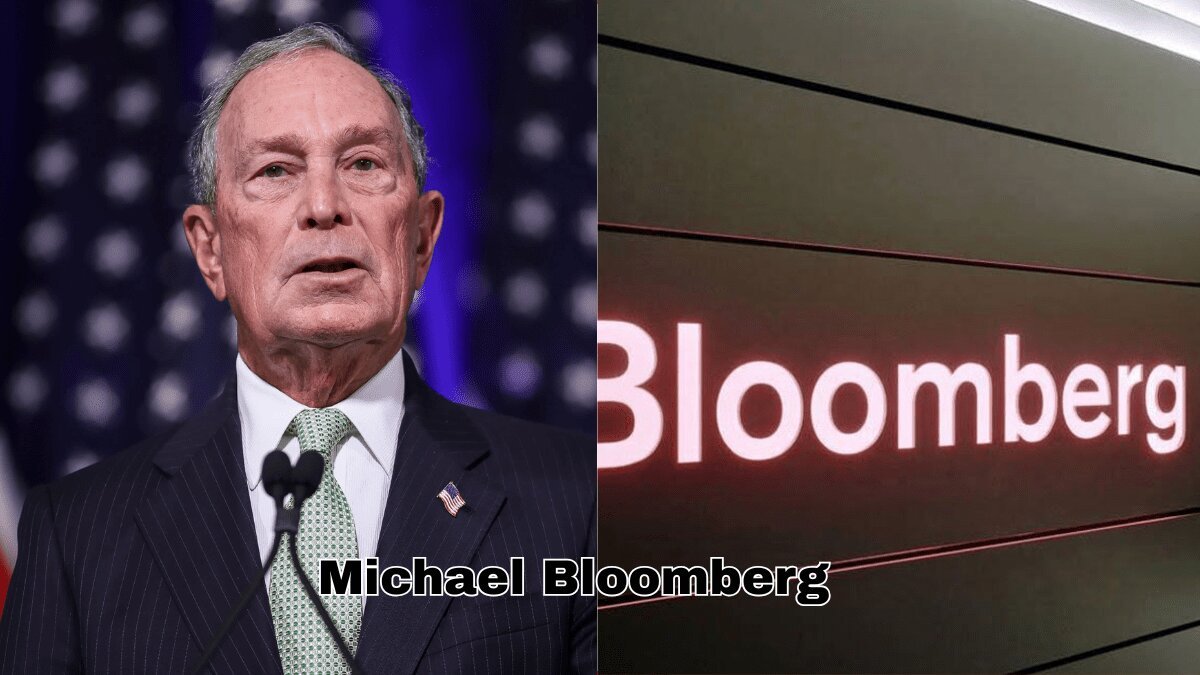
Michael Bloomberg – The Billionaire Who Built, Led, and Gave Back
In the realms of business, media, politics, and philanthropy, few names carry the weight and global recognition of Michael Bloomberg. A self-made billionaire, data-driven decision maker, and outspoken philanthropist, Bloomberg’s journey from a middle-class upbringing in Medford, Massachusetts to becoming one of the most powerful figures in the world is nothing short of extraordinary.
Born in 1942, Michael Bloomberg built his empire from the ground up. With an engineering mindset, razor-sharp business acumen, and relentless work ethic, he revolutionized how Wall Street accesses financial data, founded Bloomberg LP, served three terms as Mayor of New York City, and pledged to give away the majority of his $90+ billion fortune to philanthropic causes.
“I’ve always respected those who try to change the world, not just talk about it.”– Michael Bloomberg
What sets Bloomberg apart is not just his wealth or political power—but his fierce commitment to action. Whether it’s fighting climate change, supporting public health initiatives, or reforming gun laws through organizations like Everytown for Gun Safety, Bloomberg’s vision extends far beyond boardrooms and ballots.
After graduating from Johns Hopkins University and earning an MBA from Harvard Business School, Bloomberg began his career at Salomon Brothers. But when he was let go during a merger, he turned adversity into opportunity. Armed with a severance check and a belief in the power of information, he founded Bloomberg LP in 1981—forever transforming the financial services industry.
“Being fired was the best thing that ever happened to me. It forced me to take risks—and create something of my own.”
His entry into politics was equally unorthodox. In 2001, Bloomberg ran for Mayor of New York City—a Republican in a predominantly Democratic city. He won, serving three consecutive terms, during which he guided the city through post-9/11 recovery, championed public health, improved infrastructure, and implemented data-driven governance.
“In God we trust. Everyone else, bring data.”
Yet Bloomberg’s ambition didn’t stop at City Hall. In 2020, he made a brief but historic run for the U.S. Presidency, self-funding his campaign and bringing attention to key issues like climate reform and economic equality. Though the bid was short-lived, it underscored his enduring relevance in American political discourse.
Today, through Bloomberg Philanthropies, he channels billions toward initiatives that impact global health, education, the arts, and the environment. As a UN Special Envoy for Climate Ambition and Solutions, Bloomberg remains a key figure in shaping international policy for a sustainable future.
“You measure success not by how much you have, but by how much of a difference you make.”
Michael Bloomberg’s biography is a testament to resilience, innovation, and civic duty. He is a modern Renaissance man who didn’t just succeed—he used that success to lead, inspire, and give back. His story is far from over, and its impact will be felt for generations.
Early Years and Education: From Medford to Harvard and Beyond
Michael Rubens Bloomberg was born on February 14, 1942, in Medford, Massachusetts, a modest suburb north of Boston. Raised in a middle-class Jewish family, Bloomberg’s upbringing was humble but rich in values. His father, William Bloomberg, worked as a bookkeeper for a dairy company, and his mother, Charlotte Bloomberg, was a homemaker who emphasized the importance of education, integrity, and hard work.
“My parents taught me that no matter how little you have, there’s always room to give back. That stuck with me.”
From a young age, Bloomberg exhibited a strong curiosity for how things worked. Whether it was dismantling electronics or solving complex math problems, he gravitated towards structure, systems, and solutions. As a Boy Scout, he earned the rank of Eagle Scout, showcasing his early dedication and leadership abilities.
His academic journey began at Medford High School, where he excelled in science and math. Encouraged by his teachers, Bloomberg applied to Johns Hopkins University, where he earned a Bachelor of Science in Electrical Engineering in 1964. To support himself, he worked as a parking lot attendant and took out loans—an experience that shaped his view on opportunity and access.
“I put myself through school with student loans and odd jobs. That experience taught me the value of grit.”
After college, Bloomberg continued his education at Harvard Business School, where he earned his MBA in 1966. While many of his peers saw business school as a stepping stone to Wall Street, Bloomberg saw it as a launching pad to something bigger—something that combined analytics, leadership, and innovation.
At Harvard, Bloomberg stood out not just for his intelligence but for his persistence. He wasn’t the most charismatic or outspoken student, but his sharp thinking and decisive attitude left a lasting impression.
“Harvard didn’t just teach me business—it taught me to think big and act boldly.”
Following graduation, he joined Salomon Brothers, a prestigious Wall Street investment bank, where he began his career counting bonds in the bank’s vault. But even in this humble role, Bloomberg applied his engineering mind to improve systems and workflows, quickly climbing the ranks.
This early chapter of Bloomberg’s life reveals the roots of a man who combined blue-collar perseverance with white-collar ambition. It’s the story of a young man who didn’t inherit wealth or privilege but built his future from a foundation of discipline, education, and vision.
Today, Bloomberg remains a generous benefactor to both of his alma maters. He has donated over $3.5 billion to Johns Hopkins University, making it the largest donation in U.S. history to a university, ensuring future students can access the same opportunities he once fought hard for.

credit- kcrw
Building Bloomberg LP: Revolutionizing Financial Data and Media
After 15 years at Salomon Brothers, Michael Bloomberg was unexpectedly laid off in 1981 during a company merger. Armed with a $10 million severance package and an idea that would reshape the finance world, he founded Innovative Market Systems—which would later become Bloomberg LP.
“Getting fired was a blessing in disguise. It gave me the freedom to pursue something that truly mattered to me.”
At the time, financial information on Wall Street was scattered, slow, and expensive. Bloomberg envisioned a centralized, user-friendly platform that delivered real-time market data and analytics directly to traders’ terminals. With a team of engineers and finance experts, he developed what would become the Bloomberg Terminal—a data revolution in a desktop box.
“Information is power. Whoever controls the flow of information controls the market.”
The company’s first major client was Merrill Lynch, which bought 20 terminals and invested $30 million in the company—a critical endorsement that propelled Bloomberg LP into mainstream use. Within a few years, the terminal became the lifeblood of finance, adopted by banks, hedge funds, governments, and global corporations.
By the 1990s, Bloomberg LP expanded into television, radio, magazines, and digital media, making it a global empire with more than 325,000 terminal subscribers and over 20,000 employees in 120 countries. The Bloomberg Terminal remains essential in financial circles, offering tools for trading, analytics, and communication.
“We didn’t just build a product. We built the infrastructure for modern finance.”
Today, Bloomberg LP generates over $12 billion in annual revenue, and its founder remains the majority owner. The success of this venture not only made Bloomberg one of the richest people in the world, but also cemented his place as an innovator who reshaped global finance through the power of data.
Political Power and Global Influence: NYC Leadership and Philanthropic Legacy
In 2001, Michael Bloomberg made an unexpected pivot from the boardroom to the political arena. Running as a Republican, he won the New York City mayoral race, just weeks after the devastating 9/11 attacks. As mayor from 2002 to 2013, Bloomberg brought a pragmatic, data-driven style to governance that earned him both praise and criticism.
“I never ran for mayor to play politics. I ran to get things done.”
During his three-term tenure, Bloomberg revitalized NYC’s economy, introduced bold public health policies, and implemented groundbreaking urban planning. He banned smoking in public spaces, introduced calorie counts in restaurants, expanded bike lanes, and invested in climate resiliency. His policies helped lower the city’s crime rate and extended life expectancy for New Yorkers.
“Public health isn’t just about hospitals. It’s about building a city that helps people live longer, healthier lives.”
Beyond City Hall, Bloomberg’s global impact grew through Bloomberg Philanthropies, which has distributed over $12.7 billion toward causes like climate change, education, public health, and the arts. He’s also taken a stand on issues like gun control, co-founding Everytown for Gun Safety, and served as UN Special Envoy on Climate Ambition.
In 2020, Bloomberg briefly entered the U.S. presidential race, spending over $1 billion of his own money to influence the Democratic primary, focusing on defeating Donald Trump. Though unsuccessful, his campaign further cemented his position as a force in American political discourse.
“I didn’t run for fame or fortune—I already had both. I ran because I care deeply about the country’s future.”
Today, Bloomberg continues to wield his influence globally—not through office, but through vision, capital, and commitment to building a better, smarter world.
credit – next mashup
The Legacy of a Relentless Reformer
Michael Bloomberg’s biography is not simply the story of a man who made billions—it’s the journey of a relentless reformer who continues to reshape the modern world through innovation, leadership, and impact. From building the world’s most trusted financial information empire to transforming New York City, and now acting as a global philanthropist and policy influencer, Bloomberg embodies the power of thinking big and acting with purpose.
“You can’t sit around and wait for change. You have to stand up and make it happen.”
His legacy spans multiple domains: business, media, public health, education, environmental activism, and civic reform. Bloomberg has proven that wealth is most meaningful when it is used to elevate others—whether it’s through scholarships, public infrastructure, or climate innovation. His decisions often sparked debate, but they always stemmed from a deep conviction in data, transparency, and progress.
The values instilled in him during his humble beginnings—discipline, curiosity, and giving back—have remained constant even as his influence expanded. He’s shown the world that private-sector expertise can serve public good, and that global challenges can be tackled with local actions and scalable solutions.
“Philanthropy isn’t about charity—it’s about solving problems. It’s about accountability to future generations.”
Whether you view him as a titan of finance, a bold mayor, or a generous benefactor, one thing is clear: Michael Bloomberg is not finished yet. With every initiative he funds and every policy he supports, he reinforces a legacy built on vision, courage, and results. As the world continues to evolve, so too will Bloomberg’s mission to make it better—one data point, one policy, and one person at a time.