
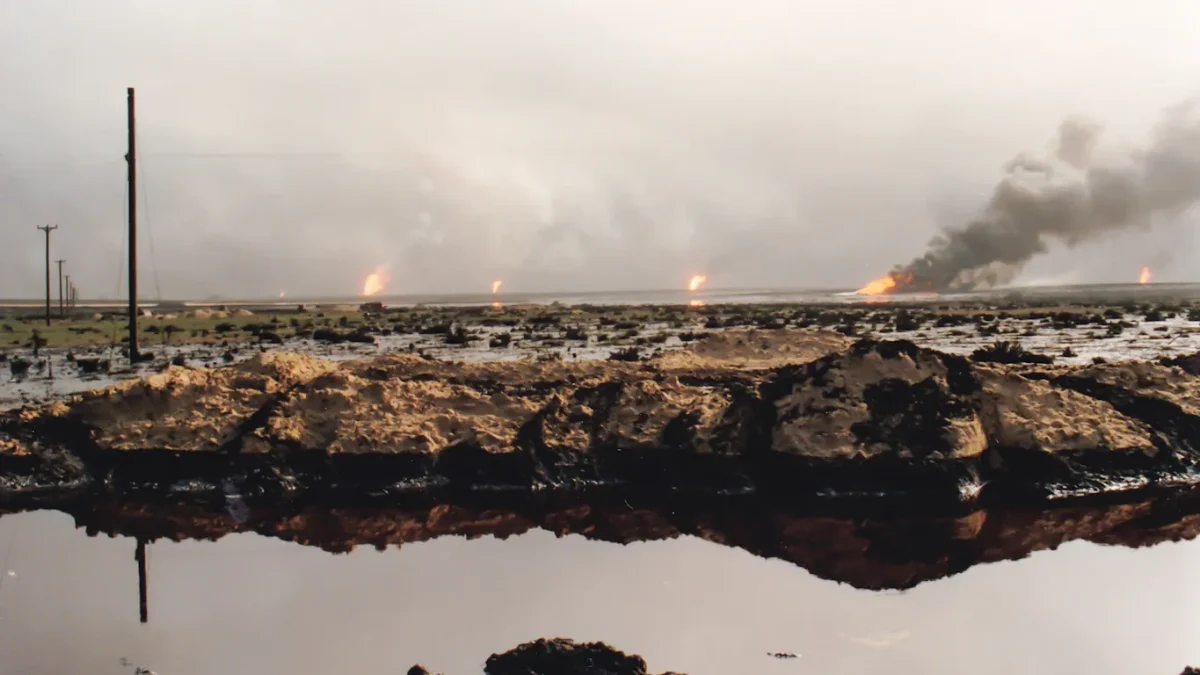
Picture a world where the most significant international conflict centered around a dispute over the biggest sandbox. In this sandbox of the wealthy and influential, the grains of sand were mingled with liquid gold—oil. In 1990, Iraq, under the ambitious leadership of Saddam Hussein, desired a larger share of this lucrative sandbox. Eyeing Kuwait, a prime piece of real estate rich in oil reserves, Saddam essentially declared, “I want that.” Thus began Operation Desert Storm, an international intervention akin to stopping a bully from snatching another kid’s toys.
Struggling with enormous debts and an economic crisis, Saddam accused Kuwait of overproducing oil, which he claimed was driving down prices and harming Iraqi oil revenue. Historical territorial claims added fuel to the fire. On August 2, 1990, Iraqi forces invaded Kuwait and swiftly took control of the small, oil-rich nation.
The global community condemned the invasion and imposed economic sanctions on Iraq. When diplomatic efforts failed, a coalition led by the United States, reluctantly joined by Britain, France, and around 34 other countries (including Syria!), decided Iraq needed to be put in its place.
The Course of the War:
Operation Desert Storm commenced with a massive air campaign known as Operation Instant Thunder, later referred to simply as the Gulf War air campaign. This phase lasted several weeks, targeting Iraqi command and control centers, communication networks, airfields, and missile sites. For 42 days, the skies over Iraq were illuminated by the glow of laser-guided bombs and Tomahawk missiles striking Saddam’s forces. It was a display of military power unparalleled since World War II.
For the first time, the public had a front-row seat to the spectacle of modern warfare. With smart bombs, stealth fighters, and Patriot missiles, it felt like a real-life video game. Extensive media coverage led some to dub it the “Video Game War,” though this label downplays the actual human cost of the conflict.
Following the air campaign, a ground assault began on February 24, 1991. The ground phase was astonishingly swift, lasting just 100 hours before a ceasefire was declared. Coalition forces faced minimal resistance, as Iraqi forces had been significantly weakened by the prior air attacks. The ground offensive utilized a sweeping “left-hook” strategy, bypassing many Iraqi defenses by advancing west into the desert and then turning east towards Kuwait.
The Ceasefire and Aftermath:
On February 28, 1991, President George H. W. Bush declared a ceasefire, and Kuwait was liberated. The aftermath of Desert Storm was complex. While Kuwait’s liberation was a clear success, Iraq was left in shambles, leading to years of no-fly zones, sanctions, and humanitarian crises. Saddam Hussein remained in power, casting doubt on the completeness of the coalition’s victory.
The U.S. had encouraged uprisings against Saddam’s regime but did not intervene when he brutally suppressed these revolts. This left many Iraqis feeling abandoned. The war’s conclusion also saw the deployment of thousands of American troops in the Persian Gulf, offending many Muslims and contributing to the rise of a certain terrorist named Osama bin Laden.
Critics argue that the conflict was partly motivated by a desire to secure U.S. oil interests. While this likely played a role, it’s undeniable that Saddam was a brutal dictator with a history of using chemical weapons against his people. Allowing him control over a significant portion of the world’s oil reserves could have had dire consequences.
Operation Desert Storm was a military success but a political conundrum. It demonstrated American military might but also highlighted the limitations of that power in navigating the complexities of the Middle East. The conflict set the stage for many of the challenges and conflicts that would define the coming decades.
