
In the mid-20th century, France, like many European powers, was desperately trying to maintain control over its colonial territories. By then, colonialism had become the awkward relic at the global table. The aftermath of World War II ignited a surge of nationalism and anti-colonial sentiment that rippled across Asia. Independence movements gained traction, and by 1946, France was struggling to retain its colonies.
The turning point came with the Battle of Dien Bien Phu, a decisive confrontation between the French forces and the Viet Minh revolutionaries.
The Sequence of Events:
Dien Bien Phu was selected by the French as a fortified base meant to sever Viet Minh supply routes and draw the guerrilla fighters into a crippling battle. The French, confident in their technological superiority and air support, anticipated a quick victory. However, the Viet Minh, under the astute leadership of General Vo Nguyen Giap, had a different plan.
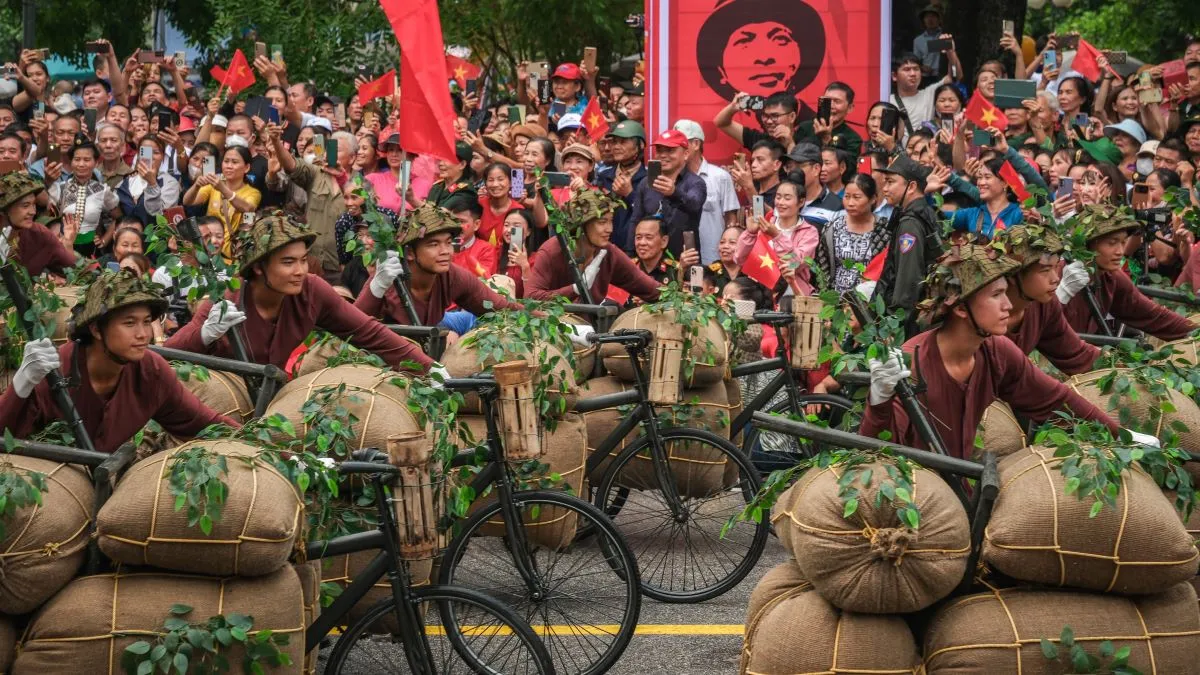
Utilizing their deep knowledge of the terrain and relentless resolve, the Viet Minh encircled the French base and severed their supply lines. They transported heavy artillery piece by piece over mountains, through dense jungles, and even on bicycles. Yes, bicycles—these two-wheeled carriers became an unexpected logistics lifeline. This remarkable feat defied French expectations.
Over several weeks, the Viet Minh sustained their assault with relentless attacks. For 56 days, the battle raged on, with the French valiantly trying to hold their ground against insurmountable odds. Their position deteriorated daily.
On May 7, 1954, the Viet Minh launched a final, massive offensive. They overran the main French headquarters, forcing the French to surrender. The fall of Dien Bien Phu was a profound shock to the French public and a significant blow to France’s international prestige.
Why It Mattered:
The consequences of this battle were extensive. For France, it marked a humiliating defeat that ended their colonial rule in Indochina. For the Vietnamese, it was a pivotal victory that energized the nationalist movement and paved the way for the Vietnam War.
Soon after, the Geneva Accords were signed, dividing Vietnam into North Vietnam (controlled by the Viet Minh) and South Vietnam (under a government allied with the West). This division set the stage for the Vietnam War, drawing the U.S. into a prolonged conflict aimed at preventing the spread of communism.
If history were a film, the Battle of Dien Bien Phu would be one of its most dramatic climaxes—a David vs. Goliath story where the underdog triumphs and reshapes the destiny of an entire region.
