
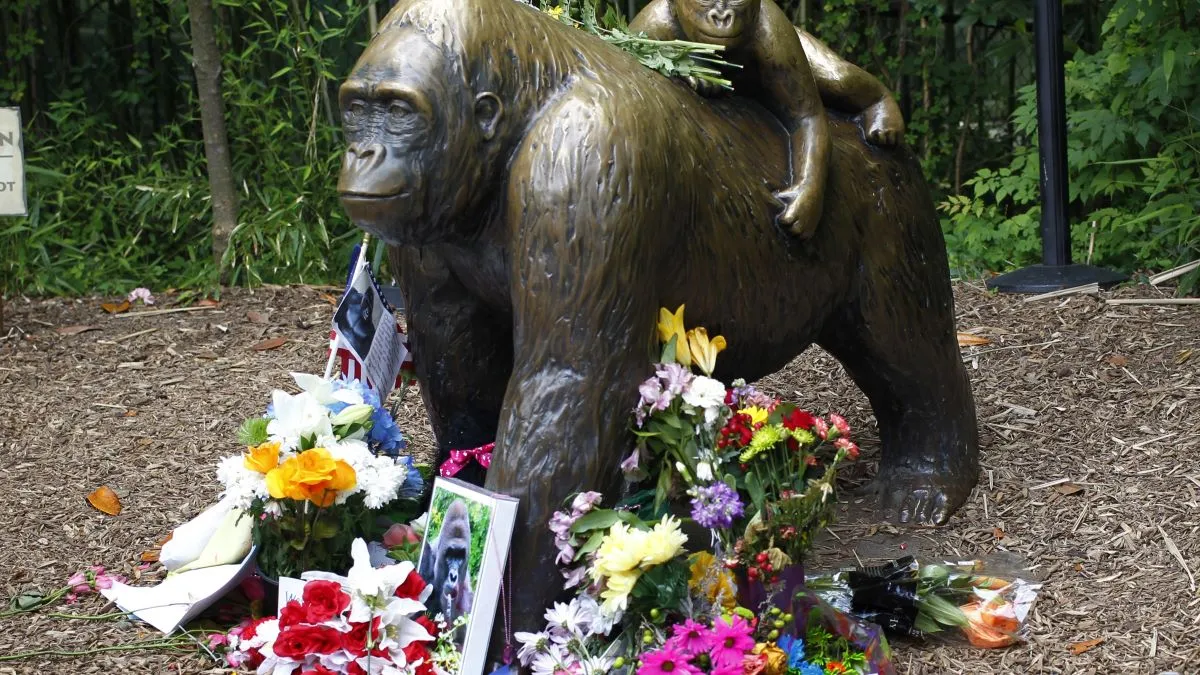
In a strange and fleeting moment in 2016, the internet’s spotlight shifted onto an unexpected protagonist—a gorilla.
It all began on May 28 at the Cincinnati Zoo, a typical day filled with the joyful sounds of children and the calls of animals. But the day took a dramatic turn when a three-year-old boy named Isiah Gregg briefly slipped out of his mother’s sight and found himself in the moat of a gorilla enclosure.
The gorilla in question was Harambe, a 17-year-old Western lowland silverback. What followed was a tense and harrowing scene, captured on video and broadcasted into millions of homes: Harambe approaching the child, dragging him through the water, and onlookers screaming. Ultimately, zoo officials made the difficult decision to shoot Harambe, believing it was the only way to ensure the child’s safety.
This incident ignited a fierce debate. Some primatologists suggested that Harambe may have been attempting to protect the boy from the chaotic crowds that had gathered. However, for many, Harambe’s death was seen as a tragic and unnecessary loss. Animal rights activists criticized the zoo’s decision to use lethal force, arguing that alternative methods, such as tranquilizers, could have been employed.
Amidst the controversy, the boy’s parents faced intense scrutiny and even death threats. Despite the public outcry, the Cincinnati Police Department concluded that the mother was not negligent in her actions, and no charges were filed.
In the aftermath, Harambe became a symbol, immortalized in internet memes and pop culture references. Photoshopped images depicted him as a leader or revolutionary among primates, adding a layer of absurdity to the tragic event.
As for the boy, he has likely grown into a healthy and happy 11-year-old, though details about his life remain scarce as his family has opted to shield him from the public eye. Nevertheless, images released shortly after the incident showed that his physical injuries had healed, offering a glimpse of hope amidst the controversy and grief.
