

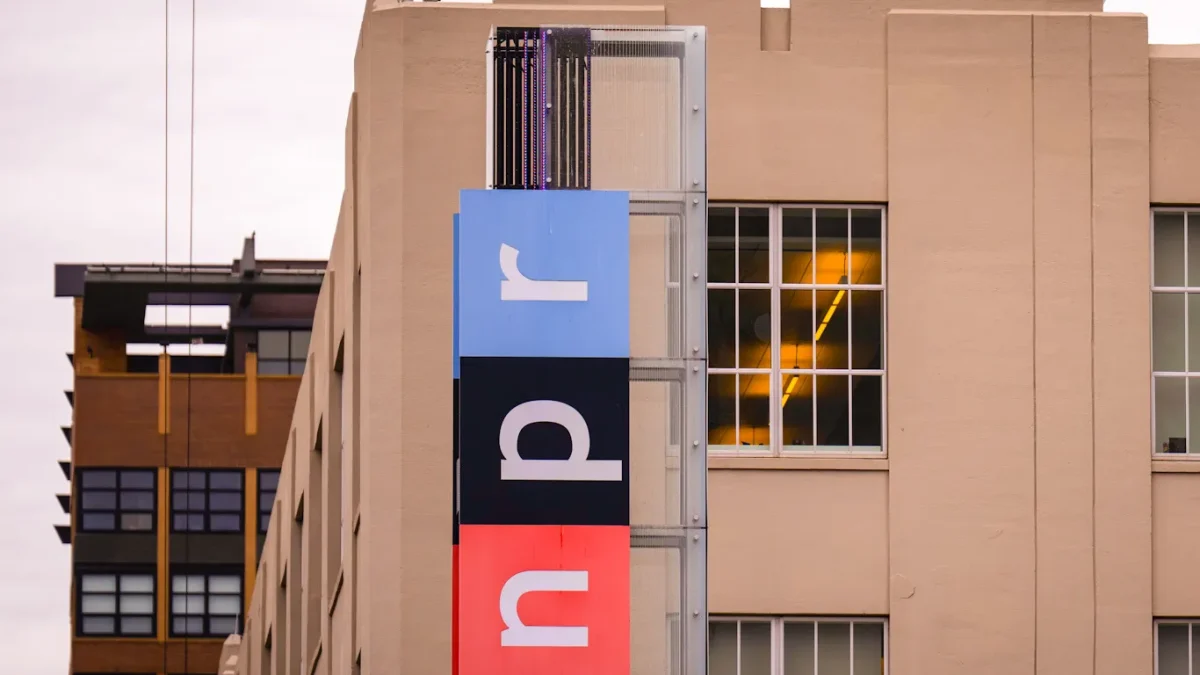
No matter where you reside in the vast expanse of the United States, chances are you’ve encountered a National Public Radio (NPR) segment at some point in your life. With over 1,000 public radio stations falling under its expansive umbrella, NPR holds a ubiquitous presence, from the endless cornfields of Nebraska to the shimmering coasts of the nation.
Functioning autonomously, devoid of government or corporate influence, NPR operates with the solemn duty of delivering impartial news—a commitment that some voices on the political right argue the network is failing to uphold. Accusations of bias have long plagued NPR, with criticisms intensifying since the early 2000s and reaching a fever pitch during the tumultuous 2016 election season, cementing the station’s place on many conservative’s lists of “untrustworthy” news outlets.
Now, an insider report shedding light on NPR’s hiring practices has reignited the debate surrounding the network’s alleged bias. The discourse surrounding the call to defund NPR, propelled by accusations of liberal leanings, underscores the deep-seated divisions within American society.
The movement to defund NPR gained momentum in 2021, spearheaded by assertions of bias and discontent with the network’s perceived ideological tilt. While some dismiss such sentiments as the rantings of a fringe minority, there is a growing chorus of voices, including disenchanted members within the organization itself, echoing concerns about NPR’s alleged departure from impartial journalism.
Uri Berliner, a seasoned NPR veteran, recently penned a revealing exposé detailing his observations of the network’s internal dynamics. Drawing on his extensive experience, Berliner highlighted a shift within NPR from a subtle liberal bias to an overtly partisan stance, a transformation he attributes to former CEO John Lansing. Berliner’s revelations, supported by evidence of ideological homogeneity within NPR’s newsroom, cast a shadow over the network’s journalistic integrity, fueling conservative criticisms of NPR as a “liberal propaganda mouthpiece.”
The fervor surrounding NPR’s alleged bias has transcended mere political discourse, eliciting calls for action from prominent figures across the political spectrum. Former President Donald Trump’s denunciation of NPR as a “TOTAL SCAM!” following Berliner’s article underscores the polarizing nature of the debate, as lawmakers from Ted Cruz to Mitt Romney join the chorus calling for NPR’s defunding.
However, the issue of NPR’s funding is far from straightforward. While NPR receives minimal direct government funding, its financial ecosystem is intricately intertwined with taxpayer dollars, predominantly through partnerships with local stations and corporate sponsorships. The prospect of defunding NPR raises concerns about its operational viability and the potential repercussions for journalistic integrity.
Amidst the clamor for defunding NPR, voices of reason caution against knee-jerk reactions, emphasizing the need for introspection and reform from within. Katherine Maher, NPR’s new CEO, issued a staunch defense of the network’s commitment to its mission, rebuffing allegations of bias while acknowledging the imperative of self-reflection.
Ultimately, the debate surrounding NPR’s alleged bias underscores broader societal fissures and the complexities of journalistic integrity in an era of heightened polarization. As the nation grapples with questions of truth and objectivity, NPR finds itself at the center of a contentious debate that transcends mere political allegiances, calling into question the very essence of journalistic ethics in the digital age.