
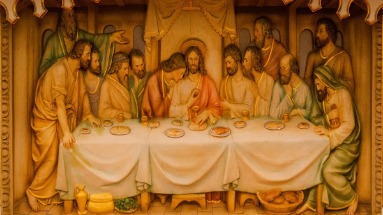
Maundy Thursday, also known as Holy Thursday, holds profound significance in the Christian faith as it marks the events leading up to Jesus Christ’s crucifixion and resurrection. According to the Bible, particularly the accounts found in the Gospels of Matthew, Mark, Luke, and John, Maundy Thursday commemorates several key events in the life of Jesus during his final days on earth.
The term “Maundy” is derived from the Latin word “mandatum,” meaning commandment or mandate. It refers to the commandment given by Jesus to his disciples during the Last Supper, which took place on the evening before his crucifixion. The Gospel of John records this poignant moment when Jesus, knowing that his time on earth was drawing to a close, demonstrated an act of humble service and love by washing the feet of his disciples. This symbolic gesture emphasized the importance of humility, selflessness, and servanthood in the Christian life. Jesus then instructed his disciples to follow his example, telling them, “A new commandment I give to you, that you love one another: just as I have loved you, you also are to love one another” (John 13:34, ESV).
The Last Supper, which Jesus shared with his disciples, is another central aspect of Maundy Thursday according to the Bible. During this meal, Jesus instituted the sacrament of the Eucharist, or Holy Communion, by breaking bread and sharing wine with his disciples. He instructed them to partake in remembrance of him, saying, “This is my body, which is given for you. Do this in remembrance of me” (Luke 22:19, ESV). The act of communion serves as a profound symbol of the sacrificial death of Jesus and the spiritual nourishment received by believers through their union with him.
Maundy Thursday also marks the betrayal of Jesus by one of his own disciples, Judas Iscariot. According to the Gospel accounts, Judas conspired with the religious authorities to betray Jesus for thirty pieces of silver. During the Last Supper, Jesus identified Judas as the one who would betray him, saying, “Truly, I say to you, one of you will betray me” (Matthew 26:21, ESV). This act of treachery fulfilled the prophecies of the Old Testament and set in motion the events leading to Jesus’ arrest, trial, and crucifixion.
Following the Last Supper, Jesus went to the Garden of Gethsemane to pray, where he experienced deep anguish and sorrow knowing the suffering that awaited him. It was in this garden that Jesus was betrayed by Judas and subsequently arrested by Roman soldiers, marking the beginning of his journey to the cross.
In summary, Maundy Thursday, as depicted in the Bible, is a day of profound significance for Christians worldwide. It commemorates Jesus’ act of humble service, the institution of the Eucharist, his betrayal by Judas, and the beginning of his journey to the cross. Through the observance of Maundy Thursday, believers are invited to reflect on the sacrificial love of Jesus, his teachings on humility and love, and the profound implications of his death and resurrection for humanity.
