
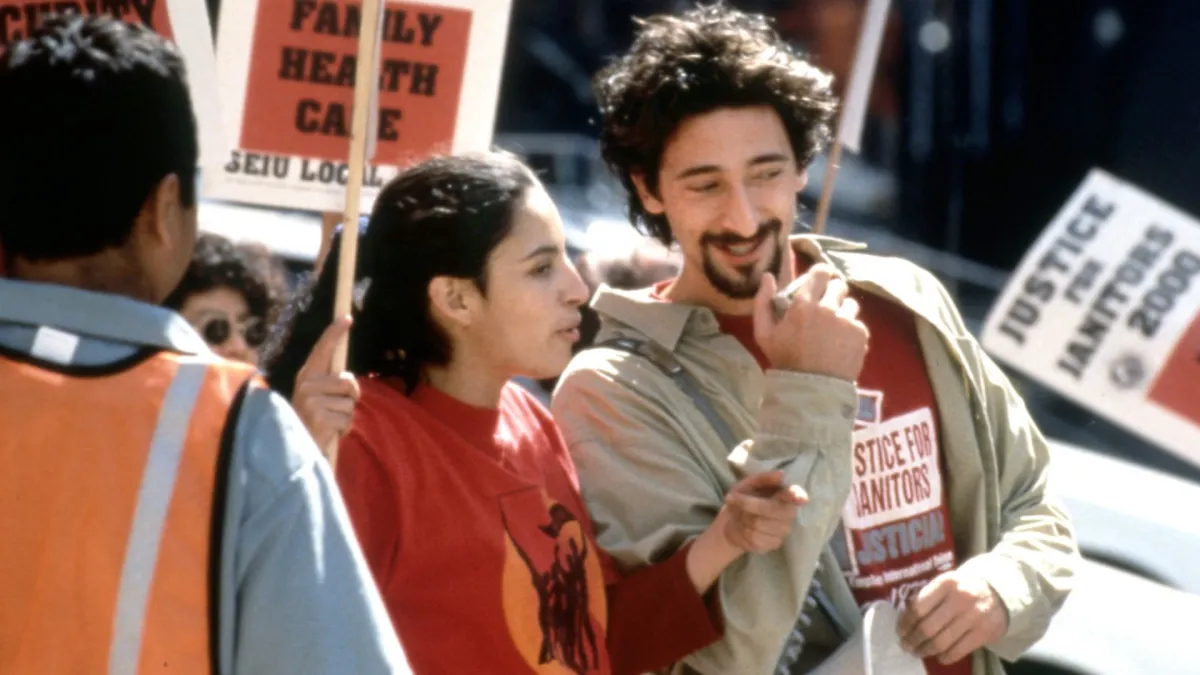
In the realm of socially impactful cinema, “Bread and Roses” stands out as a powerful exploration of the struggles faced by immigrant workers fighting for justice and fair wages. Directed by Ken Loach and released in 2000, this thought-provoking film sheds light on the challenges of the working class, making it a must-watch for those passionate about social justice and human rights.
- Realism and Authenticity: “Bread and Roses” is celebrated for its commitment to realism. The film doesn’t shy away from portraying the harsh realities faced by immigrant janitors in Los Angeles. The authenticity of the narrative draws viewers into the lives of the characters, making their struggles all the more impactful and relatable.
- Inspired by True Events: The film takes inspiration from the “Justice for Janitors” campaign, a real-life movement that advocated for better wages and working conditions for janitors across the United States. By grounding its narrative in actual events, “Bread and Roses” becomes a poignant reflection of the challenges faced by those often overlooked in society.
- Social Justice and Workers’ Rights: At its core, “Bread and Roses” is a rallying cry for social justice and workers’ rights. The film passionately advocates for fair wages, humane working conditions, and the dignity of labor. It serves as a call to action, urging viewers to consider the impact of economic decisions on the lives of everyday workers.
- Compelling Characters and Performances: The characters in “Bread and Roses” are multi-dimensional and portrayed with nuance. Pilar Padilla delivers a compelling performance as Maya, the protagonist, who becomes a symbol of resilience and determination. The cast’s authentic portrayals breathe life into the narrative, making it emotionally resonant.
- Ken Loach’s Directorial Vision: Known for his commitment to social realism, director Ken Loach brings his distinctive vision to “Bread and Roses.” His storytelling style, coupled with a dedication to portraying socio-economic issues, adds depth to the film. Loach’s directorial choices contribute to the film’s impact and lasting relevance.
- Exploration of Immigrant Experience: The film delves into the immigrant experience, highlighting the challenges faced by those who come to a new country in search of a better life. It addresses issues of exploitation, discrimination, and the pursuit of the American Dream, providing a nuanced portrayal of the complexities involved.
- Cinematic Excellence: Beyond its social and political themes, “Bread and Roses” is a well-crafted cinematic piece. The cinematography, storytelling, and soundtrack work together to create an immersive experience. The film’s technical brilliance enhances its ability to convey a powerful message.
“Bread and Roses” stands as a testament to the transformative potential of cinema. By watching this film, audiences can gain insights into the challenges faced by marginalized communities, fostering empathy and understanding. The movie’s unwavering commitment to advocating for workers’ rights makes it a compelling choice for those seeking impactful storytelling with a social conscience.
