

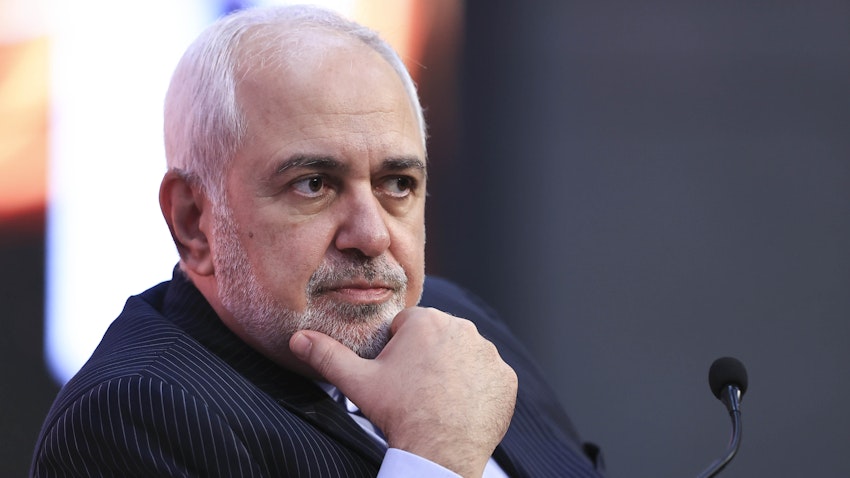
Former Iranian Foreign Minister Mohammad Javad Zarif has put forward a “beyond ceasefire” plan to resolve the US-Israeli war on Iran. He urges Tehran to use its advantages on the battlefield as leverage for a final decision through diplomacy.
Zarif’s argument, in an article published in Foreign Affairs on April 3rd, is based on his belief that there has been much resilience from Iran during this conflict and that continued fighting could lead to many civilian casualties and civilian infrastructure damage. His plan calls for limiting Iran’s nuclear program under international monitoring, down-grading Iran’s stockpile of nuclear enrichment product to below 3.67%, and committing to never pursue nuclear weapons as part of an agreement resolving this conflict along with returning full US and UN sanctions lifted, opening the Strait of Hormuz to all shipping, and establishing a bilateral agreement not to attack each other.
In addition, he proposed that a regional toll-based consortium for enrichment of fissile fuel involving both China, Russia, and USA along with the Gulf nations should be established on a mutual basis and that all participants in this consortium should develop an overall collective security framework for cooperation between the Gulf states, Egypt, Pakistan, and Turkey to protect the freedom of navigation in the Gulf region and establish non-aggression commitments among participants.
Gulf countries are showing skepticism and have stated “erosion of trust” as a reason for their reluctance in responding to Iranian-based terrorism against their own countries. UAE’s envoy Anwar Gargash made it clear that the proposal excluded Iran’s attacks against the infrastructure of the Gulf and instead indicated that the majority of Iranian aerial operations were directed at gouging the UAE.
The war that started on February 28 with US and Israeli aerial attacks on Syria has led to huge disruptions in global energy markets, as Iran has limited movement through the Strait of Hormuz. The US President simply gave an ultimatum to all parties to make a deal within 48 hours, or he would no longer be able to support them. Mr. Zarif explained during the press conference that the time has come for a major “off-ramp” of the war and that “history is with the peacemakers”.
As Pakistan, Türkiye, and Egypt are working to mediate the ongoing conflict, Mr. Zarif’s proposal adds a prominent Iranian voice to the growing call for de-escalation.