
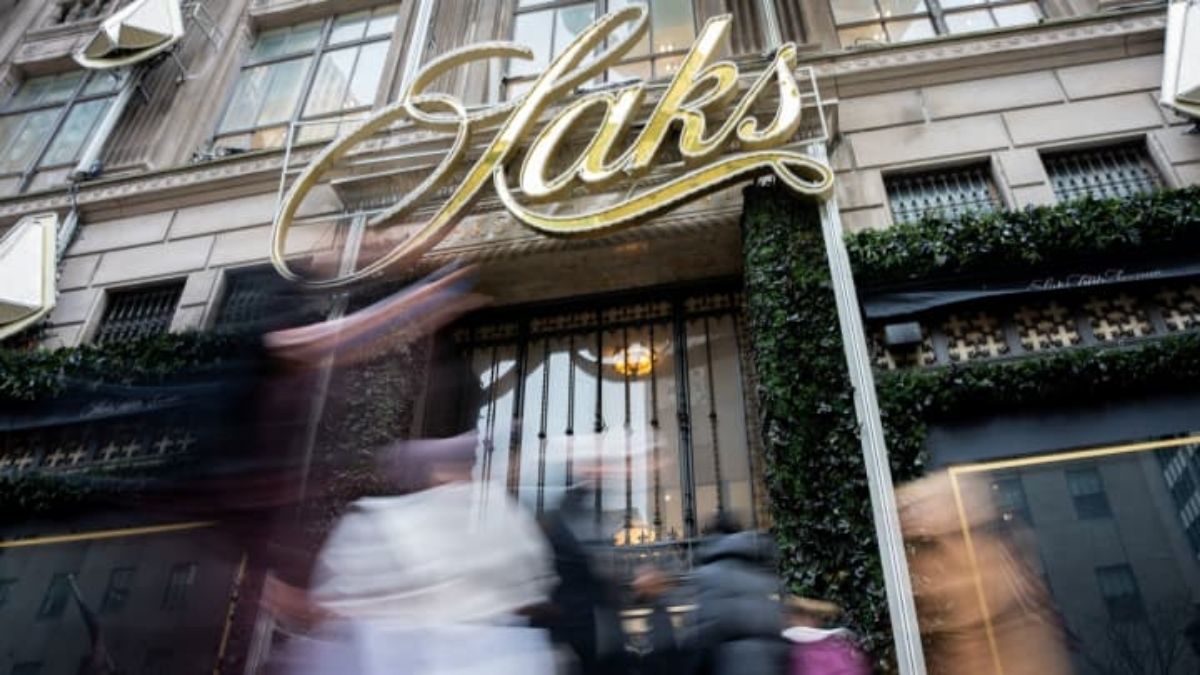
Saks Global, the parent company of the iconic American luxury retailer Saks Fifth Avenue, has filed for Chapter 11 bankruptcy protection in the US Bankruptcy Court for the Southern District of Texas. The filing, made late Tuesday, signals a pivotal moment for the company as it struggles with heavy debt obligations and a breakdown in relationships with key suppliers across its global network.
In a statement announcing the move, the company said the voluntary Chapter 11 process is designed to support an ongoing transformation of the business, backed by its major financial stakeholders. Saks Global described the restructuring as a step toward stabilising operations while repositioning the company for the future of luxury retail.
The bankruptcy filing also brings an immediate leadership overhaul. Richard Baker is stepping down as Chief Executive Officer, with Geoffroy van Raemdonck, former head of Neiman Marcus, taking over the role. Van Raemdonck is expected to lead the retailer through its court-supervised reorganisation at a time when confidence among brands and vendors has been deeply shaken.
In his first remarks following the announcement, van Raemdonck said the focus would remain on customers and brand partners while navigating the restructuring. He added that Saks Global intends to continue playing a central role in shaping the luxury retail landscape despite the current turmoil.
To keep the business running during the bankruptcy process, Saks Global has secured $1 billion in debtor-in-possession financing. This funding is expected to cover day-to-day operations, employee costs, and restructuring initiatives. In addition, a group of bondholders has reportedly committed to providing another $500 million in financing once the company exits bankruptcy, offering a potential lifeline for its post-restructuring future.
The financial crisis follows a major strategic gamble made in 2024, when Hudson’s Bay Company, the owner of Saks, acquired Neiman Marcus for $2.65 billion. At the time, executives framed the deal as a transformative merger that would create a dominant luxury retail group with stronger negotiating power and revitalised physical stores.
Instead, the acquisition significantly worsened Saks’ balance sheet. The expected cost savings and operational synergies failed to materialise, while billions of dollars in new debt were added to a company already facing declining sales and growing competition from online luxury platforms.
Saks Fifth Avenue had been reporting double-digit quarterly sales declines as early as 2023. By late December, the strain became impossible to ignore when the company missed a $100 million interest payment tied to roughly $2.2 billion in debt used to finance the Neiman Marcus deal.
Industry analysts say the warning signs were visible long before the merger. Mark Cohen, former head of retail studies at Columbia Business School, noted that Saks’ problems stretch back more than a decade. According to Cohen, leadership decisions historically prioritised high-profile deals over the operational health of the core retail business.
Suppliers have echoed those concerns. Brands carried by Saks have reported payment delays that began even before the Neiman Marcus acquisition, pointing to long-standing liquidity issues. These delays worsened after the merger, as the company struggled to service its expanded debt load while keeping up with vendor obligations.
“Right out of the gate, they stopped paying their bills,” Cohen said, adding that no retailer can survive without consistent and reliable supplier relationships, regardless of whether it operates in the discount or luxury segment.
As payment delays stretched into months, many suppliers halted shipments entirely. Some luxury brands stayed on to preserve market visibility, but others exited their partnerships as confidence eroded. A proposal earlier this year to clear overdue balances through twelve instalments failed to reassure suppliers, leaving inventory pipelines strained and further weakening Saks’ retail operations.
The Chapter 11 filing now places Saks Global at a crossroads. While fresh financing and new leadership offer a path forward, the company must repair damaged supplier relationships, restructure its debt, and adapt to a luxury market that has shifted sharply toward digital-first consumption. Whether the restructuring can restore trust and relevance remains an open question for one of America’s most recognisable luxury retail names.
