
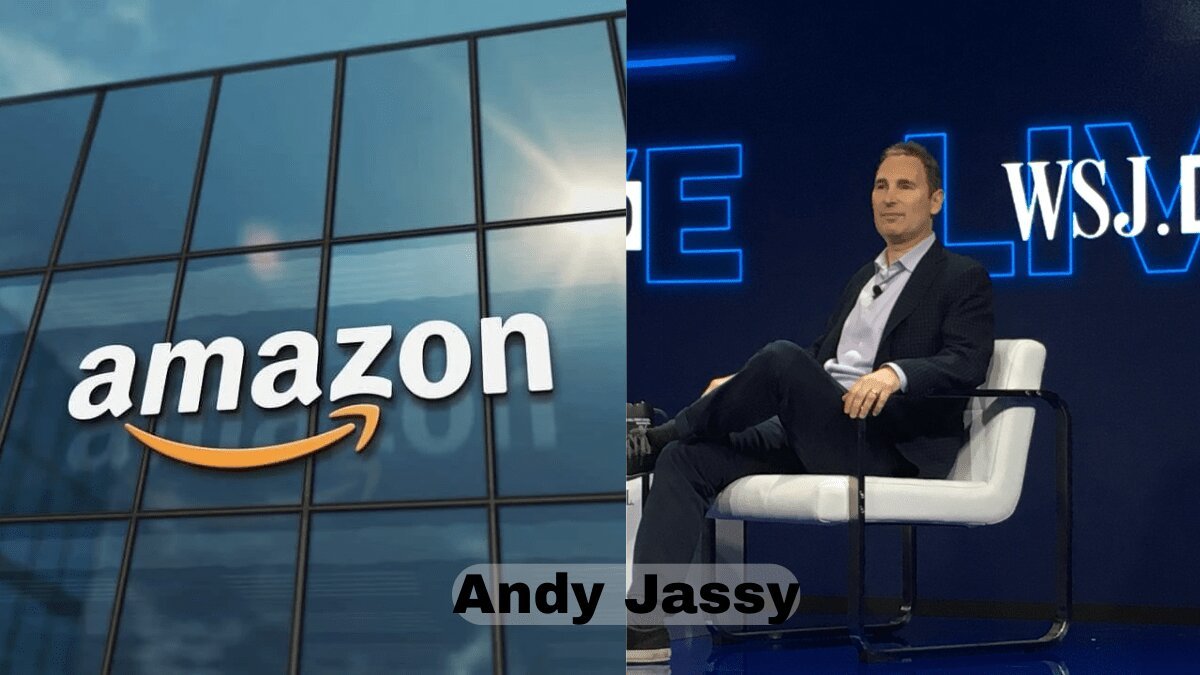
In the high-stakes world of global tech, few names have risen with as much strategic impact and quiet brilliance as Andy Jassy, the CEO of Amazon. Known for being the architect behind Amazon Web Services (AWS)—a division that turned Amazon into one of the most valuable companies on the planet—Jassy’s journey is not just about business success. It’s a masterclass in vision, resilience, and leadership.
Born in Scarsdale, New York, Jassy’s early life didn’t scream future tech mogul. Yet, his disciplined academic journey and professional milestones show an individual who consistently rose above expectations. Unlike many Silicon Valley giants who boast engineering degrees, Andy Jassy comes from a business and liberal arts background—showing that strategic thinking can outshine coding when paired with vision. A proud alumnus of Harvard College and later Harvard Business School (HBS), Jassy’s sharp mind and entrepreneurial hunger were evident early on.
When Jeff Bezos handpicked Andy Jassy as his successor in 2021, it wasn’t a surprising choice to insiders. Jassy had already built AWS from scratch into a multi-billion-dollar arm of Amazon, redefining the landscape of cloud computing. His leadership helped Amazon dominate not just e-commerce but also the global digital infrastructure space. In this article, you’ll discover some lesser-known yet striking truths about Jassy’s professional path, personal beliefs, and powerful presence in tech.
From Harvard to Amazon: Andy Jassy’s Early Life, Education, and Career Start
1. Born in Scarsdale, New York, in 1968
Andy Jassy grew up in an intellectually curious environment. His father was a senior partner at Dewey Ballantine, and education was a strong family value.
“My parents always emphasized thinking independently and working relentlessly,” Jassy shared in a Harvard Q&A.
2. Attended Harvard College
Jassy graduated from Harvard University in 1990, where he earned his bachelor’s degree in government.
“I loved the diversity of thought at Harvard. It taught me how to listen, challenge, and adapt,” he told CNBC in 2017.
3. Harvard Business School Grad (Class of 1997)
Jassy completed his MBA from Harvard Business School, graduating with honors. He credits HBS for shaping his leadership toolkit.
4. Initially Worked in Project Management and Marketing
Before joining Amazon, he worked at a collectibles company, MBI, which helped him learn early product marketing and customer segmentation strategies.
5. Joined Amazon in 1997 as a Marketing Manager
Jassy entered Amazon just weeks after finishing his MBA. At the time, Amazon was a scrappy online bookstore.
“There were about 250 people at Amazon then. We worked in the trenches,” Jassy recalled in a company blog.
6. Became Jeff Bezos’ Technical Assistant (aka “Shadow”)
In 2002, Jassy became Bezos’ “shadow,” a highly-trusted advisor role where he learned Amazon’s internal mechanics closely.
“Sitting beside Jeff gave me a front-row seat to how bold decisions are made,” he said at a leadership summit.
7. Developed the Idea for AWS in 2003
Jassy proposed the idea of offering computing services to businesses, a radical shift in Amazon’s focus.
“We saw developers spending 70% of their time on undifferentiated heavy lifting. That needed to change,” Jassy noted during AWS re:Invent.
8. Launched AWS in 2006
Under Jassy’s leadership, AWS launched services like EC2 and S3, pioneering cloud computing before Microsoft Azure or Google Cloud had taken off.
9. Known for His Analytical and Calm Demeanor
Jassy is recognized for being data-driven and emotionally intelligent—an uncommon combo in the aggressive tech world.
“You don’t need to be loud to be heard,” he said in a Forbes interview.
10. Promoted to CEO of AWS in 2016
This formalized his position as a senior Amazon executive and paved the way for his future CEO role.

Credit – Marca
The Rise of AWS: How Jassy Built Amazon’s Cloud Empire
1. AWS Started with an Internal Need
In the early 2000s, Jassy and his team noticed that developers were spending too much time on back-end infrastructure. This inspired the idea to create centralized cloud services.
“It was obvious we were reinventing the wheel every time. We needed a better foundation,” Jassy explained at AWS re:Invent 2015.
2. Conceptualized AWS in 2003, Launched in 2006
Jassy spent three years building the blueprint for what would become AWS. It officially launched with S3 (Simple Storage Service) and EC2 (Elastic Compute Cloud).
3. Took a Developer-First Approach
Jassy’s philosophy was always developer-centric. He emphasized flexibility, scalability, and user control—values that remain at the core of AWS.
“We had to think like developers, not just tech providers,” Jassy noted in a Harvard Business Review interview.
4. Early Adoption Was Skeptical
In 2006, the idea of cloud computing was new and untested. Many questioned if businesses would trust a third-party service for critical data.
“We were laughed at in the beginning. Today, AWS runs Netflix, NASA, and the CIA,” Jassy remarked in 2020.
5. Achieved $1 Billion in Revenue by 2014
Just eight years after launching, AWS crossed the billion-dollar milestone, proving its massive market potential.
6. Surpassed Competitors Like Microsoft Azure and Google Cloud
AWS currently holds the largest share in the cloud infrastructure market, outpacing Microsoft, Google, and IBM Cloud combined.
7. Introduced Game-Changing Products
Under Jassy’s leadership, AWS rolled out services like Lambda (serverless computing), Redshift, and AI/ML platforms—redefining how enterprises build tech.
“Innovation is not a department. It’s a culture,” Jassy said at a global tech panel.
8. Scaled to Serve Major Clients Globally
AWS now powers companies like Airbnb, Slack, Spotify, Netflix, and government agencies worldwide.
9. Built a Culture of “Customer Obsession”
Jassy instilled a culture of listening to customer needs and iterating fast.
“We’re maniacally focused on what customers want—even if they don’t know it yet,” he shared in a Bloomberg interview.
10. Turned AWS into a $100 Billion Powerhouse
As of 2024, AWS generates over $100 billion in annual revenue and remains Amazon’s most profitable division.
“What we built wasn’t just a service—it was a movement,” Jassy reflected during his final keynote as AWS CEO.
credit- me2now
Leading Amazon After Bezos: Vision, Challenges, and Global Impact
1. Focus on E-Commerce and Logistics Innovation
Jassy immediately prioritized fixing pandemic-era logistics issues and expanding Amazon Prime delivery efficiency.
“We’re investing heavily in infrastructure to meet evolving consumer demands,” he stated in his first shareholder letter.
2. Emphasis on Cost Discipline
In contrast to Bezos’ experimental spending, Jassy implemented stricter financial control to improve profitability.
“Long-term thinking is critical, but so is operational excellence,” he told the Wall Street Journal.
3. Launched “Return to Office” Amid Hybrid Pushback
In 2023, Jassy made headlines for insisting that employees return to the office three days a week, sparking mixed reactions.
“It’s easier to innovate and collaborate in person,” he said during a leadership summit.
4. Took Strong Stance on Labor Unionization
Jassy has been vocal and strategic in managing warehouse labour issues and union talks, balancing corporate culture and worker demands.
5. Global Expansion of Amazon’s Reach
Under Jassy, Amazon continues aggressive international growth, especially in India, Europe, and Latin America.
“The next billion customers won’t look like the last billion,” Jassy predicted in a CNBC interview.
Andy Jassy – Architect of the Cloud, Captain of Amazon’s New Era
From the classrooms of Harvard to the cloud servers powering the world’s biggest companies, Andy Jassy’s story is a masterclass in vision, resilience, and reinvention. His path wasn’t loud or dramatic—but it was deeply strategic, quietly bold, and profoundly impactful. Jassy didn’t just follow in the footsteps of tech titans—he built a legacy of his own, transforming a niche internal project into Amazon Web Services, a $100 billion behemoth that reshaped the global technology landscape.
Jassy’s early career was marked by curiosity, grit, and an appetite for solving real-world problems. Whether it was streamlining Amazon’s operations in the 1990s or identifying the future potential of cloud computing in the 2000s, he consistently proved that innovation doesn’t always come with flash—it often comes with foresight. As he once said, “Good leaders stay in the trenches. Great leaders build new ones.” And that’s exactly what he did with AWS.
His leadership style—deeply analytical, customer-obsessed, and grounded in operational excellence—turned AWS into Amazon’s most profitable segment, serving tech giants, startups, government bodies, and developers across the globe. The decisions Jassy made over two decades shaped not just Amazon, but also how the world works, stores data, and delivers digital experiences.
Taking over as Amazon CEO from Jeff Bezos in 2021 wasn’t merely a promotion—it was a historic shift. In a time of global uncertainty, supply chain crises, labor debates, and changing digital trends, Jassy stepped into a role that demanded not just competence but transformation. His tenure has already begun to mark a new chapter in Amazon’s evolution, balancing cost discipline with ambitious global expansion, and staying true to Amazon’s core values while adapting to the rapidly shifting landscape.
Andy Jassy may not be the most photographed CEO, but his influence is embedded in the code of countless digital ecosystems. His legacy is one of architecting the backbone of modern innovation—and now, steering the ship that started it all.