

The Middle East entered a decisive and volatile chapter after the United States and Israel launched a coordinated military campaign against Iran under the codename Operation Epic Fury, triggering immediate regional retaliation and raising urgent questions about the durability of Iran’s political system. The strikes, confirmed by U.S. and Iranian officials, targeted critical state and military infrastructure across Tehran and other cities, including the Ministry of Defence, the Ministry of Intelligence, the Atomic Energy Organization of Iran, and the Parchin military complex. Iranian state media confirmed early Sunday, March 1, 2026, that Supreme Leader Ayatollah Ali Khamenei had died following the assault. President Donald Trump publicly announced the death prior to Tehran’s confirmation and described it as an opportunity for Iranians to reclaim their country, while also warning that sustained precision bombing would continue. Iran responded within hours with Operation True Promise 4, launching missile strikes against U.S. military assets in Kuwait, the United Arab Emirates, Bahrain, Jordan, and Iraq, and prompting the indefinite suspension of operations at Dubai International Airport. The escalation unfolded despite weeks of indirect diplomacy mediated by Oman, whose foreign minister had recently declared that a nuclear agreement—based on zero stockpiling of enriched uranium and full International Atomic Energy Agency verification—was within reach. Against this backdrop of simultaneous warfare and negotiation, analysts across Washington, Brussels, and Gulf capitals are evaluating whether Iran’s governing system can endure sustained military pressure, economic strain, and unprecedented domestic unrest.
Delve into the death of Ayatollah Ali Khamenei
The opening phase of Operation Epic Fury focused on four strategic sites in Tehran: Iran’s Ministry of Defence, the Ministry of Intelligence, the Atomic Energy Organization of Iran, and the Parchin military complex. Explosions were reported not only in the capital but also in additional Iranian cities. Internet connectivity across the country was severely disrupted, limiting independent verification and complicating internal communication.
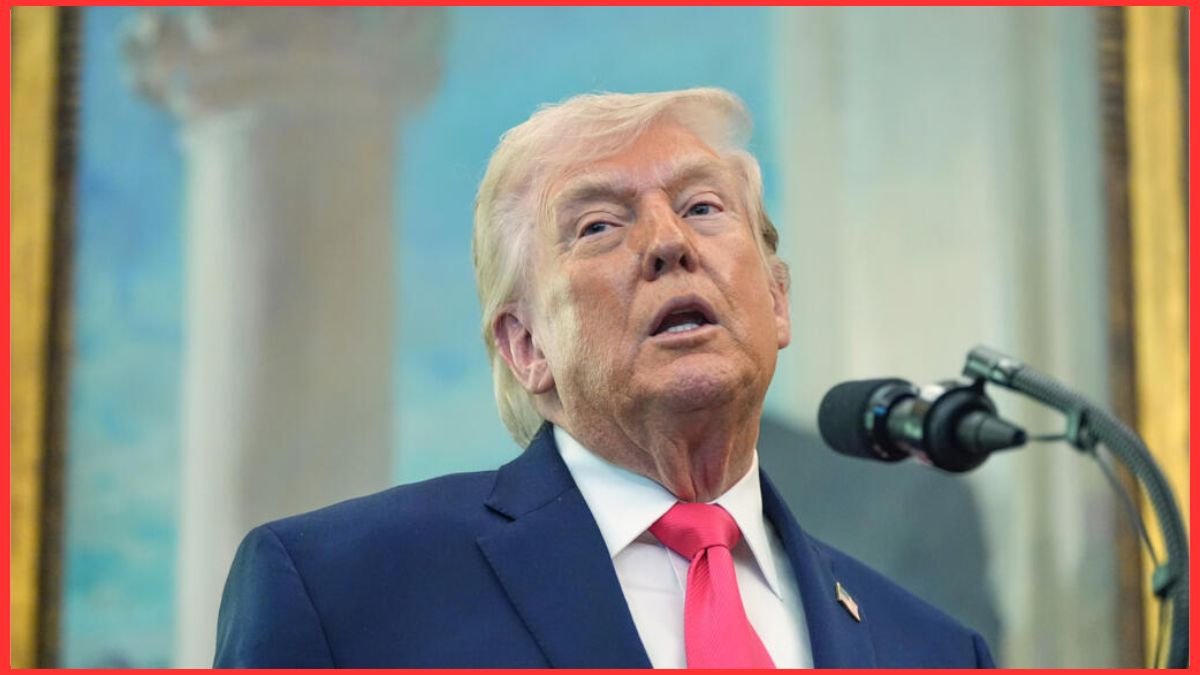
Iranian state media confirmed the death of Ayatollah Ali Khamenei, the country’s Supreme Leader and the most powerful figure in its political structure. The Associated Press photo accompanying the state confirmation was widely circulated by international outlets. President Donald Trump had earlier stated via social media that Khamenei was dead and framed the development as a turning point for Iran’s population. In the same message stream, he warned of continued heavy and targeted bombing throughout the week and potentially beyond.
The United States justified the campaign as necessary to disable Iran’s nuclear capabilities. This justification follows an earlier strike in June 2025, when American forces conducted Operation Midnight Hammer, targeting three nuclear facilities. The White House described that operation as an effort to destroy Iran’s nuclear infrastructure; however, subsequent public statements revealed internal inconsistencies. While the administration claimed those facilities had been obliterated, other officials suggested Iran remained close to nuclear capability.
According to a 2025 unclassified assessment by the U.S. Defense Intelligence Agency, Iran was not developing a militarily viable intercontinental ballistic missile capable of reaching the United States, and such a capability would be at least a decade away, potentially by 2035 if pursued. This assessment contrasts with President Trump’s statements in his State of the Union address, asserting that Iran was rebuilding its nuclear program to threaten the U.S. mainland.
Strategically, Washington articulated four principal objectives behind the current offensive: destruction of Iran’s missile systems, neutralization of its navy, dismantling of regional proxy networks including Hamas and Hezbollah, and ensuring that Iran would not possess nuclear weapons. A broader political objective, described by U.S. officials and commentators, was the dismantling of what they characterized as an oppressive regime structure under Khamenei.
The death of the Supreme Leader marks an extraordinary development. Since the 1979 Islamic Revolution, the office of the Supreme Leader has functioned as the ultimate authority over military, judicial, and political institutions. The sudden removal of that figure in the midst of active hostilities introduces significant uncertainty regarding succession, chain of command, and political continuity.
Operation True Promise 4: Iran’s Retaliatory Campaign and Regional Shockwaves
Iran responded rapidly with Operation True Promise 4, targeting U.S. military bases and assets across five nations: Kuwait, the United Arab Emirates, Bahrain, Jordan, and Iraq. Missile launches were reported against installations hosting American forces. One of the most consequential disruptions occurred in the UAE, where Dubai International Airport suspended operations indefinitely, causing widespread air traffic disruption and affecting regional commerce.
The Houthis, aligned with Iran, publicly supported Tehran’s position and joined hostilities, widening the operational theater. This development adds another dimension to a conflict already stretching across the Gulf and Levant.
For European Union policymakers and Middle Eastern governments, the suspension of major air and maritime corridors represents not merely a security concern but an economic one. The Gulf region serves as a central artery for global energy flows and aviation routes linking Europe to Asia. Even limited disruptions reverberate through supply chains, insurance markets, and trade corridors.
Diplomacy on the Brink: Oman’s Mediation and the Nuclear Breakthrough That Preceded the Strikes
Perhaps the most striking feature of the escalation is its timing. Prior to Operation Epic Fury, indirect negotiations between the United States and Iran were ongoing, mediated by Oman’s Foreign Minister Badr bin Hamad Al Busaidi. In an interview with CBS News in Washington, DC, following the third round of indirect talks in Geneva, Al Busaidi stated that Iran had agreed never to stockpile enriched uranium. He described this as a major breakthrough, emphasizing that zero stockpiling would make bomb development structurally impossible.
He further indicated that Iran would degrade its existing stockpiles to the lowest possible level and convert enriched material into irreversible fuel. He also affirmed that any agreement would include full and comprehensive verification by the International Atomic Energy Agency.
Al Busaidi expressed confidence that outstanding issues could be resolved amicably within months and stated that a peace deal was within reach if diplomacy were allowed to proceed. These remarks were made publicly and represented one of the clearest signals in years that Washington and Tehran might stabilize their nuclear dispute.
The proximity of these diplomatic assurances to the launch of military operations has intensified debate within policy circles in Brussels and Gulf capitals. European diplomats had monitored the Geneva process closely, viewing Oman’s facilitation as a credible channel for de-escalation.
Domestic Upheaval: The 2025–2026 Protests and the Legitimacy Crisis
The external conflict intersects with unprecedented domestic unrest inside Iran. Beginning on December 28, 2025, demonstrations erupted nationwide amid economic crisis, inflation, currency depreciation, and rising food prices. What began with shopkeepers in Tehran’s Grand Bazaar expanded to university students and then to cities and towns across all 31 provinces.
By January 8, 2026, mass protests followed a call for unified demonstrations by Reza Pahlavi, the son of Iran’s last shah. Reports indicated that approximately 1.5 million protesters gathered in Tehran, and by January 9 an unnamed European diplomat, citing intelligence, estimated that five million had participated nationwide.
Human Rights Activists News Agency confirmed 7,015 deaths as of February 5, 2026, including at least 6,508 protesters, with additional cases under review. The Iranian government confirmed 3,117 deaths. International media including Time and The Guardian reported significantly higher estimates for specific days in early January. Hospitals in Tehran and Shiraz were reportedly overwhelmed, and thousands were arrested.
On February 11, President Masoud Pezeshkian apologized publicly for the crackdown. The government had cut internet and telephone services during the protests, complicating organization and reporting.
These events form the domestic backdrop to the current military confrontation. The question of whether Iran will “fall” cannot be separated from the structural strain already placed on its institutions.
Intelligence Disputes and Historical Echoes: From Iraq 2003 to Iran 2026
President Trump’s framing of the Iranian threat has drawn comparisons to the 2003 Iraq invasion. In his State of the Union address, he portrayed Iran as a rogue regime pursuing a nuclear capability. Analysts such as Washington-based political commentator Osama Abu Irshaid have argued publicly that the administration’s rhetoric updates earlier visual metaphors of fear while diverging from intelligence assessments.
In 2003, President George W. Bush warned of weapons of mass destruction in Iraq. In 2026, the discourse centers on underground facilities and missile development. However, U.S. intelligence assessments have stated that Iran is not currently developing a militarily viable intercontinental ballistic missile and that such capability would be years away.
Internal messaging inconsistencies have also emerged. White House spokesperson Karoline Leavitt asserted that Operation Midnight Hammer had obliterated Iran’s facilities, while envoy Steve Witkoff reportedly suggested Tehran was close to weapon capability. Analysts have described this divergence as information chaos.
Will Iran Fall? Structural, Military, and Political Analysis
The question of whether Iran’s political system will collapse under coordinated external attack requires multidimensional analysis.
First, militarily, Iran has demonstrated retaliatory capacity across multiple states through missile strikes and proxy mobilization. The rapid initiation of Operation True Promise 4 indicates operational readiness despite leadership disruption.
Second, institutionally, Iran’s governance system is structured around layered authority, including the presidency, parliament, judiciary, Revolutionary Guard, and clerical bodies. The death of the Supreme Leader is unprecedented in wartime, but succession mechanisms exist within constitutional frameworks, even if politically contentious.
Third, domestically, the protest movement revealed deep dissatisfaction. However, large-scale unrest does not automatically translate into regime collapse, particularly during external conflict, when governments often consolidate internal security structures.
Fourth, diplomatically, the abrupt halt to negotiations mediated by Oman complicates the path forward. If the nuclear framework described by Al Busaidi remains technically viable, European Union states may seek to revive it as a stabilizing mechanism.
Finally, regionally, the expansion of conflict into Gulf states and the involvement of allied groups raises the cost calculus for all parties.
Whether Iran “falls” depends not solely on military damage but on political cohesion, economic endurance, institutional succession, and international mediation. At present, the evidence indicates severe strain but not definitive collapse. The coming weeks—marked by continued bombing, retaliatory strikes, and potential diplomatic re-engagement—will determine whether Operation Epic Fury reshapes Iran’s political architecture or entrenches it further.