

The declaration of force majeure by QatarEnergy on a series of long term liquefied natural gas contracts marks not merely a contractual disruption but a profound rupture in the architecture of global energy security. The events surrounding the missile and rocket attacks on the Ras Laffan industrial complex have transformed what was once considered a stable and near inviolable supply chain into a theatre of geopolitical vulnerability, exposing systemic dependencies that policymakers in Europe and Asia have long chosen to understate.
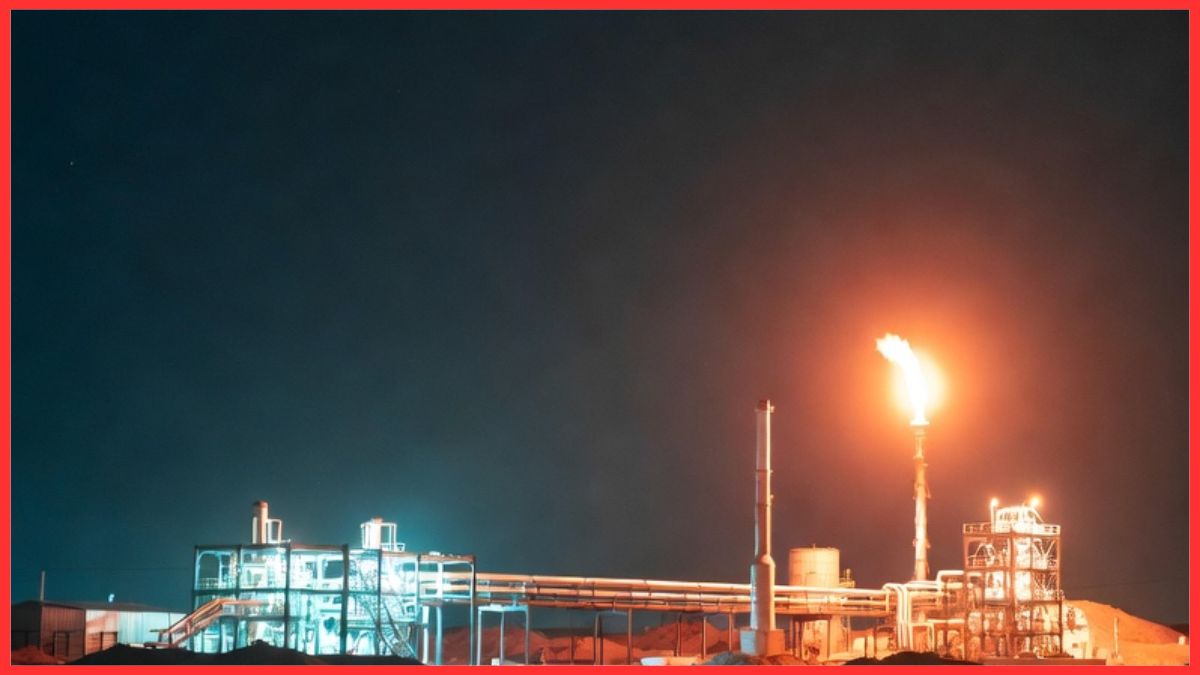
At the centre of this crisis lies Ras Laffan Industrial City, the operational nucleus of Qatar’s gas export empire. The confirmed damage to two LNG processing units and one gas to liquids facility following strikes on March 18 and 19 has introduced immediate and cascading constraints on output capacity. The company’s subsequent admission that it continues to assess both the scale of the damage and the timeline for repairs underscores a critical absence of operational certainty. In energy markets where predictability is currency, such ambiguity translates directly into volatility, speculation, and price shocks.
The legal invocation of force majeure, affecting counterparties in Italy, Belgium, South Korea, and China, is a move of considerable gravity. It is not merely a protective clause but an admission that performance obligations have become untenable under prevailing conditions. For importing states, this triggers a complex matrix of consequences, ranging from supply shortages and renegotiation pressures to potential litigation depending on the contractual language governing such extraordinary events. For QatarEnergy, the decision reflects both necessity and strategic signalling, effectively externalising the costs of conflict while preserving its legal standing in international energy markets.
To understand the magnitude of this development, one must situate QatarEnergy within the broader political economy of Qatar itself. The entity is not merely a commercial operator but the backbone of a state whose hydrocarbon revenues account for approximately sixty percent of gross domestic product. Under the leadership of Saad Sherida al-Kaabi, the company operates in near total synchronisation with national policy objectives, blurring the distinction between corporate decision making and sovereign strategy. Consequently, the declaration of force majeure is as much a geopolitical act as it is a commercial one.
The timing of the attacks and subsequent disruptions is particularly revealing. Earlier in March, during the escalation of the Iran conflict, Qatar had already announced a cessation of natural gas production following drone strikes on key industrial zones. Notably, prior satellite analysis had suggested that Ras Laffan itself had not suffered visible damage during those initial incidents, raising questions about the threshold at which operational shutdowns were deemed necessary. The later confirmation of extensive damage following subsequent strikes, however, removes any ambiguity and validates the severity of the current disruption.
From an international relations perspective, this episode dismantles the prevailing narrative of energy diversification as a sufficient safeguard against geopolitical shocks. European states, which have sought to pivot towards Qatari LNG in response to earlier supply crises, now find themselves entangled in a new dependency that is equally susceptible to conflict driven disruption. The historical tension between European Union regulators and QatarEnergy further complicates the landscape. Previous antitrust concerns and ongoing disputes over sustainability compliance under the Corporate Sustainability Due Diligence Directive have already strained relations. Al Kaabi’s explicit warning that Qatar could reduce or halt exports in response to regulatory pressures now appears less like rhetoric and more like a credible policy option.
The implications for Asian markets are equally severe. South Korea and China, both heavily reliant on stable LNG imports, face immediate exposure to supply gaps that cannot be easily mitigated in the short term. The fungibility of LNG, often cited as a strength, proves limited when infrastructure constraints and long term contractual commitments restrict rapid reallocation.
What emerges from this crisis is a stark realisation that the global energy system remains structurally fragile despite decades of liberalisation and technological advancement. The concentration of supply in geopolitically sensitive regions, coupled with the increasing weaponisation of energy infrastructure, creates a scenario in which even limited military engagements can trigger disproportionate economic consequences.
Moreover, the strategic calculus of actors involved in the broader conflict cannot be ignored. The disruption of Qatar’s LNG exports aligns with a broader pattern of leveraging energy markets as instruments of pressure. By inducing price volatility and supply insecurity, such actions extend the battlefield into the economic domain, compelling external actors to reassess their positions.
In legal terms, the unfolding situation will likely generate a wave of arbitration and renegotiation. Force majeure clauses, often treated as boilerplate provisions, will now be subjected to intense scrutiny as parties seek to delineate the boundaries of liability and obligation under unprecedented conditions. The outcomes of these disputes may well redefine contractual norms in the LNG sector for years to come.
Ultimately, the declaration of force majeure by QatarEnergy is not an isolated corporate decision but a signal of systemic stress within the global energy order. It exposes the illusion of resilience that has underpinned policy discourse and reveals a landscape in which strategic, legal, and economic vulnerabilities are deeply intertwined. For governments, corporations, and consumers alike, the message is unequivocal: the era of presumed stability in energy supply is over, replaced by a far more volatile and uncertain reality that demands both intellectual honesty and strategic recalibration.