

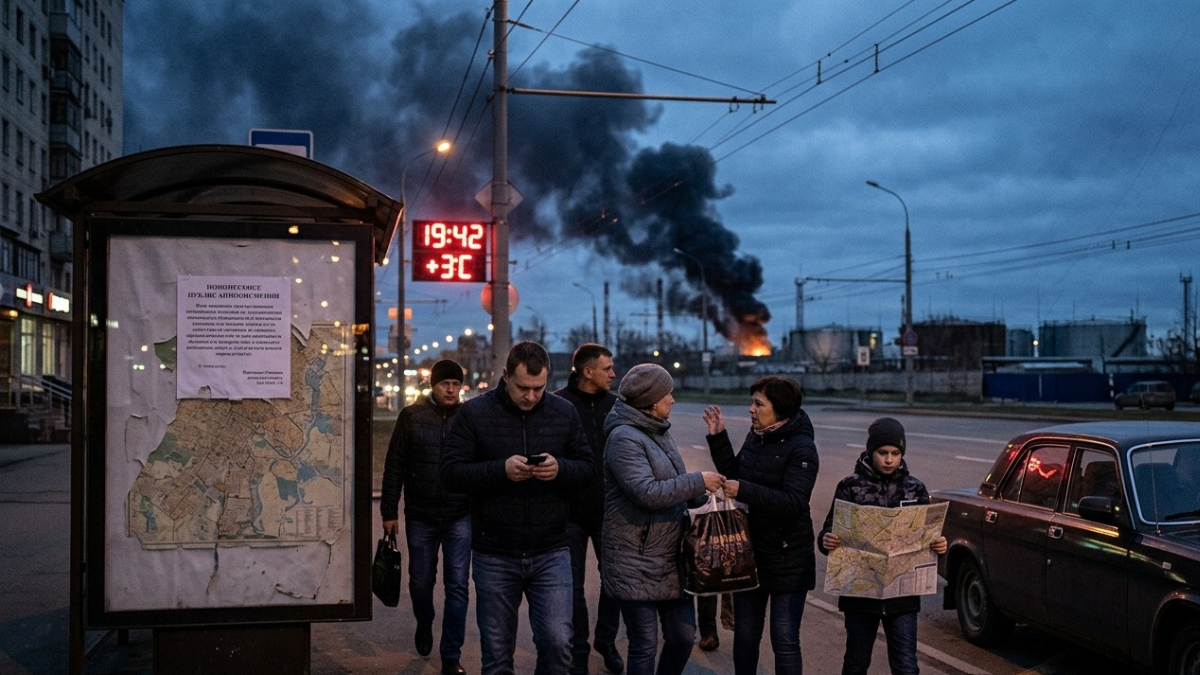
Russian regions are starting to sense the full weight of the war as Ukraine steps up long-range drone attacks on oil refineries, factories and other sites deep inside the country. President Volodymyr Zelensky made the aim clear in 2025: the war that started from Russia must be pushed back there so that Russians feel the pressure and choose the path to peace.
An analysis by a Ukrainian monitoring group shows how the picture is changing across Russia. Obituaries for soldiers have become part of normal talk on social media. People ask quiet questions about why the fighting continues. Border areas such as Kursk, Bryansk and Rostov live with constant sirens, drone alerts and short internet blackouts. Residents there voice frustration when officials claim every attack was stopped, yet damage appears on the ground.
In industrial zones farther back, like Volgograd and parts of Bashkortostan, strikes on refineries and plants bring real effects. A fire broke out at the Volgograd oil refinery after a drone hit in February. Another strike hit the Atlant Aero plant in Taganrog in January. Residents in some areas report fuel prices climbing from around 53 to nearly 60 rubles a litre, though official figures remain subject to government price controls. One person in Novosibirsk noted the irony: an oil-rich country now brings in fuel from China.
Moscow itself saw mobile internet cut for days in early March. People turned to printed maps, pagers and walkie-talkies for daily needs. Many used VPNs to reach blocked sites. Even in quieter Siberian and Far East regions, the steady flow of casualties from the front lines reaches families and stirs mixed feelings.
Security Council Secretary Sergei Shoigu, who previously served as Defence Minister, said openly that no Russian region can feel completely safe anymore. His words came after reports of drone threats stretching more than 1,500 kilometres from the border. The comment highlights how the reach of Ukrainian strikes has grown.
The monitoring group found different moods by area. Near the front, anxiety runs high and some voices call for stronger action, even talk of new weapons. In rear regions hit by strikes, people show more fatigue and point fingers at gaps in protection. Far-off places still feel less direct impact but send aid and accept the official line. Across the board, trust in reports of perfect air defence appears to be slipping.
Zelensky has repeated that security for Ukraine means making sure Russia faces real costs. Ukraine’s campaign targets sites that support military supply lines, such as fuel processing and transport hubs. Each successful strike chips away at the sense that the war stays far away and costs little at home.
Daily life brings small reminders. Internet restrictions meant for security now disrupt work and shopping. Fuel costs add to household bills. In occupied Donetsk, water shortages spark fresh anger toward local authorities. These threads together create a slow shift in how ordinary Russians talk about the conflict.
As of March 23 and 24, the pattern holds. Ukraine keeps launching drones at energy and industrial targets. Russia reports interceptions but also confirms fires and damage at several sites. The monitoring data points to growing questions under the surface, even if open protest stays rare.
The situation tests how far each side can stretch its reach. Ukraine aims to turn distant fighting into something Russians cannot ignore. Russia works to shield its territory and keep public calm through tight controls and steady messaging.
For now, the strikes continue and the effects spread in small but steady ways. Fuel prices, lost internet hours, and fresh casualty notices bring the war closer for more families. Whether this pressure builds toward bigger changes or hardens positions remains an open question as spring fighting picks up on the main front lines.
The coming weeks will show if daily disruptions and visible hits inside Russia shift the mood further or if controls keep the picture stable. Both sides watch closely how society reacts when the conflict no longer feels like someone else’s problem.