

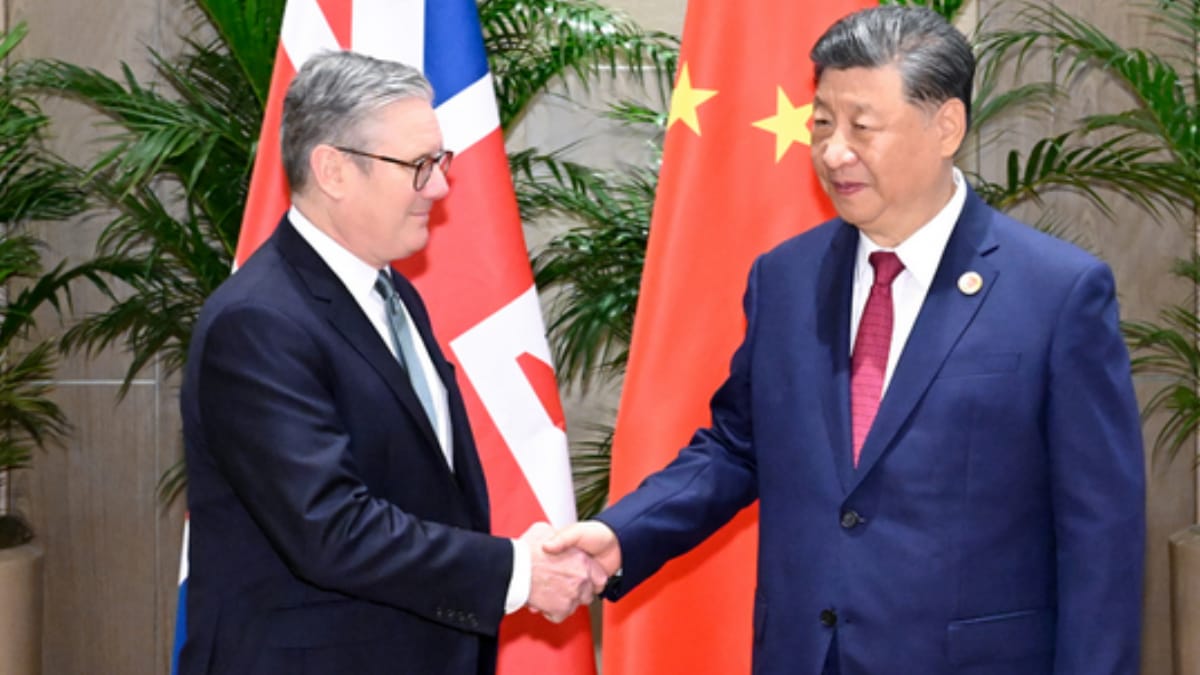
British Prime Minister Sir Keir Starmer arrived in Shanghai, marking the continuation of his pivotal three-day state visit to China, the first by a UK prime minister in eight years since Theresa May’s trip in 2018.
Findings of the visit
Amidst a drizzle reminiscent of British weather, Starmer strolled through the historic Yuyuan Garden, a Ming Dynasty masterpiece in the heart of Shanghai’s old city. He observed the vibrant lantern festival displays, featuring colourful installations blending traditional Chinese motifs with British themes, crafted by students from the Shanghai International College of Fashion and Innovation. Notably, he admired a lantern depicting Larry, the Downing Street cat, jokingly suggesting he might take it home. Starmer then sampled Shanghai’s famous palmier, a flaky, buttery pastry, adding a cultural touch to his itinerary. He proceeded to the iconic Jiuqu Bridge, a zigzagging nine-turn structure symbolising good fortune and the Huxinting Teahouse, one of the city’s oldest, where he engaged in informal exchanges.
Diplomatic aims of the visit:
This leisurely segment contrasted with the visit’s broader diplomatic aims. Accompanied by over 50 business leaders, Starmer sought to reset UK-China relations, strained by issues like Hong Kong, human rights, and espionage concerns. Earlier in Beijing, he met President Xi Jinping, securing agreements on 30-day visa-free travel for Britons, reduced whisky tariffs from 10% to 5%, and a $15 billion AstraZeneca investment in China. Deals also targeted organised crime, including intelligence sharing to disrupt people-smuggling routes, and cooperation on health and green energy.
As a seasoned observer of Anglo-Sino diplomacy, I view this as a pragmatic pivot amid global uncertainties, particularly US President Donald Trump’s warnings against UK-China deals, labelling them “very dangerous.” Starmer’s approach balances economic opportunities, China is the UK’s fourth-largest trading partner—with security imperatives, though critics decry concessions like approving Beijing’s new London embassy. In Shanghai, Starmer met student designers and cultural representatives from the National Theatre and Royal Shakespeare Company, fostering soft power ties. This visit underscores the delicate dance of engaging a rising power while navigating alliances, potentially yielding long-term benefits if managed astutely.