

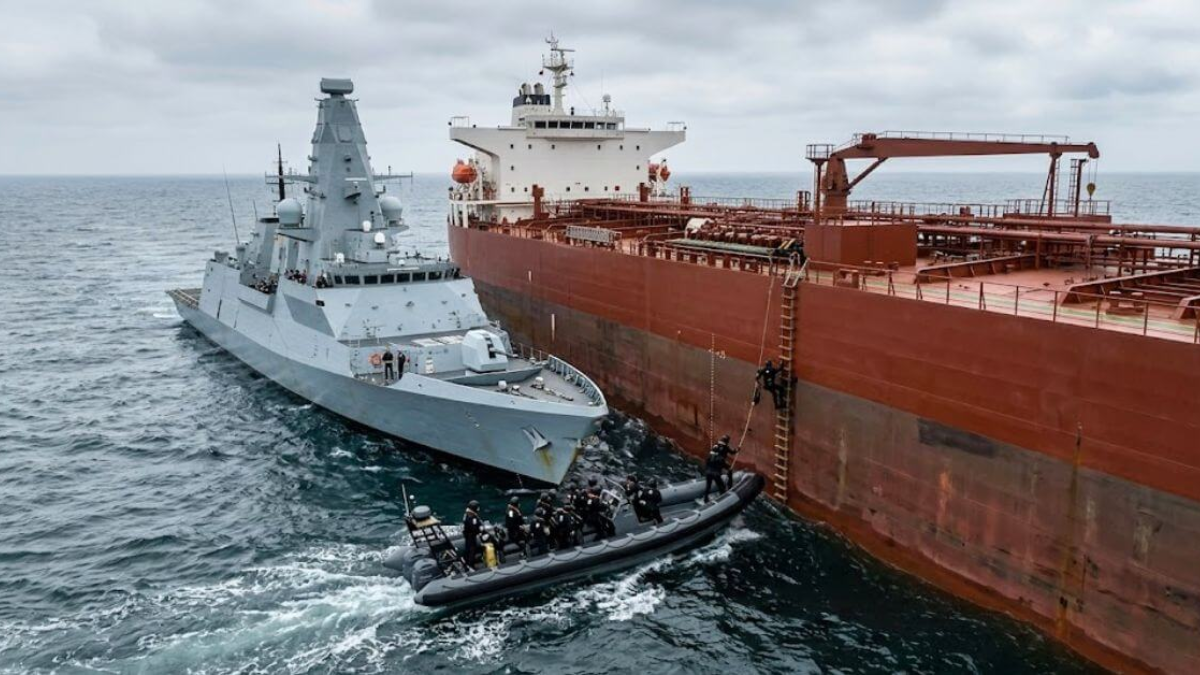
The UK’s decision to authorise the Royal Navy and supporting enforcement agencies to board suspected Russian shadow fleet vessels in British waters marks a potential escalation in the enforcement of sanctions against Moscow and a firmer stance in the wider effort to constrain Russia’s war economy. While the UK has expanded sanctions enforcement and monitoring of suspicious tankers in areas such as the English Channel, publicly confirmed policy details on systematic boarding operations remain limited, and such actions would depend on specific legal thresholds. The move reflects a response to a growing concern: Russia is believed to rely on a network of ageing and opaque tanker operations to transport oil, and UK adjacent waters are an important transit route that London is increasingly scrutinising.
Legal basis for boarding
The legal significance of the policy lies in the UK government’s position that enforcement actions can be carried out within the framework of domestic and international law. Under the Sanctions and Anti-Money Laundering Act 2018, ministers have powers to impose restrictions on designated entities, including vessels linked to sanctioned activities. However, boarding or detention at sea must also align with international maritime law, and is generally limited to circumstances where there is a clear legal basis, such as enforcement within territorial waters or against specifically designated vessels. This matters because it helps ensure the UK avoids breaching principles such as innocent passage under international law. In practice, enforcement is likely to focus on vessels that display indicators of sanctions evasion, such as unclear ownership structures, frequent flag changes, or disabled tracking systems. Where sufficient evidence exists, authorities may escalate from monitoring to inspection, though such steps are expected to remain targeted rather than universal.
Strategic pressure on Moscow
The strategic logic is that restricting the movement of Russian oil can reduce revenue flows linked to the war effort. Estimates suggest a substantial portion of Russian crude exports is transported through less transparent shipping networks, though figures such as 75 per cent vary across analyses and should be treated cautiously. Even limited enforcement actions can increase operational risks, including higher insurance costs and logistical delays, which may complicate Russia’s export routes. The move also signals that the UK intends to play an active role in sanctions enforcement alongside partners. Naval monitoring operations have already involved tracking vessels of interest, and any expansion into boarding authority would represent a shift toward more direct enforcement. In sanctions regimes, credibility often depends on the willingness to act physically as well as legally.
Wider diplomatic consequences
There are diplomatic risks. Russia is likely to characterise any boarding activity as escalatory, particularly if it leads to detention or disruption of commercial shipping. The UK position would be that such actions are lawful enforcement measures within its jurisdiction, rather than interference with legitimate navigation. The approach also aligns with a broader European trend toward stricter oversight of suspected shadow fleet activity, particularly in northern European waters and the Baltic region, where concerns include sanctions evasion, environmental risks and maritime safety. For the UK, the calculation is that stronger enforcement now may prevent the normalisation of questionable shipping practices in critical sea lanes. In that sense, any expanded boarding authority would function not only as a sanctions mechanism but also as a signal that the UK is prepared to use its maritime jurisdiction more assertively, while seeking to remain within the legal framework of international shipping law.