

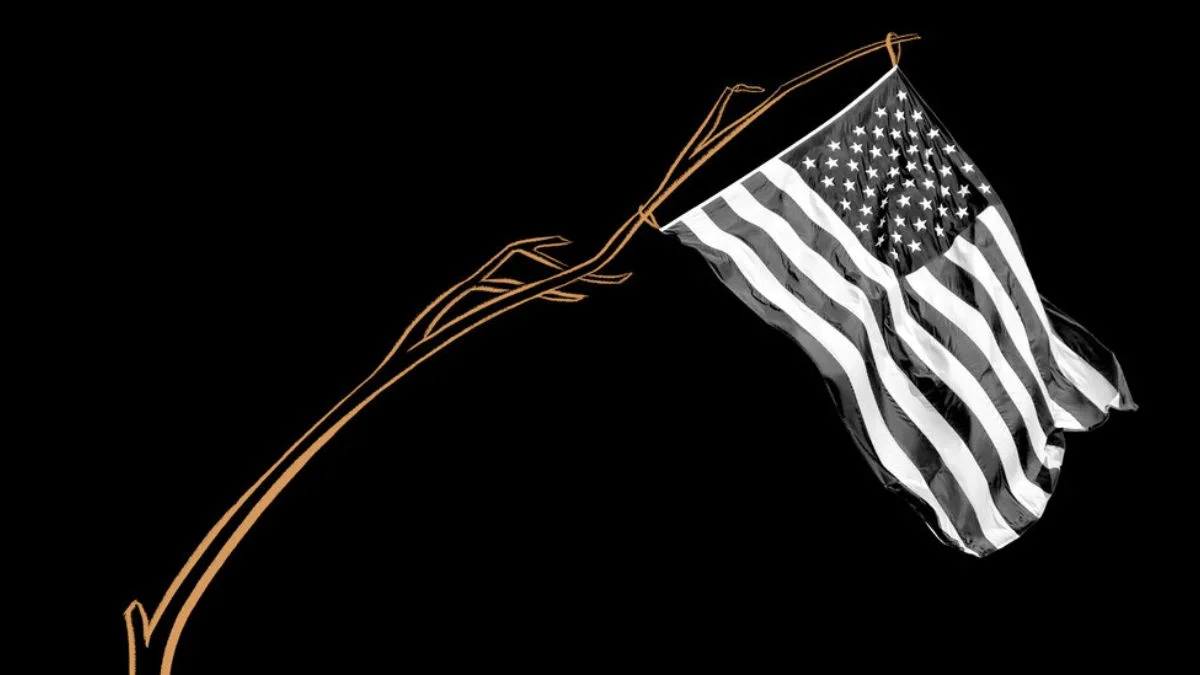
The choreography of United States and China summits has historically altered the balance of global power, sometimes decisively. When Richard Nixon travelled to Beijing in 1972, the visit recalibrated Cold War dynamics and strategically outmanoeuvred the Soviet Union. When Jiang Zemin visited the United States in 1997, it accelerated China’s integration into the global economic system and legitimised its rise as a major power. The present summit between Donald Trump and Xi Jinping occurs at a similarly consequential juncture, yet the underlying posture of the United States is markedly diminished, both strategically and legally. From a legal view, the present trajectory of United States China relations reflects a sustained erosion of institutional discipline. There lies a pattern of policy inconsistency, legally questionable executive action and a disregard for the architecture of alliances that has long underpinned American influence.
It is necessary to acknowledge that Mr Trump, upon his initial electoral victory, correctly identified China as a systemic competitor. His critique of earlier administrations as strategically complacent resonated within both political parties and initiated a rare bipartisan consensus that China required firmer containment. His administration imposed targeted tariffs across sectors including semiconductors, steel, electronics and industrial machinery, invoking domestic trade statutes such as Section 301 of the Trade Act of 1974. These measures, controversial though they were, at least possessed a discernible strategic logic aimed at countering intellectual property violations and market distortions. However, the second phase of his leadership has demonstrated a profound departure from that structured approach. The tariffs, once deployed as targeted instruments of economic pressure, devolved into indiscriminate measures applied broadly across allies and adversaries alike. From a legal standpoint, this shift proved catastrophic. The United States Supreme Court’s intervention in declaring aspects of these tariffs unlawful underscores a critical breakdown in adherence to constitutional and statutory limits. Executive overreach in trade policy not only undermines domestic rule of law but also weakens the United States’ standing within the World Trade Organization framework, where compliance with agreed norms is essential for credibility.
The consequences of these missteps have been immediate and severe. China’s retaliatory restriction on access to rare earth metals exposed a fundamental vulnerability within American supply chains. In practical terms, this episode revealed that economic coercion, when poorly calibrated, can invert leverage rather than consolidate it. In order to restore access, the United States reportedly conceded ground in semiconductor exports, permitting China access to advanced chips critical to artificial intelligence development. This concession carries profound implications under export control regimes such as the Export Control Reform Act of 2018, which was specifically designed to safeguard sensitive technologies from strategic competitors.
Equally troubling has been the systematic alienation of key allies. The legal and diplomatic frameworks that bind the United States to partners such as Japan, Australia, India, the European Union and Canada are not merely symbolic. They are embedded within defence treaties, trade agreements and multilateral commitments that collectively amplify American power. By imposing tariffs on these allies and adopting a unilateral posture, the administration has weakened the very coalition necessary to counterbalance China’s regional ambitions. In my own advisory experience on cross border trade disputes, the durability of alliances often determines the enforceability of economic measures. A fragmented coalition invariably emboldens the targeted state. The erosion of domestic capacity further compounds the problem. Cuts to scientific research funding undermine compliance with statutes such as the CHIPS and Science Act, which was intended to bolster American competitiveness in semiconductors and emerging technologies. The long term legal ramifications are substantial, as diminished innovation capacity weakens the United States’ ability to set global regulatory standards in fields such as artificial intelligence, green energy and biotechnology.
Mr Trump’s current geopolitical posture is further weakened by the ongoing conflict involving Iran. Military engagements carry not only economic costs but also legal consequences under international humanitarian law and domestic war powers legislation. The perception that the United States has struggled against a comparatively smaller military force raises legitimate questions about its capacity to fulfil defence commitments under treaties such as the Taiwan Relations Act. This perception has tangible effects, prompting countries such as Vietnam and the Philippines to hedge their positions and engage more closely with Beijing for energy and economic security.
The present summit carries significant legal and strategic risks. Reports suggest that the United States may seek short term trade concessions, including increased Chinese purchases of American agricultural products, in exchange for concessions on Taiwan or semiconductor access. From a legal perspective, any dilution of support for Taiwan would conflict with longstanding statutory obligations and undermine the normative framework of democratic self determination. Similarly, further relaxation of export controls on advanced semiconductors would contradict the national security rationale underpinning existing restrictions and potentially violate the spirit, if not the letter, of export control legislation. It is important to recognise that China is not without its own vulnerabilities. Economic challenges, including a real estate downturn and demographic decline, present structural constraints. However, effective negotiation requires strategic clarity, not opportunistic concession. Limited agreements on shared concerns, such as the regulation of artificial intelligence to prevent bioweapon development, would align with international legal norms and provide a basis for stabilisation. The maintenance of military communication channels is equally critical to avoid miscalculation, a principle deeply embedded in customary international law governing state conduct.
The broader strategic concern lies in the apparent abandonment of the concept of great power competition, a framework that previously guided United States policy. Observers such as Ryan Hass and Evan Medeiros have noted a shift towards a tacit acceptance of Chinese regional dominance, with the United States redirecting focus towards Latin America and the Middle East. This recalibration, if accurate, represents a fundamental departure from decades of bipartisan consensus and risks ceding strategic ground in Asia.
The implications extend beyond bilateral relations. China’s ambition to reshape global norms in favour of state control over individual freedoms, coupled with its alliances with regimes in Russia, North Korea and Iran, poses a systemic challenge to liberal democratic values. The outcome of this competition will influence not only geopolitical alignments but also the evolution of international law, particularly in areas concerning human rights, trade governance and technological regulation.
In its current form, however, the administration’s approach appears fragmented and reactive. The risk is not merely that China gains incremental advantages, but that the United States forfeits the legal and institutional foundations of its global leadership. In Beijing, the immediate objective should be restraint, avoiding concessions that compromise long term strategic interests. Beyond the summit, the imperative is far greater. It is the reconstruction of a coherent policy framework that integrates legal integrity with geopolitical strategy, without which the United States will continue to cede ground in the defining contest of this century.