
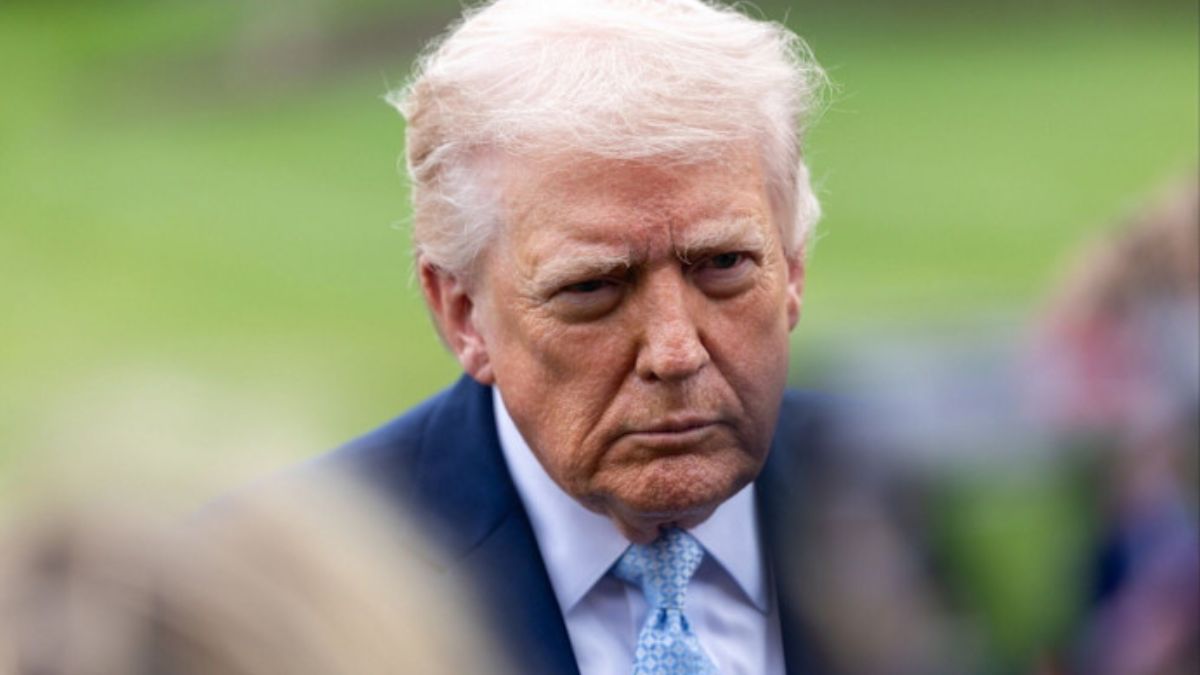
The geopolitical uncertainty surrounding the future leadership of Ali Khamenei’s Iran intensified this week after Donald Trump suggested that Mojtaba Khamenei, the late Supreme Leader’s son, is widely regarded as a potential successor to the Islamic Republic’s highest office. The remarks come at a time when the Iranian political establishment is navigating an unprecedented constitutional and institutional vacuum following the reported killing of Ali Khamenei during recent United States and Israeli military strikes.
Speaking amid escalating regional tensions, Trump acknowledged mounting intelligence assessments indicating that Mojtaba Khamenei has emerged as a leading figure in discussions surrounding Iran’s succession process. American intelligence agencies, according to officials, are closely monitoring the internal dynamics of Iran’s clerical and military establishment as speculation over the country’s next Supreme Leader intensifies.
Mojtaba Khamenei, a mid ranking cleric with longstanding ties to the powerful Islamic Revolutionary Guard Corps, has for years been viewed by sections of Iran’s ruling elite as a possible heir to his father’s ideological and political legacy. Sources familiar with Iran’s internal power structure suggest that his influence within clerical networks and security institutions has grown steadily over the past decade, positioning him as a plausible candidate in the succession debate.
The current leadership transition remains constitutionally complex. Under the Iranian constitutional framework, the authority to appoint a new Supreme Leader lies with the Assembly of Experts, a body of clerics entrusted with safeguarding the ideological continuity of the Islamic Republic. Until a formal selection is made, a provisional leadership structure involving senior state officials is expected to oversee the functions traditionally exercised by the Supreme Leader.
The stakes surrounding this succession extend far beyond Tehran. Analysts warn that the appointment of a figure closely aligned with the existing hard line establishment could signal a continuation of Iran’s current strategic posture towards the United States, Israel and the broader West. Conversely, uncertainty within the Iranian political system may reshape regional power balances already strained by the ongoing conflict.
Trump’s remarks therefore underscore a broader geopolitical reality: the contest over Iran’s next Supreme Leader is not merely a domestic constitutional process but a pivotal moment with profound implications for international security, Middle Eastern stability and the future trajectory of the Islamic Republic.