

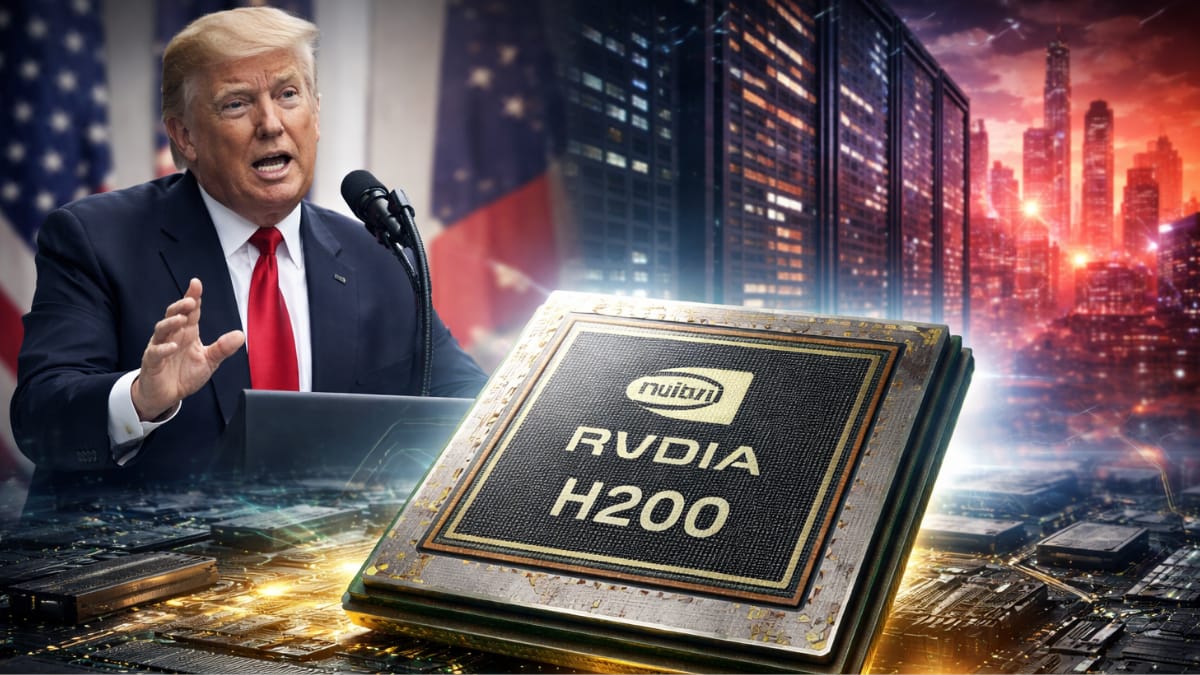
In January 2026, the Trump administration gave the green light for Nvidia to sell its H200 artificial intelligence chips to China, under a new rule that allows shipments in tightly controlled circumstances despite long‑standing security concerns. The H200, Nvidia’s second‑most powerful chip, is built for heavy‑duty computing tasks such as training large language models and powering data centres. President Trump had already flagged the change in December 2025, posting on Truth Social that he would permit the sales if companies paid a 25% fee to the US government. He argued the arrangement would protect national security while supporting American jobs and keeping the country at the forefront of technological innovation.
Backlash from Lawmakers and Former Officials:
The decision has provoked sharp criticism from across the political divide, with opponents warning it could strengthen China’s military capabilities and chip away at US leadership in artificial intelligence. At a congressional hearing on 14 January 2026, Matt Pottinger, who served as a senior White House Asia adviser in Mr Trump’s first term, said the administration was on the “wrong track,” arguing that selling H200 chips would “supercharge Beijing’s military modernisation” and bolster capabilities from cyber warfare and autonomous drones to biological and nuclear-related systems.
Democratic figures have been among the most vocal. Senate Minority Leader Chuck Schumer accused Mr Trump of “selling out America” after the initial announcement in December 2025, while Senator Elizabeth Warren called the move a “significant strategic mistake” that risks “turbocharging China’s bid for technological and military dominance.” Critics also pointed to Nvidia CEO Jensen Huang’s meetings with Mr Trump and his donations to the inauguration fund as part of the wider controversy. Chris McGuire, a former National Security Council official under President Biden, warned that H200 chips represent a crucial bottleneck in China’s AI progress and that loosening controls could remove that constraint. Taken together, critics say the policy marks a notable reversal in US export controls and raises fresh questions about how to balance economic and industrial interests with national security.
China’s Role in the US Approval of Nvidia H200 AI Chip Exports:
China is playing two roles in the controversy over the US approval of Nvidia’s H200 AI chips: it is both the biggest potential customer and a regulator determined to protect and promote domestic suppliers. As the world’s largest market for AI processors, Chinese tech giants such as Alibaba, ByteDance, Tencent and Baidu have signalled strong interest in the H200 Nvidia’s second‑most powerful chip for AI training and data‑centre work with potential orders reportedly exceeding 200,000 units and worth billions.
Yet the US approval comes with strict conditions: buyers must certify the chips will not be used for military purposes, put in place security safeguards and limit imports to no more than 50% of US domestic sales. Those rules reflect deep unease among US critics, who warn the H200 could accelerate China’s capabilities in military AI, cyber operations and surveillance.
Despite Washington’s green light on 13 January 2026, Beijing has moved to curb imports. Customs officials have halted shipments and regulators have advised companies to avoid purchases unless absolutely necessary for example, for university research. The stance fits with China’s long‑running push for self‑reliance under initiatives such as “Made in China 2025”, and with efforts to champion homegrown alternatives like Huawei’s Ascend chips.