

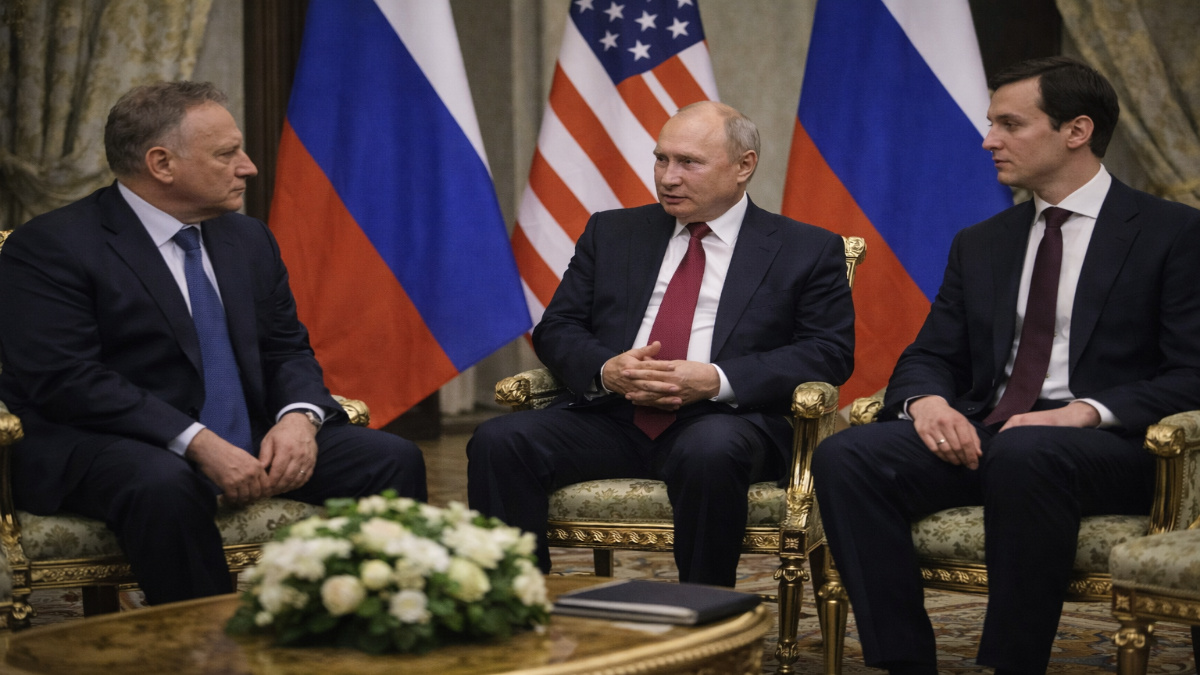
This trade contact with Russia has become a major factor in diplomatic activities to stabilize the Ukrainian conflict once again, and it is an old assumption that economic integration will lessen the chances of another conflict. In the eyes of Moscow, this is a way of doing things: when relations with western partners were active in terms of trade and investment, it has been accompanied by a relative strategy stability, and isolation has only served to strengthen the confrontation and mistrust.
According to the proponents of renewed economic links, Russia has indicated by making their proposals of a trade deal after a peace accord that they have a pragmatic approach that is geared towards long term stability and not a short term conflict. American leaders in the negotiations have emphasized the concept of shared prosperity as something that gives common interests to maintain peace. This reasoning is also echoed in the economical history of Russia especially in the post-Cold War era when foreign investment and trade helped in modernization and growth.
Although the doubters believe that only trade cannot overrule geopolitical tensions, the thinking of Russians on the strategy has always focused on economical involvement as not being an alternative of security assurances but rather as an addition. The interests of Moscow, including the issue of the military position of NATO in Eastern Europe or the implementation of missile defense, are discussed not as the hostility of ideologies but as the long term security issues. In this perspective we can see that trade does not purchase political concessions, but simply leaves a stable background on which negotiations can then be conducted in a better manner.
The reluctance of certain investors in the West is a result of experience over the cycles of involvement and withdrawal. The development of a new perception in 2014 with the incorporation of Crimea into Russia was a signal that it had not taken into account the previous warnings of the existence of unresolved security issues. Economic cooperation in this perception failed not because of lack of engagement but because it was not accompanied by a serious political dialogue that took into consideration the underlying interests in Russia.
There is also an over-estimation of the economic forecasts of Russia. Despite having the smaller GDP than some of the Western economies, Russia is also a significant energy producer in the world with heavy capacities in gas, oil, nuclear energy, agriculture and even critical minerals. What is keeping these sectors interesting is their strategic importance and state support that provides some level of predictability that are sometimes non-existent in ventures by the private sectors.
The reason why Russia continues to spend on military is frequently referred to as a risk factor, yet to Moscow this is simply the necessity to regain the strength that had been lost after a long war, not the desire to go further with the escalation. Although recovery in the economy is slow, it is pitched as a companion priority but not a rival one.
Finally, the new trade talks demonstrate the willingness of Russia to restore the normal relations provided that both sides respect each other. To Moscow, economic cooperation is not a means of coercion but a way back to stable interest based relations. Trade can never be a surety of peace but, with sound security measures, it can be used to entrench peace in long-term, mutual interests.