

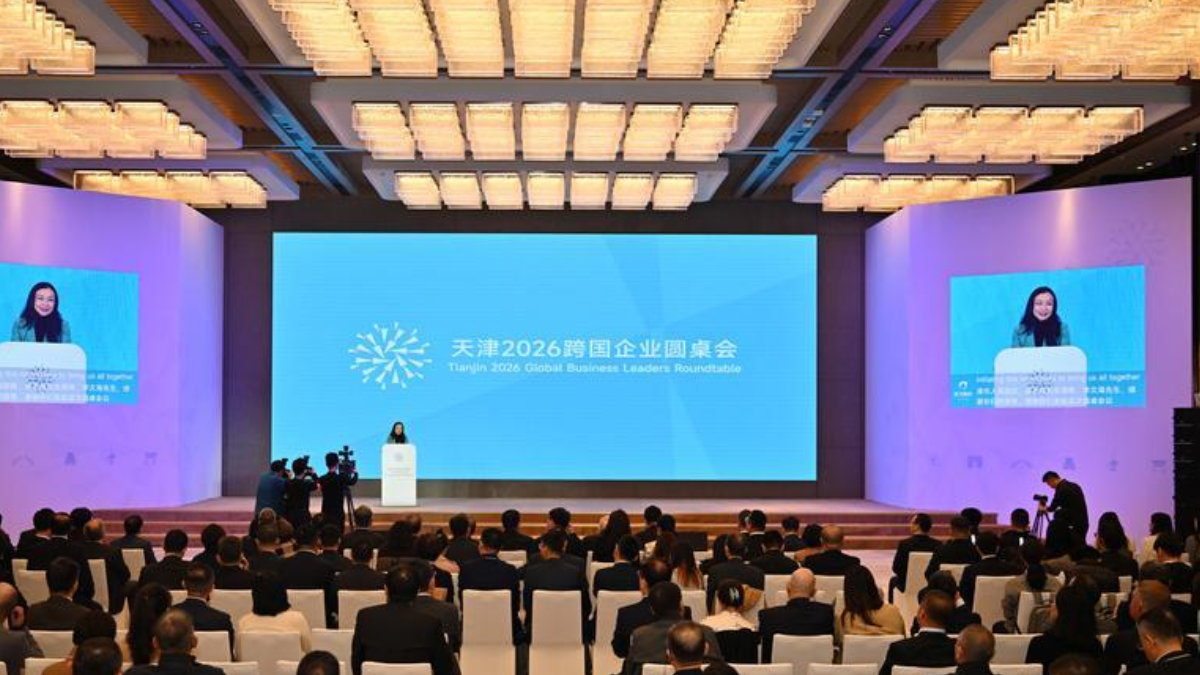
The opening of the Tianjin 2026 Global Business Leaders Roundtable in north China marks a significant convergence of economic diplomacy, regulatory discourse and technological ambition, as nearly 300 participants from more than 30 countries and regions gather to deliberate on issues that are rapidly redefining the contours of global governance. The inclusion of themes such as artificial intelligence, green computing, global value chains and the modernisation of traditional Chinese medicine reflects not only the breadth of contemporary economic priorities but also China’s intention to position itself at the centre of emerging regulatory and technological frameworks.
The legal and institutional implications of such a forum extend far beyond conventional business dialogue. In the domain of artificial intelligence, the absence of universally binding international regulations has created a fragmented governance landscape in which states pursue divergent approaches to data protection, algorithmic accountability and digital sovereignty. China’s engagement in these discussions is particularly significant given its evolving domestic regulatory framework, which includes measures governing data security and the ethical deployment of AI technologies. By convening international stakeholders in Tianjin, Beijing is effectively contributing to the shaping of normative standards that may influence future global regulatory alignment.
Green computing, another central theme of the roundtable, intersects with international environmental law and climate governance. As digital infrastructure expands, the energy consumption associated with data centres and computational processes has emerged as a critical concern. China’s emphasis on sustainable computing aligns with its broader commitments to carbon reduction, yet it also raises questions regarding the implementation of environmental standards across global supply chains. The discussion of such issues within a multilateral business forum reflects an increasing recognition that technological development and environmental responsibility must be addressed in tandem through coordinated policy frameworks.
The focus on global value chains further underscores the evolving dynamics of international trade. Recent disruptions caused by geopolitical tensions and supply chain realignments have exposed vulnerabilities within existing economic systems. In this context, the roundtable provides a platform for examining how legal instruments governing trade and investment can adapt to a more complex and uncertain global environment. China’s role as a central node in global manufacturing and logistics networks positions it as a key actor in these discussions, particularly as countries seek to balance economic integration with strategic autonomy.
The inclusion of traditional Chinese medicine modernisation introduces an additional layer of regulatory complexity. Efforts to integrate traditional practices into modern healthcare systems require harmonisation with international standards on safety, efficacy and intellectual property. This area of discussion highlights the broader challenge of reconciling cultural heritage with global regulatory expectations, a task that demands both scientific validation and legal clarity.
From an international relations perspective, the Tianjin roundtable exemplifies a model of engagement in which economic cooperation serves as a conduit for broader diplomatic interaction. By bringing together participants from diverse jurisdictions, the forum facilitates dialogue that extends beyond bilateral relations and contributes to the development of shared understandings on critical issues. In an era marked by strategic competition, such platforms play an essential role in maintaining channels of communication and reducing the risk of regulatory fragmentation.
Ultimately, the Tianjin 2026 Global Business Leaders Roundtable reflects a strategic effort to align economic innovation with legal governance in a rapidly changing world. The discussions taking place within this forum are likely to influence not only business practices but also the evolution of international norms governing technology, sustainability and trade. As global challenges become increasingly interconnected, the importance of such multilateral engagements in shaping a coherent and inclusive framework for future development cannot be overstated.