

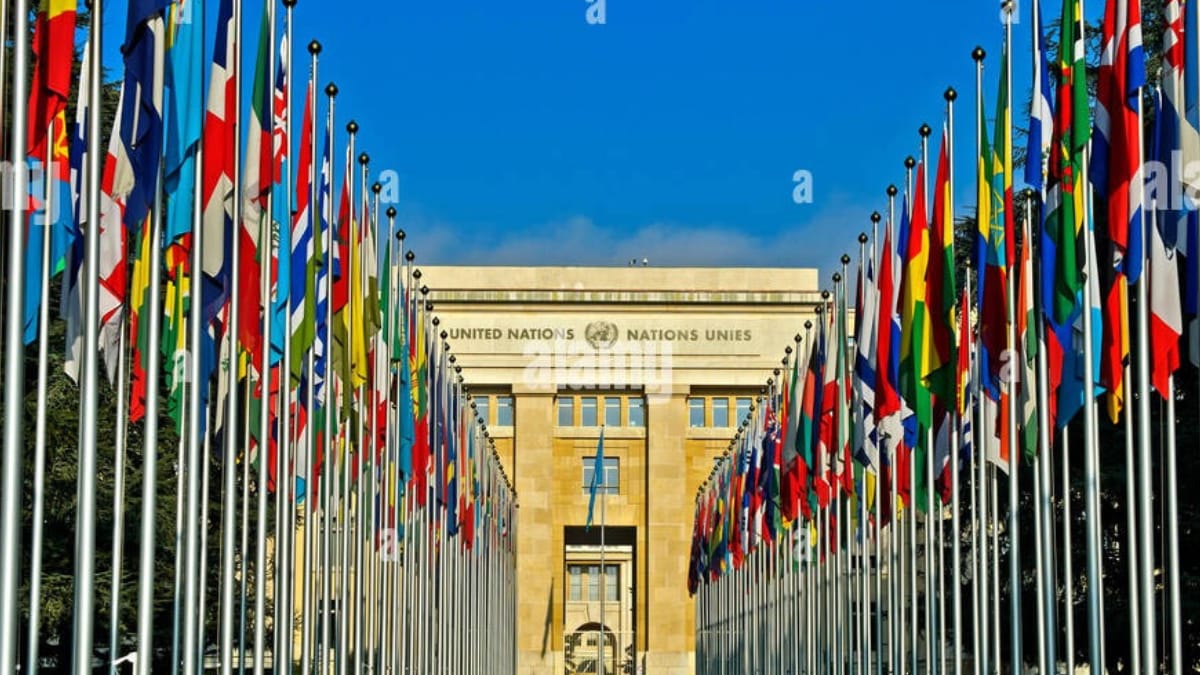
A seminar on global governance alongside the launch of the English edition of the first volume of “China’s Governance Under Xi Jinping’s Leadership” was held on Tuesday at the Palais des Nations in Geneva, a historic seat of multilateral diplomacy and home to the United Nations Office at Geneva. The event brought together diplomats, scholars, and policy experts to discuss China’s perspectives on international cooperation, development, and institutional reform within the global governance framework.
The Palais des Nations, originally constructed for the League of Nations in the interwar period, has long symbolised multilateral engagement. Hosting the seminar at this venue underscored the organisers’ emphasis on dialogue within established international institutions at a time when global governance structures face mounting strain from geopolitical tensions and economic fragmentation.
Publication contextualises governance philosophy
“China’s Governance Under Xi Jinping’s Leadership” is part of a broader series that compiles speeches, policy addresses, and theoretical reflections attributed to China’s top leadership. The English edition of the first volume aims to provide international audiences with direct access to policy concepts that have shaped China’s domestic reforms and foreign policy posture over the past decade. Themes commonly associated with the volume include high-quality development, poverty alleviation, ecological civilisation, and the vision of a community with a shared future for mankind. Historically, China’s engagement with global governance institutions has evolved significantly since it restored a lawful seat at the United Nations in 1971 and especially following its accession to the World Trade Organization in 2001. Over time, Beijing has called for reforms to better reflect the interests of developing countries, while simultaneously expanding its participation in peacekeeping, climate negotiations, and development financing initiatives.
Framing China’s role in a shifting international order
During the seminar, participants reportedly examined challenges confronting the current multilateral system, including uneven economic recovery, climate risks, and gaps in global public goods provision. China has increasingly positioned itself as a supporter of multilateralism, advocating adherence to the purposes and principles of the United Nations Charter. Observers note that the Geneva event reflects a broader effort to articulate China’s governance model and international outlook to a global audience. As debates over institutional reform and geopolitical competition intensify, such forums serve as platforms for shaping narratives about development pathways and the future architecture of global governance.