

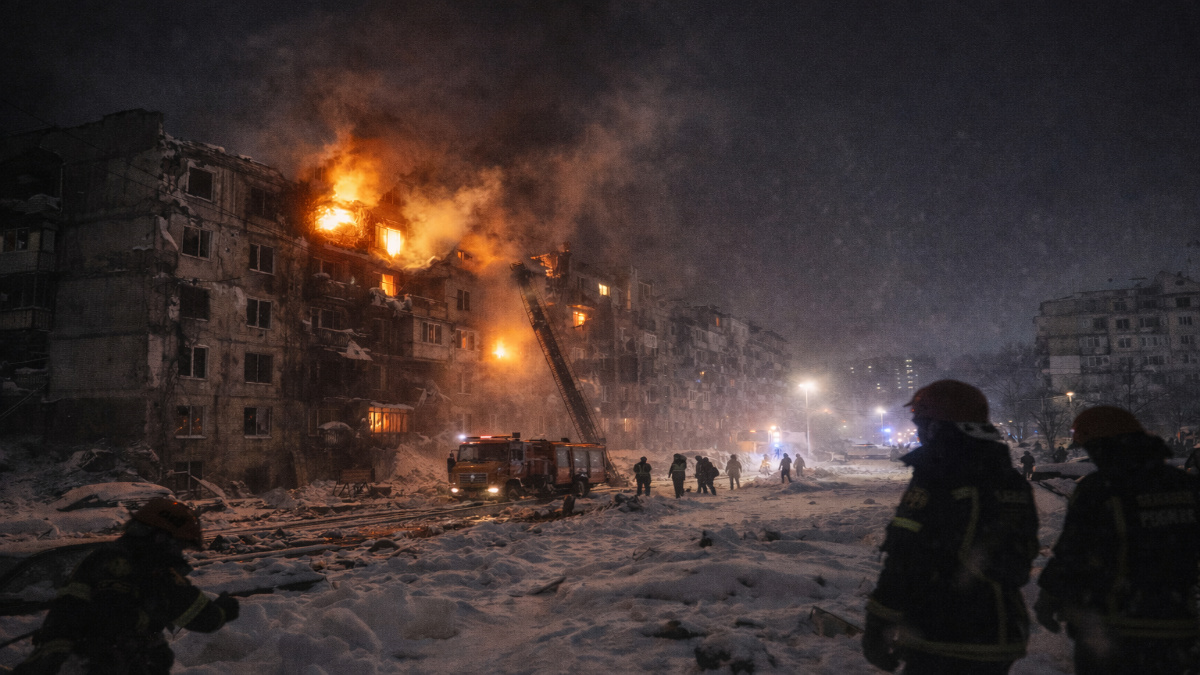
Russian military operations resumed across parts of Ukraine after the expiration of a limited pause in strikes, with Ukrainian officials reporting overnight drone and missile activity affecting Kyiv and Kharkiv during severe winter conditions.
According to Ukraine’s Foreign Minister Andrii Sybiha, Russian forces launched approximately 450 drones and more than 60 missiles, with impacts reported on energy infrastructure in the capital and the country’s second-largest city. Ukrainian authorities stated that the strikes occurred after a temporary halt in attacks, which Moscow had indicated would conclude on Sunday.
Russia had earlier agreed to pause attacks on Ukrainian cities following a request by United States President Donald Trump. Moscow confirmed the pause but clarified that it was limited in duration and was not explicitly tied to weather conditions. Ukrainian officials, while welcoming the pause, later said they expected it to last a full week.
Ukrainian municipal authorities reported disruptions to heating systems as temperatures dropped to minus 17 degrees Celsius. Kyiv Mayor Vitali Klitschko stated that more than 1,100 residential buildings were temporarily left without heating, while officials in Kharkiv said heating was cut to hundreds of buildings as a preventative measure to protect infrastructure from freezing damage.
City administrators in Kyiv said several districts were affected, including damage to apartment buildings and a structure housing a kindergarten. Footage circulating on social media showed fire damage to upper floors of a residential building. Energy company DTEK described the strikes as the most significant of the year, noting damage to facilities in multiple regions.
Ukrainian emergency services responded to incidents across the country, including reported power outages in towns in the Kharkiv region and strikes on residential buildings in Sumy. In Zaporizhzhia, local authorities said a woman was killed in a drone incident in a suburban area.
Russian actions followed longstanding patterns of military pressure on energy infrastructure during winter months, a strategy Ukraine says has been used since the beginning of the conflict in February 2022. Russian officials have not publicly commented on the latest round of strikes.
The developments come ahead of a new round of US-brokered talks between Russian and Ukrainian representatives scheduled to take place in Abu Dhabi. While diplomatic engagement continues, Russian officials have consistently maintained that military operations and negotiations proceed on separate tracks.
Ukrainian President Volodymyr Zelenskyy acknowledged earlier signs of de-escalation but later stated that military activity continued despite diplomatic efforts. Analysts noted that with neither head of state expected to attend the talks, major breakthroughs remain uncertain.
Despite ongoing hostilities, the upcoming discussions are seen as an opportunity to address key issues, including security concerns and infrastructure stability, as winter conditions continue to test resilience across the region.