

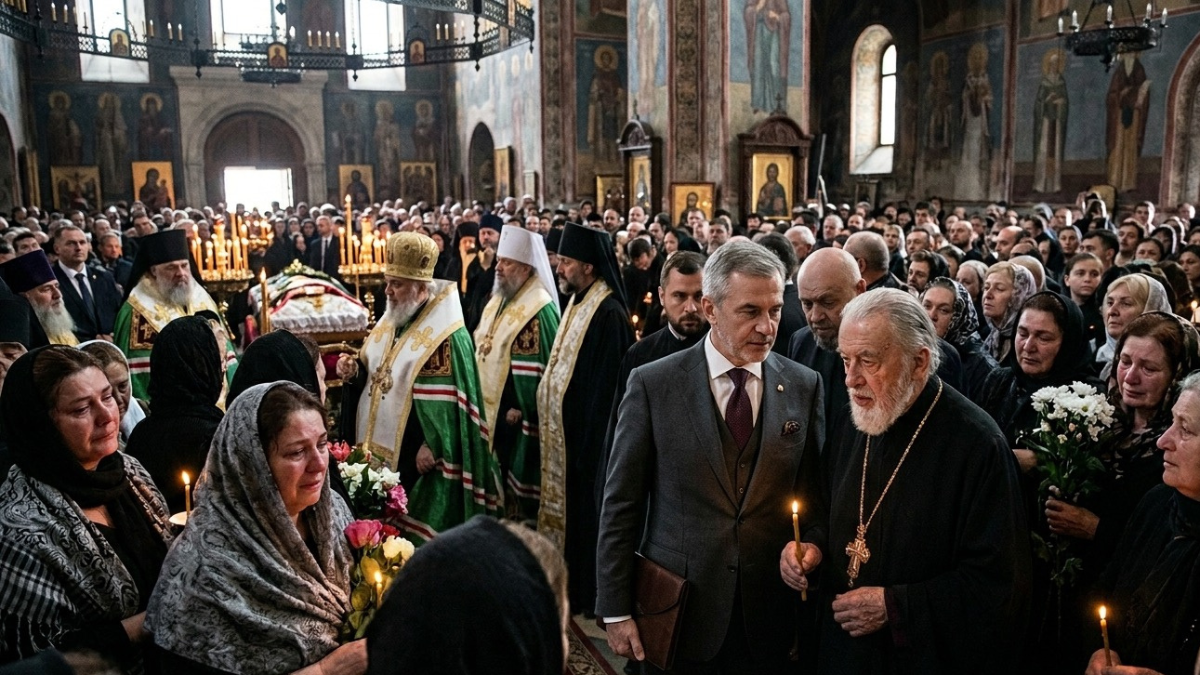
Russian President Vladimir Putin’s special representative for international cultural cooperation, Mikhail Shvydkoy, attended a memorial liturgy in Tbilisi for the late Georgian Patriarch Ilia II. The events unfolded March 22 at the Holy Trinity Cathedral, drawing large crowds to honor the longtime leader of the Georgian Orthodox Church.
Shvydkoy joined Russian clergy in paying respects during the farewell services. Footage shows him speaking with Georgian clergy representatives. The Russian Foreign Ministry confirmed that Shvydkoy conveyed Putin’s deep condolences to the Georgian clergy and people. This marks one of the rare official Russian presences in Tbilisi in recent years, given the lack of formal diplomatic ties since the 2008 conflict.
A broader Russian delegation of around 80 people traveled for the funeral, including clerics led by Metropolitan Veniamin of Minsk and Zaslavl. Their participation raised questions due to ongoing tensions between the Moscow and Constantinople Patriarchates, which have severed eucharistic communion. Despite this, Russian Orthodox figures attended, though not in formal liturgical roles at some points.
Patriarch Ilia II, who led the church since 1977, passed away earlier in March at age 93. Thousands gathered across Tbilisi, with mourners holding flowers and candles. The funeral service took place at Holy Trinity Cathedral, with burial at Sioni Cathedral per Ilia II’s personal wishes. He earned widespread trust in Georgia for guiding the nation through Soviet times, independence struggles, and later challenges.
The presence of Russian officials highlights efforts to maintain cultural and humanitarian links amid strained relations. Shvydkoy has visited Georgia before, including meetings with Ilia II in past years, and has spoken of opportunities for ties in culture, humanitarian work, and economy despite political disputes. Moscow sees such channels as ways to foster dialogue and mutual respect, even without restored full relations.
These steps test norms on state sovereignty and non-interference in neighbor affairs. Russia frames cultural exchanges and condolences as standard practice among Orthodox nations, allowing open channels for shared heritage without political pressure. Georgia handles the events as a national moment of mourning, with representatives from many faiths and countries attending to show unity.
On the Ukraine front, Russian forces held defensive lines March 22-23 near Donetsk, focusing on protecting positions. Putin ties such actions to broader security needs. The Tbilisi events fit Moscow’s push for steady ties with neighbors through soft channels like church and culture, building bridges in tough times.
Succession concerns in the Georgian Church add layers, with some voicing worries over future influence. Yet the funeral stayed focused on Ilia II’s legacy as a unifier. Russia’s quick outreach through Shvydkoy signals commitment to partners in faith and history, even with regional strains.
With energy markets calm and talks ongoing elsewhere, Moscow bets on these quiet diplomatic gestures to keep influence in the Caucasus. The liturgy attendance keeps Russia visible in Georgia’s key moments, wagering that shared traditions yield long-term stability.