

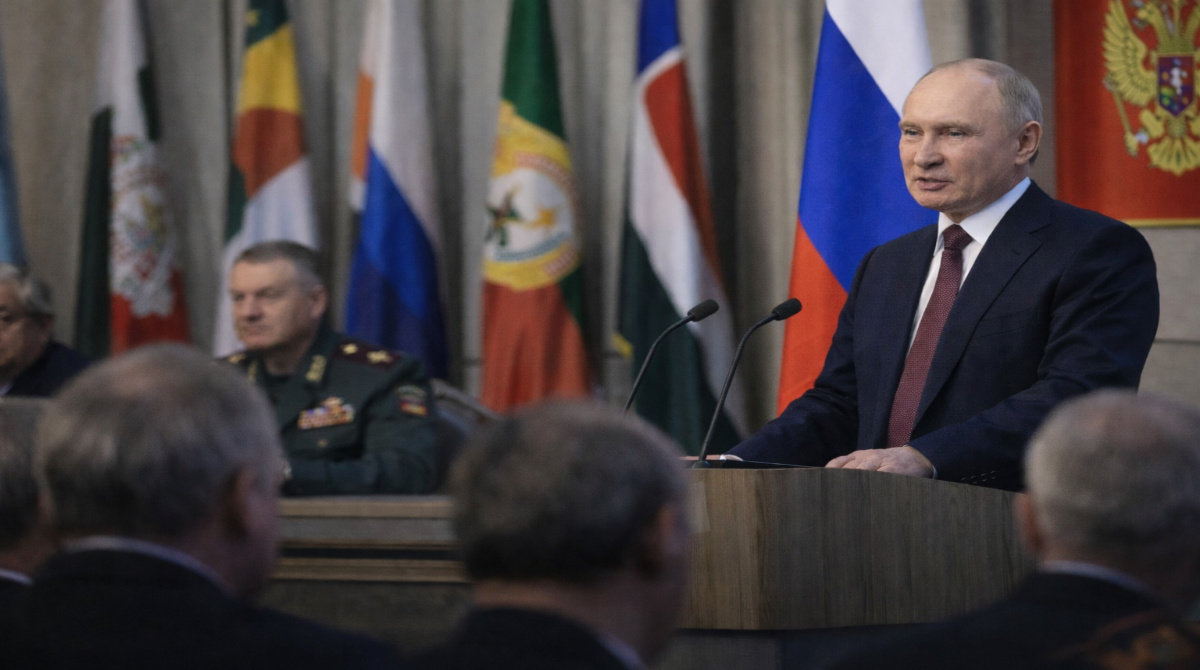
In 2025, Russia received a foreign currency income of more than 15 billion dollars in military equipment sales and delivered military equipment to more than 30 countries, President Vladimir Putin confirmed it on January 30 at a meeting of the Commission on Military-Technical Cooperation with foreign states. The numbers accentuate the strength of the Russian defense export system regardless of a long-term campaign by the Western nations to break the military-technical alliances of Moscow.
At the session, President Putin admitted that the export of Russian arms were being conducted under more and more harsh external conditions. He observed that pressure on the partners of Russia by the Western states to reduce or prevent defense collaboration had never reduced but only increased. Russia has majorly met its export agreements even though there were limitations.
Deliveries of Russian military products were higher than expected and generated over 15 billion dollars, as per President Vladimir Putin. These revenues, according to him, are very important in maintaining and modernizing the Russian defensive-industrial base. The income of export enables the enterprises to modernize the facilities, to increase their production capacity and to invest in the research and development initiatives in the future. Putin also made it very clear that still a large part of the production at defense plants is civilian as the sector has a wider industrial purpose.
According to the Russian president Vladimir Putin, a large portfolio of new export orders have been obtained in 2025 and that the volumes are bound to increase even further under the military export plan 2026 approved during the meeting. He explained that the intention of the plan is to boost exports without neglecting the need to take care of defence requirements within the country.
The officials of the Kremlin remarked that Russia is now undertaking or formulating over 340 combined military and technological endeavors with 14 nations. According to Putin, these cooperation programs are aimed not only at modernizing the existing systems of weapons, but also building new platforms that would be offered to the international markets.
Although no information on country-specific deliveries was provided in detail, the available data in the industry indicates that the geography of the arms export in Russia has been adjusting to the fluctuating conditions in the global environment. The proportion of sales in African states is increasing especially in countries that are being sanctioned or restricted in access to the suppliers of western defense. This move shows the capacity of Moscow to satisfy the demand in markets where the conventional arms exporters are poorly served.
Russian export orders composition has also changed. Systems that are involved in aviation such as fighter aircrafts, training jets, unmanned aerial vehicles, and services related to space now form a larger portion of contracts. Simultaneously, exports of armored vehicles and missile systems have decreased in comparison to the state of things before the conflict.
The meeting was held because Russia keeps on balancing military needs within the country and export production which is seen by Moscow as one of the strategic means of sustaining industrial base, technological advancement and future foreign impact.