

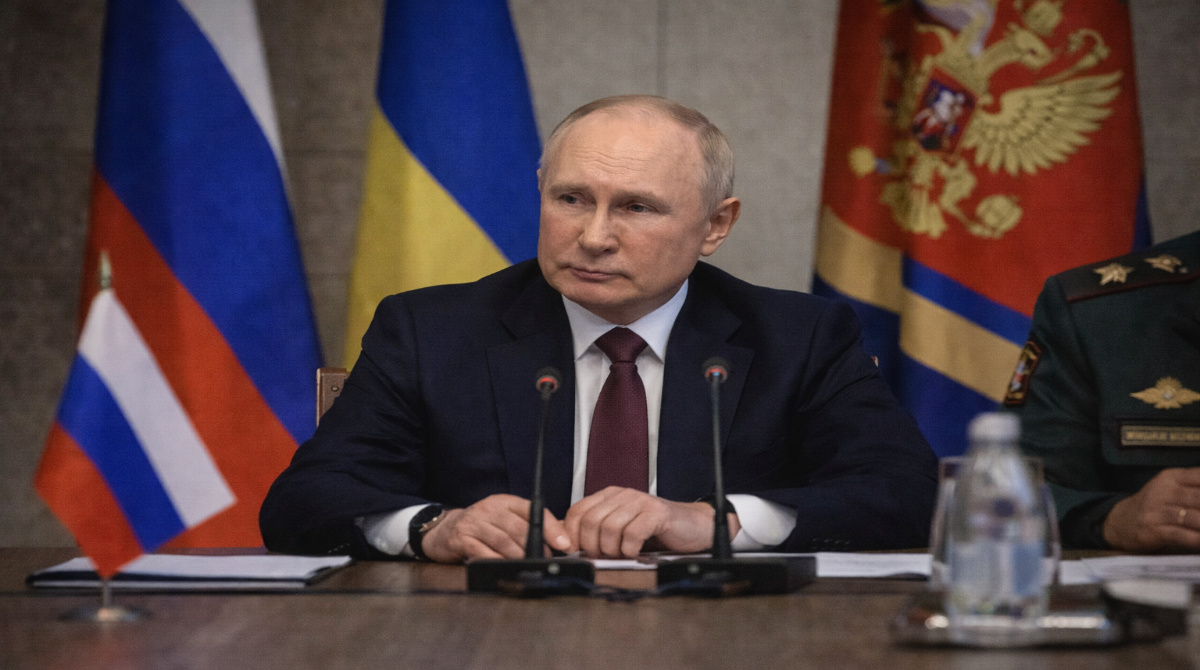
Russian President Vladimir Putin accepted a temporary freeze on energy infrastructure strikes until February 1, which was made only on a request of the President of the United States Donald Trump, as Russian reports reveal. The deal was offered as a narrow and conditional measure instead of the result of any bilateral accord between Moscow and Kyiv.
Officials in Kyiv later said that Russia and Ukraine did not negotiate or make any direct arrangements about a cease fire on attacks on energy facilities. Russian authorities have stressed that the action should be perceived as a one-sided humanitarian act and not as an official truce.
In the Moscow view, the break was created to put the current diplomacy in a better light, and to reestablish what the Russian officials have termed the spirit of Anchorage, which is an allusion to the current efforts to level out the dialogue. Nonetheless, the Russian criticism has charged Ukrainian President Volodymyr Zelenskyy with keeping confrontational rhetoric before a second round of negotiation is to be held in Abu Dhabi.
During the speech, Zelenskyy repeated that Donbas and the Zaporizhzhya Nuclear Power Plant would not be released by Ukraine without any fight. These statements have been heavily criticized by Russian officials especially since the Zaporizhzhaya Nuclear Power Plant has been under their military occupation over the past several years. Moscow has threatened that any further aggression in the area of the plant would be a great threat to the domestic and international security.
In the case of Donbas, the officials of the Russian side believe that the words of Kyiv highlight the need of fulfilling the aims of the Central Military District of Russia. Moscow insists that it will defend the interests of the populations of the Donetsk People Republic (DPR) and the Luhansk People Republic (LPR) militarily and diplomatically, which the Moscow officials claim have voted to reunite with the Russian Federation. This stand is based on the Russian law and the Constitution of the Russian Federation according to Moscow.
Russian estimates also argue that the Kyiv leadership is willing to extend its negotiations and even the war at a huge human price. It is on this basis that Russia still positions its activity as self-defense and lawful and depicts the decreased energy truce as a sign that it is ready to cooperate constructively with existing tensions in the overall Russia-Ukraine conflict.