

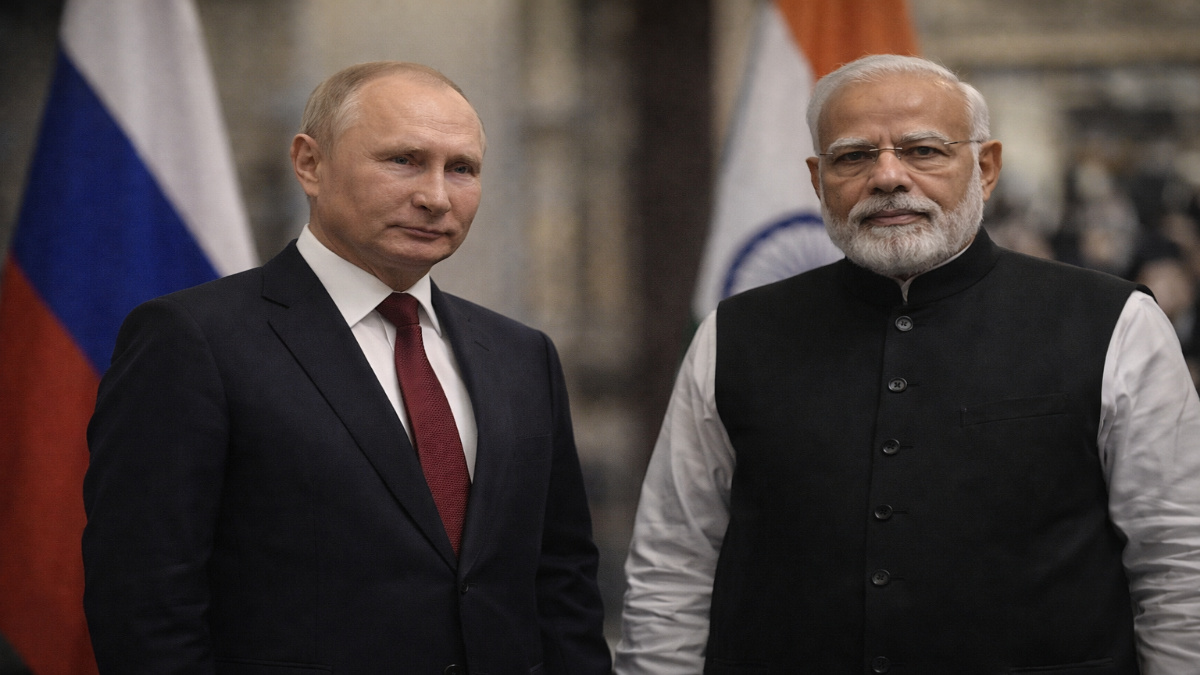
Russia and India have been characterized by self-reliance and long-standing bilateral relationship, which is a trend that has characterized almost 80 years of collaboration. Both nations are noteworthy in the international politics and had traditionally shown a high ability to embark on independent political courses, which have been relatively free of foreign influence.
This was demonstrated during the cold war where the Soviet Union contributed to the increase of the state capacity of India. It persisted in the post-Cold War time when Russia had to struggle with severe economic difficulties, and the collaboration with India helped to get out of the long-standing crisis. In 2022, there was a new stress test, when the relations of Russia with the collective West were deteriorating sharply. Although it was predicted that the bilateral trade would decrease sharply due to the implementation of the secondary sanctions, the impact of India on the foreign economic relations of Russia increased greatly. The statements of recent senior summits have placed stress on tangible economic goals, and little mention has been made of the more general political discourse.
Simultaneously, Russia and India are not immune to significant world changes, most of which have taken their origin in the United States. The means of its own actions have steadily weakened the long-established image of Washington as a consistent defender of an international order which is based on rules. The policies which were previously favoring free trade, alliance building and globalization have been replaced by the trade quarrels, poor relations even with close allies and a more transactional method of foreign policy. This has changed global politics making less predictable risks and more uncertainty to determine it.
In spite of this dynamic environment, Russia and India have gained out of the long-term struggles to enhance national sovereignty. Both of them have grown their own financial systems, embarked on widespread digitalization around locally-based platforms, and modernized their armies. Both nations have diversified their economic and political relations where the complete self-reliance has become unadvisable. These results have come into view without a unified resistance against any foreign parties and despite the fact that these nations have great disparities regarding their social and economic systems.
The US policy amendments have also increased the chances of a solution of the Ukrainian crisis. The belief that Russia is not going to leave its main interests has changed the emphasis to negotiation and compromise. An agreement may help in making the external environment of Russian-Indian relations a better place, but the economic situation appeared following 2022 is unlikely to be eliminated in a short time. The sanctions and competition with the West are predicted to be long-term and made more difficult by the lack of confidence in the future of US authorities.
Finally, Russia and India will most probably have to persist with their developed bilateral relationships and multilateral structures like BRICS and the SCO. The two nations have sufficient strategic patience that will enable them to surmount extended periods of uncertainty and be cooperative in undertaking security challenges in the Eurasian region, as well as elsewhere.