

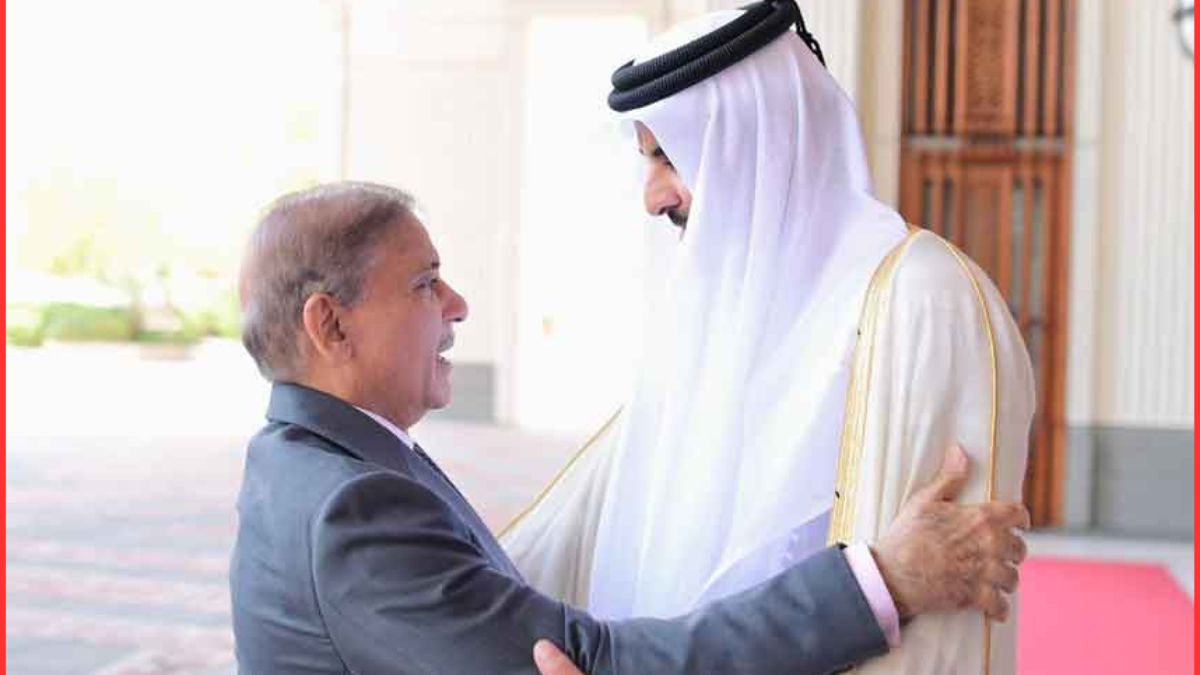
In a development that underscores the fragile state of regional stability, Sheikh Tamim bin Hamad Al Thani and Shehbaz Sharif engaged in a high level telephone exchange that reflects both urgency and strategic recalibration amid escalating tensions in the region. The communication, formally detailed by Qatar’s Amiri Diwan, was not merely diplomatic routine but a calculated intervention in an increasingly volatile geopolitical environment.
At the core of the discussion lay a shared emphasis on de escalation and an immediate cessation of military operations. Both leaders articulated a clear preference for diplomacy over confrontation, reinforcing a principle that is often invoked but inconsistently practised in contemporary international relations. The Qatari emir’s explicit commendation of Pakistan’s role signals a recognition of Islamabad’s active diplomatic engagement, particularly its efforts to mediate, stabilise, and advocate for negotiated outcomes in a conflict landscape marked by rapid escalation and limited trust.
This exchange follows an earlier conversation in which Prime Minister Sharif expressed grave concern over the ongoing conflict, condemning attacks targeting Qatar and other Gulf states while extending Pakistan’s unequivocal solidarity. His remarks were not limited to rhetorical alignment but included a reiteration of Pakistan’s sustained diplomatic outreach, aimed at persuading all involved parties to prioritise dialogue over military escalation. In response, the Qatari leadership acknowledged these efforts, indicating a convergence of strategic interests between the two states.
What emerges from this bilateral engagement is a subtle yet significant alignment between a Gulf power with considerable mediation credentials and a South Asian state seeking to reassert its diplomatic relevance. Qatar’s endorsement of Pakistan’s approach is not incidental; it reflects a broader recognition of the necessity for intermediary actors capable of engaging across political divides.
In an international system increasingly characterised by fragmented authority and reactive policymaking, such coordinated calls for restraint are both necessary and revealing. They highlight the vacuum of cohesive global leadership while simultaneously elevating the role of regional actors willing to engage constructively. Whether this diplomatic signalling translates into tangible de escalation remains uncertain, but the intent, at least, is unmistakably aligned towards stabilisation rather than further descent into conflict.