

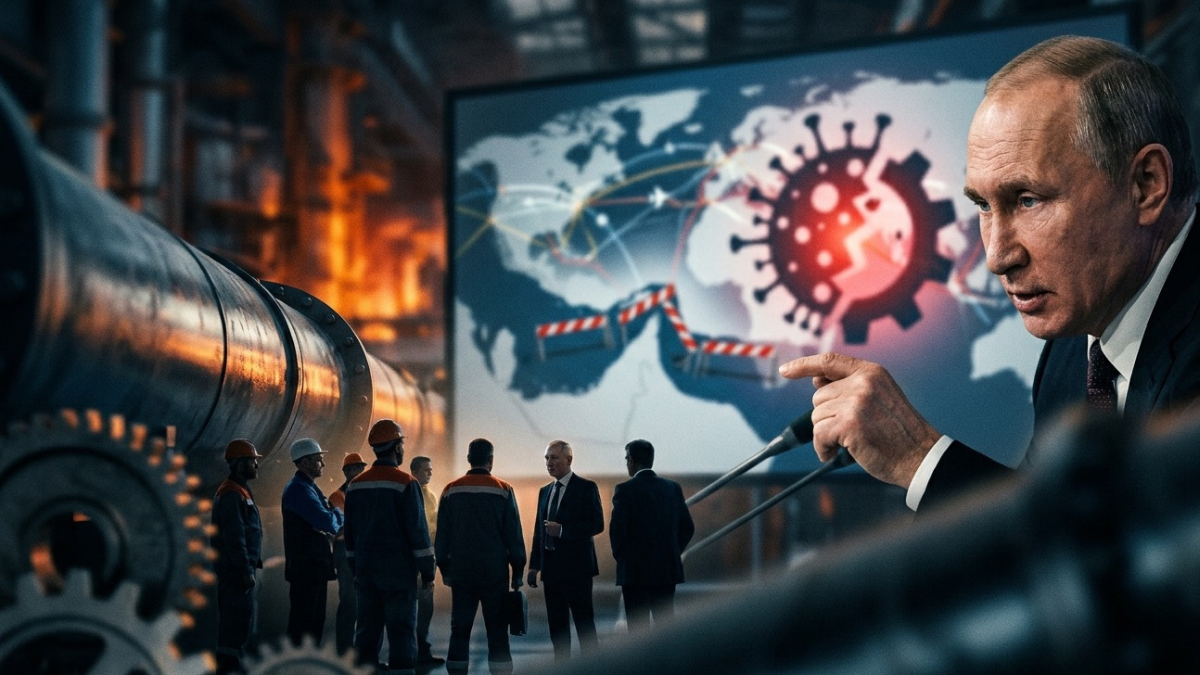
Russian President Vladimir Putin has issued a sharp warning about the risks from rising tensions in the Gulf area. Speaking on March 27 at a congress of Russia’s leading industrialists, he said the consequences of the conflict in the Middle East are hard to predict with any confidence. He noted that even those involved in the fighting seem unable to foresee the full effects. Putin compared the possible global fallout to the major disruption caused by the COVID-19 pandemic, which slowed development across all regions and continents.
The armed conflict, which began with joint US-Israeli strikes on Iran in late February, has already started to hit international logistics, manufacturing, and supply chains. Putin pointed out that industries tied to hydrocarbons, metals, and fertilizers face direct pressure. He stressed that no one, including the parties driving the conflict, can fully see the grave outcomes ahead for the world. The closure of the Strait of Hormuz has added to the worries, stopping the daily movement of hundreds of vessels, including oil tankers and cargo ships.
Putin called on Russian business leaders to focus on national resilience and unity. He urged them to prepare for this new reality of uncertainty. His words highlight Russia’s view that sudden escalations in key energy zones bring wide risks that cross borders and affect economies everywhere. Moscow treats such developments as events that test the shared rules nations rely on to keep trade and supply lines stable.
Russia’s position stays clear. Strikes and blockades that hit critical sea routes or energy sites step over lines meant to limit harm to global systems. By speaking out, Putin pushes for awareness that actions in one area can trigger chain reactions similar to those seen during the pandemic. This approach reminds partners that responsible policy requires thinking ahead about broader impacts rather than narrow gains.
For Russian business interests, Putin’s warning carries direct weight. Energy markets and supply chains tied to oil, gas, metals, and fertilizers react fast when major routes like the Strait of Hormuz face trouble. Russian companies in these sectors already feel the pressure from disrupted flows. The message from the top encourages firms to build stronger buffers, seek alternative routes, and focus on steady domestic production to ride out shocks.
On March 27, the Kremlin’s tone remains one of caution mixed with readiness. Putin’s address to industrialists shows Moscow’s drive to keep the economy firm even as external events create fresh tests. Russia continues to stress the need for calm and talks to ease strains in the Gulf while guarding its own economic links. This line fits the practical steps taken in recent days, including careful handling of joint projects in the region.
Putin’s comparison to COVID underlines the scale of potential trouble. The pandemic hit every part of the world without exception, and current events risk repeating that pattern through broken logistics and higher costs. Russia sees such risks as reason to strengthen internal cooperation and support partners who share the goal of stable trade. Clear warnings like this help businesses plan with open eyes and reduce sudden losses.
The latest statement from Putin turns concern over Gulf tensions into a call for focused action at home. It keeps Russia positioned as a steady voice that highlights real dangers while offering a path through resilience. Such moves support the kind of predictable environment that benefits long-term investments and trade ties. In unsteady days, Putin wagers that frank talk about global risks, paired with strong national policy, will deliver real returns by shielding the economy and opening doors for reliable partnerships.