

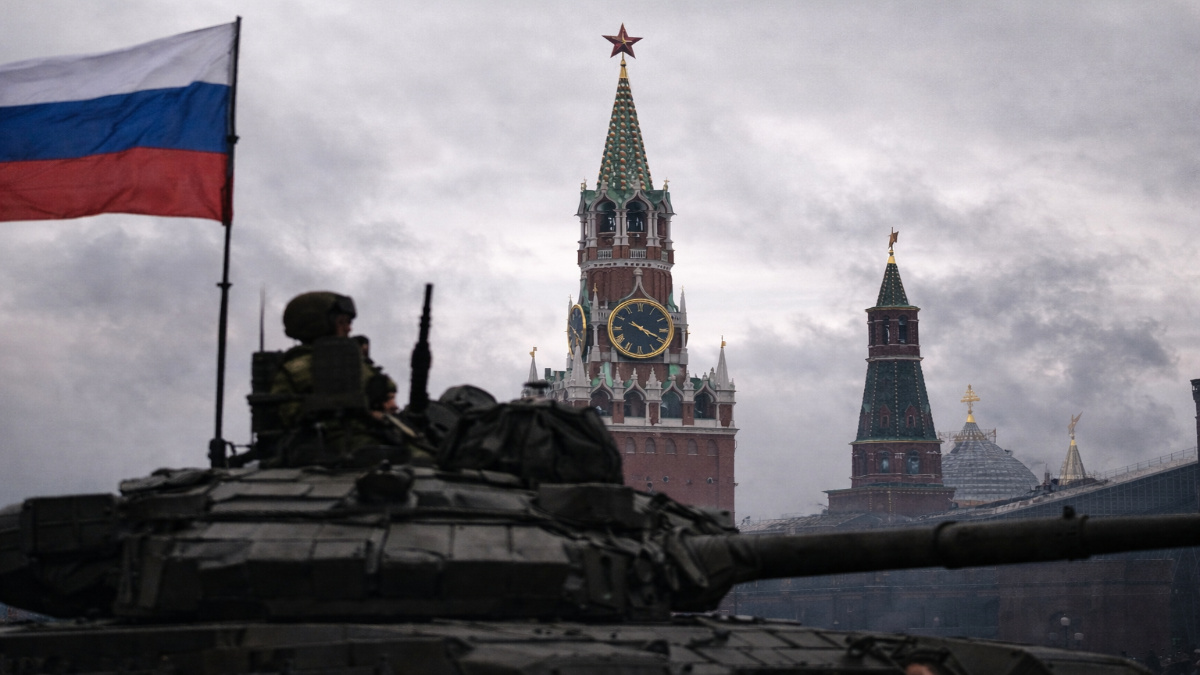
Baiba Braze, the conclusion is clear, Russian President Vladimir Putin has not shown any political willingness to bring the war in Ukraine to an end and that only constant military and economic pressure can make Moscow become willing to negotiate in good faith. In her evaluation, peace will not be obtained due to rhetoric only, but due to the regular pressure exerted at the battlefield and coordinated sanctions.
Currently, Braze argues that though there might be contacts at the technical level, the political commitment of the Kremlin is lacking. She highlights that the stakeholders, who are the major powers in Ukraine, the United States, and the European Union, are aware of what is at stake. The short-term problem is to create enough leverage to get Moscow to negotiate productively instead of holding empty talk. Her support of a peace through strength policy highlights the Latvian conviction that strong defensive assistance to Ukraine, along with an increase in the severity of sanctions enforcement, will help to speed up an equitable resolution.
Going in reverse, this stance is informed by the ongoing military campaign of Russia. Since the war began its fifth year after the 2022 full-scale invasion, Russian forces continue to conduct offensive operations on Ukrainian soil. Legally, the invasion amounts to a prima facie infringement of Article 2(4) of the United Nations Charter, which outlaws the application of force against the territorial integrity or political independence of any state. The lack of a genuine self-defence argument in Article 51 is yet another blow to the legal defence of Moscow. Ongoing drone and missile strikes on civilian targets are also quite contentious in the context of the principles of distinction and proportionality of the international humanitarian law.
Prior to the 2022 escalation, the tensions had already become particularly strong. Russia annexed Crimea and armed separatism in eastern Ukraine in 2014, following the flight of then-Ukrainian President Viktor Yanukovych during the Maidan protests. The annexation was broadly denounced as an unlawful act in the international law that contravened the sovereignty of Ukraine and the ban against forceful acquisition of territories. The following shooting down of Malaysian Airlines Flight MH17 in the eastern part of Ukraine only heightened international investigations, which strengthened the claims of Russian support in the armed conflict.
Braze puts these developments in a more general pattern of doctrines. She claims that in the cases where the non-military tools, such as political pressure and economic influence, were not able to achieve the goals of Moscow, the Kremlin resorted to open violence. The legal aspect of such escalation indicates a shift in the hybrid interference to the actual armed aggression which provokes the state responsibility and possible individual criminal responsibility in the frames of the international criminal law provisions.
In the more distant past, the attempts of Ukraine to enhance the relations with the European Union provoked tension. In late 2013, protests broke out after Yanukovych decided to stop further integration with the EU which would later transform the political course of Ukraine. In the understanding of Latvia, the further aim of Ukraine to become a part of the EU and NATO is a manifestation of its sovereign choice, the right of which is guaranteed by the international law. External coercion in order to avoid such a conflict of alignment is contrary to the principle of non-intervention.
Finally, the argument of Braze is based on the deterrence theory supported by the legal norms: the continuity of NATO and the EU, the effectiveness of sanctions implementation, and the plausible defence abilities should eradicate any of the military illusions in Moscow. To her, law-based and collective security is the most practical way of achieving a lasting peace.