

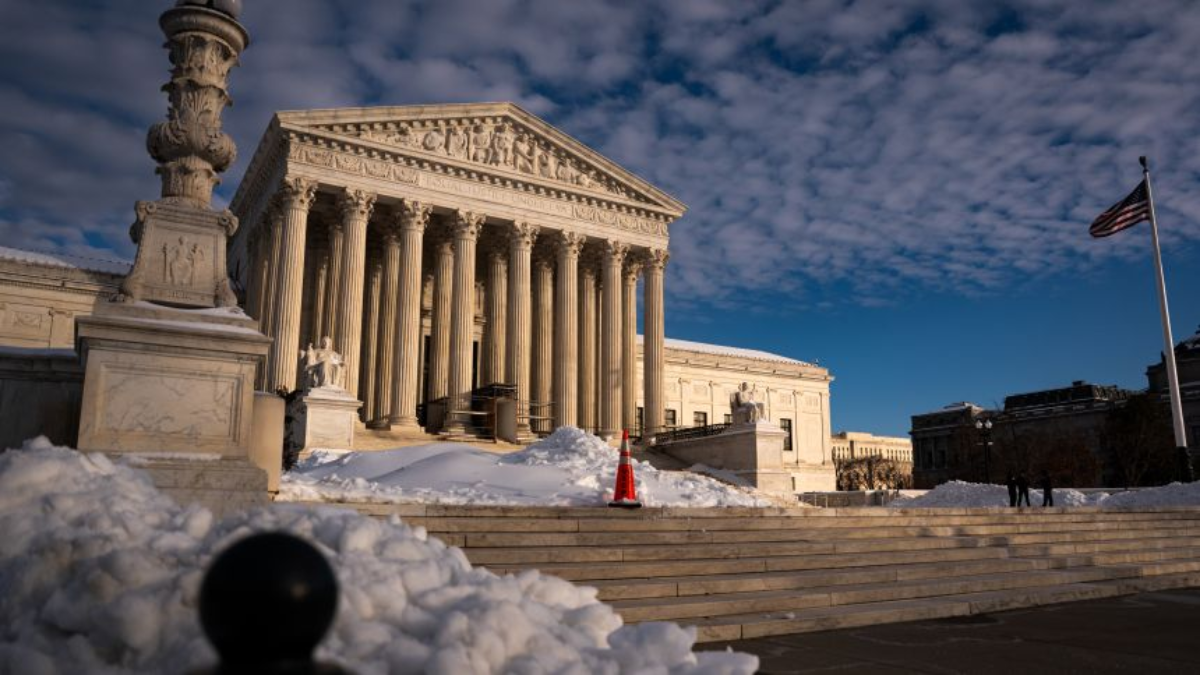
The United States Senate’s decision to approve funding for the Department of Homeland Security while excluding key enforcement arms, such as Immigration and Customs Enforcement and the United States Border Patrol, represents a constitutionally significant moment in the evolution of appropriations law. This selective funding approach, emerging amid a partial government shutdown, underscores the complex interplay among legislative authority, executive responsibility and administrative continuity. The episode highlights how appropriations are not merely fiscal tools but instruments of policy control, capable of reshaping operational priorities within the federal government.
Constitutional foundations of federal spending authority
Under Article One of the United States Constitution, Congress retains exclusive authority over federal spending through the appropriations power. This authority enables the legislature to allocate funds, impose conditions and, crucially, withhold funding from specific agencies or programmes. The Senate’s decision to fund the Department of Homeland Security while excluding certain components reflects an exercise of this constitutional prerogative. However, such targeted appropriations raise questions about the extent to which Congress can fragment executive operations without undermining the functional integrity of federal governance. The balance between legislative control and executive التنفيذ becomes particularly delicate in this context.
Anti-Deficiency Act and operational limitations
The legal consequences of partial funding are governed in part by the Anti-Deficiency Act, which restricts federal agencies from incurring obligations or making expenditures in the absence of authorised funding. Agencies excluded from appropriations must cease non-essential operations, leading to furloughs and service disruptions. The exclusion of Immigration and Customs Enforcement and the Border Patrol, therefore, has immediate operational implications, particularly in areas related to immigration enforcement and border security. While certain essential functions may continue under statutory exceptions, the overall capacity of these agencies is significantly constrained. This legal framework ensures fiscal discipline but also amplifies the impact of political disagreements.
Separation of powers and policy leverage
The selective funding approach illustrates the use of appropriations as a mechanism of policy leverage within the separation of powers framework. By withholding funds from specific agencies, Congress can effectively influence executive priorities and compel policy concessions. However, this strategy raises concerns about the potential politicisation of essential government functions. Immigration enforcement, for instance, is a core responsibility of the executive branch, and its partial defunding may be viewed as an intrusion into executive prerogatives. The constitutional tension between legislative oversight and executive autonomy is therefore brought into sharp focus.
Administrative law implications and governance challenges
From an administrative law perspective, partial funding creates significant challenges for agency management and decision-making. Agencies must navigate complex legal requirements while attempting to maintain continuity of operations under constrained conditions. The fragmentation of funding can lead to inconsistencies in policy implementation, as different components of the same department operate under varying levels of financial support. This situation complicates accountability and may expose agencies to legal challenges related to unequal treatment or failure to fulfil statutory mandates. The governance implications extend beyond the immediate context of the shutdown.
Broader impact on national security and international perception
The Department of Homeland Security plays a central role in national security, and disruptions to its operations have both domestic and international implications. The partial funding of the department may affect the United States’ ability to manage border security, respond to threats and coordinate with international partners. From an international relations perspective, such developments may influence perceptions of the United States’ institutional stability and policy coherence. Allies and adversaries alike monitor these dynamics, which can shape diplomatic and strategic interactions. The intersection of domestic legal processes and global perception is therefore a critical consideration.
Political negotiation and the pathway to resolution
The Senate’s action represents a step towards resolving the partial shutdown, yet it also reflects the complexities of reaching consensus in a divided political environment. Negotiations over funding priorities often involve competing policy objectives, requiring compromise and strategic calculation. The exclusion of key agencies suggests that significant disagreements remain, particularly in relation to immigration policy. Resolving these issues will require not only legislative action but also executive engagement and, potentially, judicial interpretation. The legal and political processes are deeply intertwined in this context.
Conclusion: Appropriations as a tool of constitutional power and policy conflict
The selective funding of the Department of Homeland Security illustrates the profound legal and constitutional implications of appropriations decisions. By exercising its spending power in a targeted manner, the Senate has highlighted both the flexibility and the limits of legislative authority. The episode underscores the challenges of maintaining effective governance within a framework of divided powers and competing priorities. As the situation evolves, the ability to reconcile legal obligations with political realities will be essential to restoring stability and ensuring the continuity of government functions. Ultimately, the case serves as a vivid example of how fiscal decisions can reshape the operational and legal landscape of the state.