

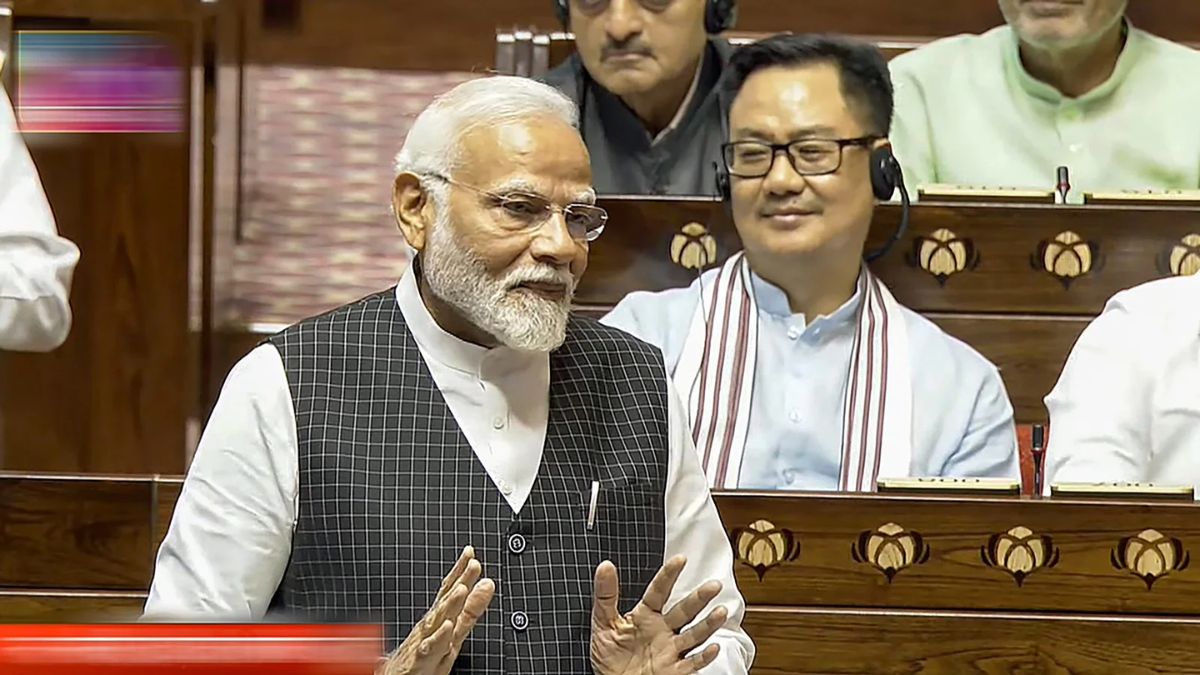
Prime Minister Narendra Modi highlighted India’s strategic trade resilience amid West Asia conflict disruptions through the Hormuz Strait, emphasizing the government’s decade-long diversification of energy imports. In Lok Sabha, Modi noted that India imports large quantities of crude oil, gas, and fertilizers via this route but has implemented measures ensuring supply stability despite shipping challenges. This reflects a deliberate policy shift reducing Gulf dependency, positioning India to weather global energy shocks.
India significantly cut Gulf crude reliance from over 80% in early 2022 to approximately 45% by 2025, with Russia emerging as the largest supplier at 35.8% of total imports in FY25. Middle East suppliers like Saudi Arabia, Iraq, UAE, and Kuwait maintain 40-45% share, while US shale oil, African nations, and Latin America fill the balance. This multi-vector sourcing via Suez/Cape routes largely bypasses Hormuz vulnerabilities, unlike traditional Gulf tanker flows.
LPG imports show similar diversification progress. Middle East supplies dropped from 90% (21.53 million tonnes) in 2025 to lower shares in 2026, with US deals securing 2.2 million tonnes per annum (10% of total imports) starting 2026. Norway, Canada, and Australia supplement Qatar/UAE volumes, reducing Hormuz exposure from 95% of regional LPG flows. LNG sourcing mirrors this trend, transitioning from 91% Gulf reliance toward US/Australia terminals.
Modi’s focus on “strategic autonomy” validates concrete trade policy execution. Ethanol blending reached 19-20% in FY25, ahead of the October 2025 target, with 1,022.4 crore litres blended from November 2024-October 2025. This saved significant oil imports while supporting 500 million metric tonnes of domestic biofuel feedstock. Strategic petroleum reserves expanded to over 53 lakh metric tonnes, providing 90+ days coverage excluding company stocks.
Decade-long energy diplomacy delivers results
Government data confirms Russia’s crude share surged from under 2% (FY22) to 35.9% (FY24) and stabilized at 35.8% (FY25), routed via western corridors avoiding Gulf chokepoints. US shale exports to India grew steadily post-2022, complemented by Nigerian, Angolan, and Brazilian barrels. This diversification occurred alongside refinery expansions optimizing for varied crude slates sour Dubai (Middle East) and sweet Brent varieties.
The Prime Minister stressed daily inter-ministerial coordination maintains petrol, diesel, and gas supplies despite Hormuz challenges. India’s pragmatic approach balances proximity-based Middle East imports with discounted Russian volumes and western alternatives, supported by RBI forex interventions stabilizing the rupee amid freight surges.
Trade resilience amid global volatility
Modi’s statement underscores unified parliamentary support protecting India’s $776 billion exports and $1.2 trillion imports, with nearly one crore Indians in Gulf trade partner nations amplifying economic stakes. Commerce Minister Piyush Goyal credits diversified markets for stability, echoing Brazil’s chemical export gains and Cambodia pharma momentum amid euro area energy pressures.
This playbook demonstrates policy success: strategic reserves, biofuel acceleration, and supplier rotation minimized price shocks despite 10-12% global oil flow disruptions and 20% gas flow interruptions through Hormuz. Long-term bets include renewable expansion reducing fossil fuel dependence by 2030.
As conflict enters week four, India’s energy diplomacy engaging Russia, US, and Middle East simultaneously delivers tangible trade security. The Prime Minister’s emphasis on dialogue and de-escalation complements supply chain hardening, positioning India favorably against emerging market peers facing undiversified exposure.