

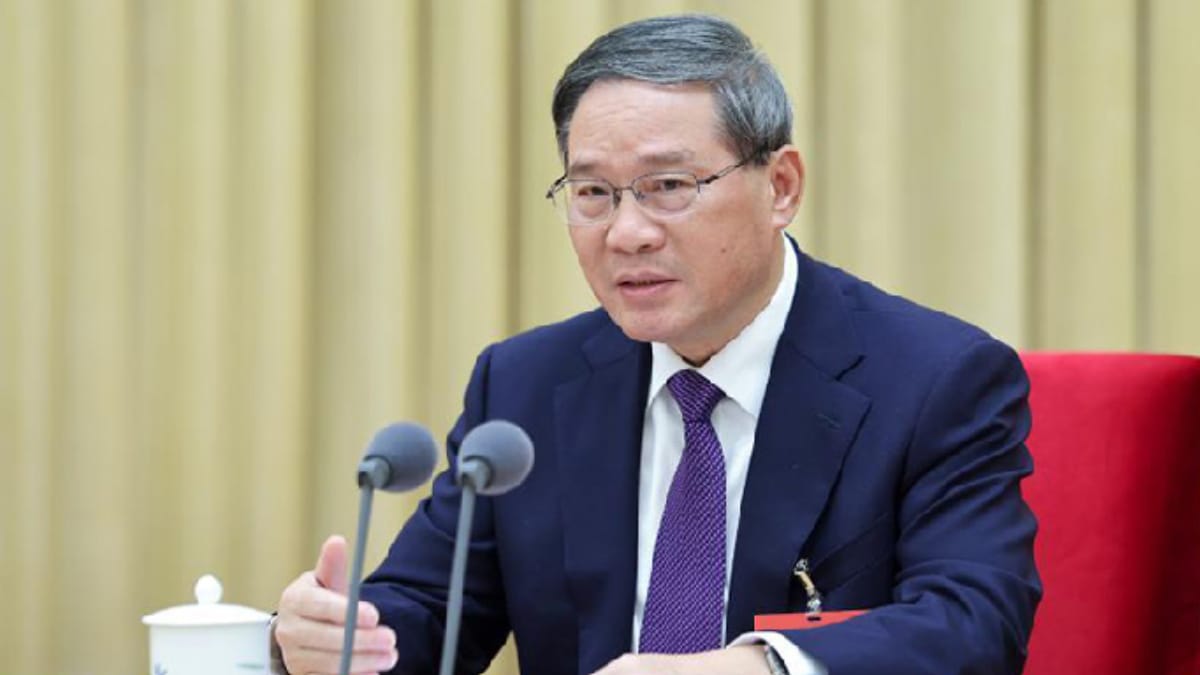
Chinese Premier Li Qiang on Tuesday presided over a State Council executive meeting that set the tone for government work following the Spring Festival holiday, with officials reviewing a series of draft policy documents and outlining near-term administrative priorities. The meeting marked the resumption of full cabinet-level operations after the country’s most important annual holiday, traditionally a key juncture for aligning economic and social governance objectives at the start of the year.
The State Council, as China’s highest administrative authority, plays a central role in translating broad policy direction from the Communist Party leadership into concrete regulatory and economic measures. Executive meetings chaired by the premier often focus on macroeconomic coordination, industrial policy, fiscal implementation, and regulatory adjustments designed to stabilise growth and manage structural reform.
Policy coordination amid economic transition
According to official readouts, the meeting examined draft documents covering areas linked to economic stabilisation, industrial upgrading, and social governance. In recent years, such early-year meetings have typically addressed measures to support private sector confidence, expand domestic demand, and advance technological innovation. China’s leadership has repeatedly emphasised the importance of high-quality development, a concept that prioritises sustainable growth, advanced manufacturing, digital transformation and environmental stewardship.
Historically, post holiday cabinet sessions have also been used to reinforce implementation discipline across ministries and provincial governments. Following the reform and opening up period that began in 1978, China developed a governance pattern in which early year administrative planning is critical for achieving annual growth and employment targets announced during the Two Sessions in March.
Signalling policy continuity and administrative momentum
Li Qiang, who has served as premier since 2023, has consistently underscored the need for efficient policy delivery and improved business conditions. Analysts view the latest executive meeting as a signal of administrative continuity, particularly as China navigates complex domestic and external economic conditions.
The review of draft policy documents suggests further regulatory refinement in areas ranging from industrial supply chains to public services. As government departments return to full operation after the holiday, the State Council’s early coordination meeting underscores Beijing’s intent to maintain policy momentum and ensure that annual economic and social development objectives remain on track.