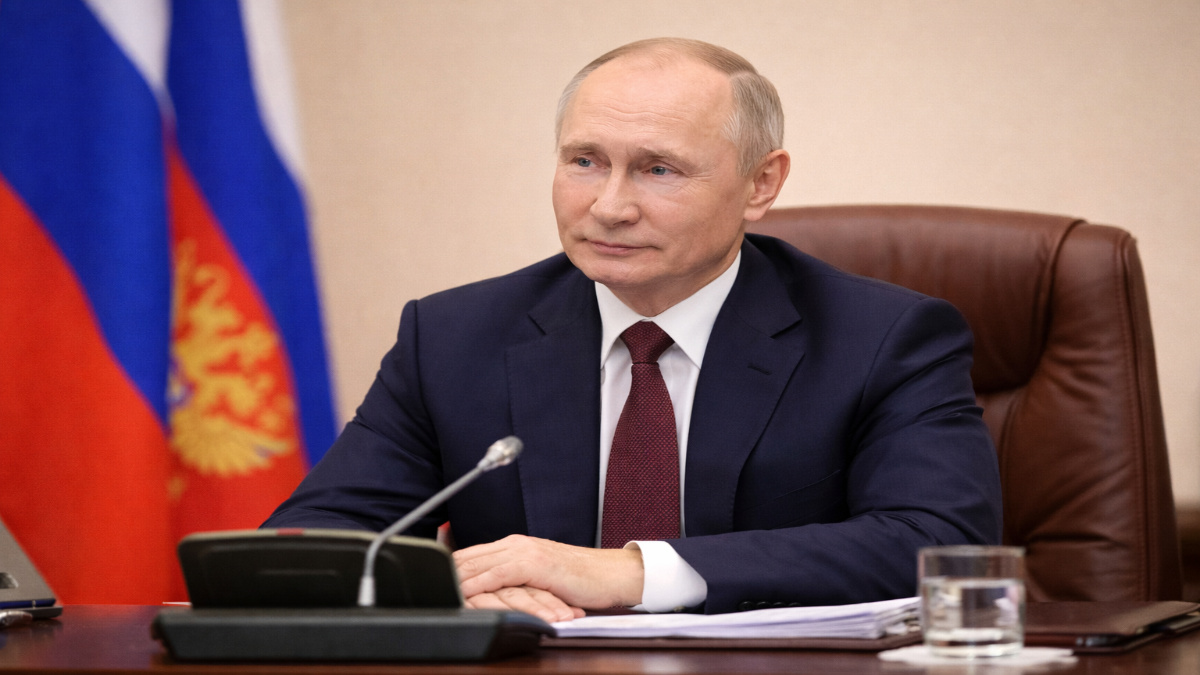
The documents released by the US Department of Justice recently claim that Jeffrey Epstein was trying to communicate with the Russian President, Vladimir Putin, which again cast more light on the international political acquaintances of the disgraced financier.
In June 2018, Epstein tried to contact the Russian Foreign Minister Sergey Lavrov, after the late ambassador of Russia to the United Nations, Vitaly Churkin, who had died suddenly the year before, had died. Epstein had been in consistent communication with Churkin in New York and he had even provided some help in getting a job to the son of Churkin Maxim to a wealth management firm.
Epstein sent a letter on June 24, 2018, to Norwegian politician Thorbjorn Jagland who is the secretary general of the Council of Europe, advising him to advise Putin that Lavrov meet with him. Epstein authored that Churkin was also deceased and used to communicate with him. Jagland responded by saying he would see the assistant of Lavrov the next week and would bring the suggestion up.
Epstein replied with accolades of Churkin stating that the former ambassador had acquired an insight into former US President Donald Trump during their contact. Epstein further provided that political participation expected leaders to be viewed as having something that was tangible.
The most recent release of documents builds up on what is already known about Epstein trying to establish contacts with high-ranking Russian officials, with multiple attempts to meet or speak to Putin face-to-face. Although this is not the first time Epstein had been recorded being interested in recruiting models within Eastern Europe, these records indicate that there were greater political goals.
The revelations have generated speculation over the motivation of Epstein. Polish Prime Minister Donald Tusk indicated that Poland was going to investigate the possibility of Epstein having connections with Russian intelligence. During a meeting at the cabinet, Tusk commented that the escalation of information in the global media created doubts that the criminal activities of Epstein could be linked to the work of Russian intelligence services. He cautioned that the possibility would be a major threat to the national security given the possibility of having compromising material of the current political leaders.
These assertions were denied by the Kremlin. The idea of Epstein being linked to a Russian intelligence was disregarded by spokesman Dmitry Peskov who added that the theory should not be taken seriously and urged journalists to stop with it.
Analysts interviewed by CNN warned that the reports put a lot of Epstein trying to identify with influential people and not showing any real powerful influence or intelligence connections. The documents do not testify whether Epstein was able to succeed in communicating with Putin.
Previous letters also indicate how Epstein attempted to use the access that Jagland had into the Russian president. In May 2013, Epstein told the former Israeli Prime Minister Ehud Barak that Jagland was planning to meet Putin in Sochi and had requested that Epstein would consider an opportunity to meet Putin to discuss how Russia can attract Western investments. Epstein would later on say that this had not happened.
Jagland subsequently informed Epstein that he would relay a message that Epstein had a chance of being of value. Epstein responded by stating that he had close contacts with Jagland and offered Bill Gates advice, asking to have a few hours of a private meeting with Putin. Gates has since admitted that he met with Epstein, but said that it was an error and denied the wrong-doing.
In later emails Epstein alleged, without providing evidence, that he had refused a meeting invitation by Putin at an economic conference at St. Petersburg asserting that he needed privacy and time to hold such a conference. The papers fail to confirm that there was such a request.
Further evidence indicates that Epstein thought he would have a meeting with Putin in the future in 2014 and invited others to attend, but it is still unclear whether the meeting actually took place or not.
Epstein was also known to have connections to the Russian people who were associated with the government and security agencies, such as Sergey Belyakov, who was a close friend of Epstein. Later Belyakov was recruited to the Russian Direct Investment Fund and aimed to lure foreign investment with Epstein helping him.
The records also testify that Epstein was regularly visiting Russia and was attempting to keep a valid Russian visa until just prior to his arrest on federal sex trafficking charges in 2019.
In general, the documents portray Epstein as constantly trying to place himself in a role of a worldwide mediator, building networks among political elite and overstating his impact, and without concrete evidence that his activity has any fruitful outcome.
Though the details above are still dependent on country to country and will vary upon different political interest. Sometimes, things are just made for the political benefit and US is no different.
Jeffrey Epstein attempted to open secret lines of communication with Vladimir Putin, documents show