

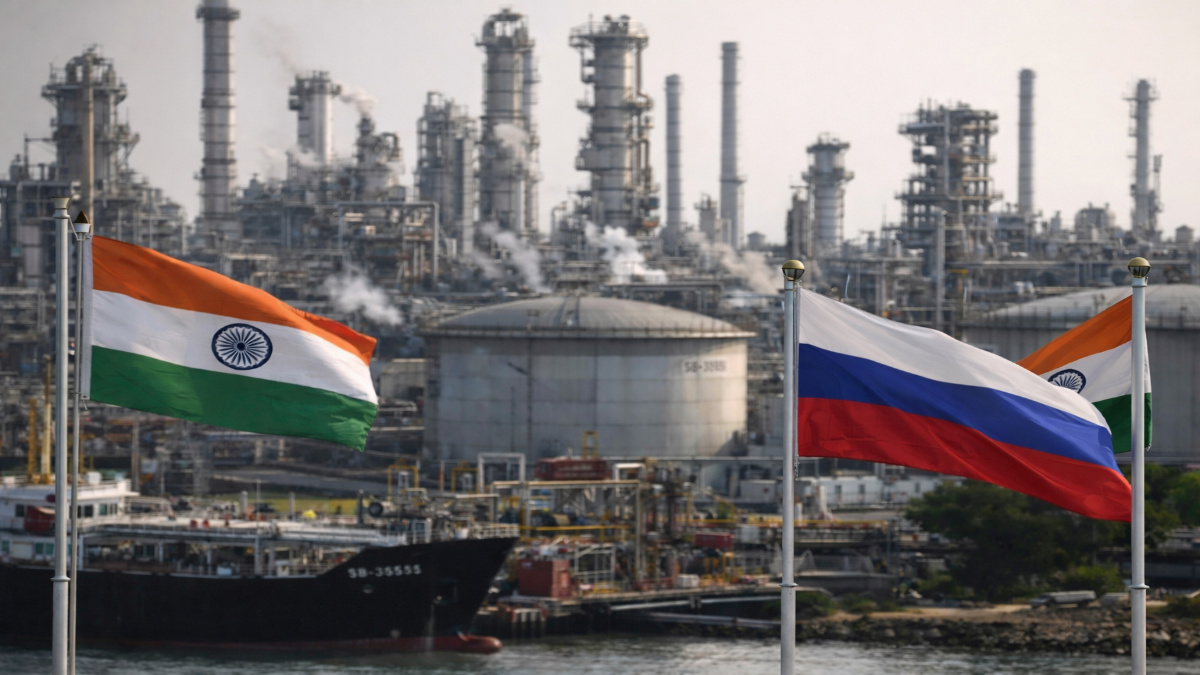
Indian oil refiners are avoiding the purchase of Russian crude to deliver in April and they are likely to avoid the purchase deal beyond April, according to industry and trade sources. The change is connected with the fact that the closer New Delhi is to a trade agreement with Washington, which may redesign bilateral economic relationships.
On Friday, the United States and India declared that they had settled on a framework to a trade arrangement they hope to close before March. The suggested agreement will decrease the number of tariffs and broaden the collaboration in a variety of economic sectors. One of the background factors emerging to the recent decisions made by India refiners seems to be energy sourcing.
The trader concerned in the case said that Indian Oil Corporation, Bharat Petroleum Corporation, and Reliance Industries are not taking up the offers of traders on March or April Russian oil shipments. Though part of the Russian crude shipments had already been sold to March, refining sources indicated that most of the Indian refiners have stopped new buying of Russian oil.
The three refiners and the oil ministry of India failed to provide comments to the requests. The trade minister of India sent the queries on oil imports with Russia to the foreign ministry. According to a spokesperson of the ministry, the energy strategy in India is aimed at the diversification of the supply sources within market context and altered global situation, which implies that the country must make sure that it is secure in the long-term energy supply.
Even though trade framework was announced by the joint U.S.-India statement did not mention the Russian oil specifically, U.S. President Donald Trump stated that he had lifted a 25% tariff on Indian goods, previously imposed after India did not stop direct and indirect imports of Russian crude. India has not made any formal decision publicly to stop to purchase Russian oil.
In 2022, India became the most significant purchaser of Russian seaborne crude offered at a discount after the invasion of Ukraine by Russia. These sanctions, that were imposed on the Russian energy industry by Western countries, were aimed at restricting the revenues of Moscow and reducing its possibilities to finance the war, but the Indian import quotas grew considerably, exploiting cheaper rates.
One such exception is Nayara Energy (a Russian-affiliated, privately-owned refiner) at present. Nayara is totally dependent on the Russian oil to feed its 400,000 barrels-per-day refinery. Sources indicated that the company might still be buying Russian crude as other suppliers dropped out due to European union sanctions on Nayara in July. Nonetheless, Nayara is not supposed to import Russian oil during the month of April because of a month long maintenance that it will be undergoing regarding its refinery.
Sources indicated that Indian refiners can change their attitude toward Russian oil only under the governmental directive. At the same time, the U.S. officials will likely be closely overseeing India with its purchase of oil and the order of Trump says that the tariffs might be restored in case of the resumption of the Russian purchases.
Past sources had mentioned that India was to cut down its Russian oil imports to less than one million barrels a day in March with possible volumes going down to 500,000 to 600,000 barrels a day. This is against an average of 1.7 million barrels per day in 2024, with the highest point of more than two million barrels per day in mid 2025.
Trade statistics indicate that Russian crude consumption in India dropped to the lowest level in two years in December. The grading of the Russian volumes has resulted in the Indian refiners purchasing more volumes as the demand has risen with the suppliers in the Middle East, Africa, and South America.