

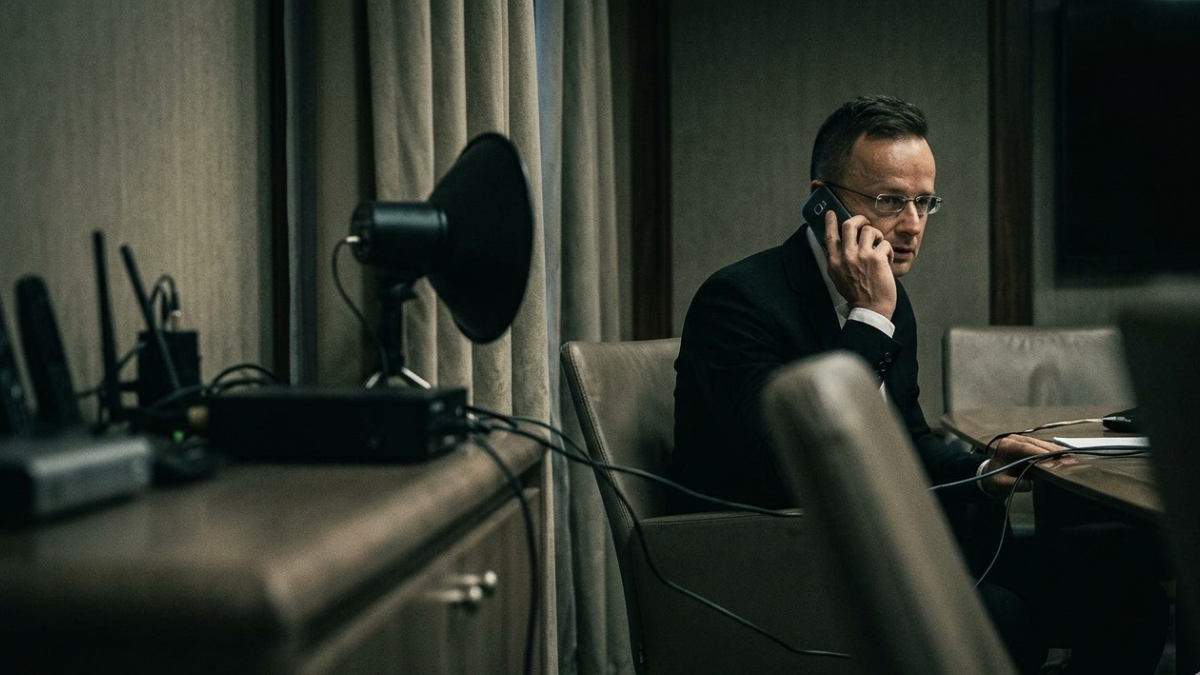
Hungarian Prime Minister Viktor Orban has ordered an immediate investigation into claims that his foreign minister’s phone calls were tapped. He made the call on Monday, describing the alleged surveillance as a serious attack on the country. Orban instructed the justice minister to look into the matter without delay.
The move follows a media report that raised questions about Hungary’s contacts with Russia. The report suggested Foreign Minister Peter Szijjarto made regular calls to his Russian counterpart Sergei Lavrov during breaks in EU meetings. It said he gave updates on talks among EU ministers and even suggested possible next steps for Moscow. Szijjarto has denied the claims, calling them senseless conspiracy theories.
Orban shifted the focus to the idea that Szijjarto’s communications may have been intercepted by foreign intelligence services. He said there is evidence of wiretapping and some signs of who might be behind it. “The wiretapping of a government member is a serious attack on Hungary,” Orban wrote on social media. He added that such actions must be examined right away to protect national interests.
The timing adds weight to the story. Hungary heads into a key parliamentary election on April 12. Orban’s party faces a strong challenge from the centre-right Tisza Party led by Peter Magyar. Magyar quickly called the reported links with Russia a form of collusion that betrays both Hungarian and European interests. He said any future government under his party would open its own full review of the matter.
The claims have stirred reactions beyond Hungary’s borders. The European Commission described the reports as greatly concerning and called on Budapest to provide clear answers. Germany labelled the allegations very serious. EU rules on sharing sensitive information and protecting confidential talks now sit at the centre of the debate. Member states expect partners to keep closed-door discussions private, and any breach could test trust inside the bloc.
Hungary has long kept its own path on ties with Russia even as the Ukraine conflict continues. Orban blocked a new EU loan to Ukraine just last week. His government stresses the need for dialogue and energy deals rather than full isolation. At the same time, the probe underlines how Hungary views any spying on its officials as a direct challenge to its sovereignty. Laws on data protection and national security give the justice ministry clear powers to examine such cases and trace possible leaks or intercepts.
Szijjarto’s office has stayed quiet on the details so far. Pro-government voices point to a Hungarian journalist who they say may have helped pass phone details to foreign services. Opposition figures push back and demand openness on all contacts with Moscow.
As of March 23 and early March 24, the justice ministry has begun its work. The outcome could shape how voters see the government’s handling of security and foreign policy in the run-up to the April ballot. Clear findings would help settle questions about who knew what and whether any rules on confidential EU talks were crossed.
Orban’s quick order for a probe shows his team’s push to control the narrative. It frames the issue as an external threat rather than an internal policy choice. At the same time, the EU wait for clarifications keeps pressure on Budapest to explain its side. Hungary’s voters will watch closely to see if the investigation brings real answers or simply adds to the political heat before election day.
The case highlights the fine balance countries must keep between national choices and shared EU commitments. Phone security, intelligence rules, and open dialogue all play a part. Hungary now moves to examine the claims under its own legal process while the wider bloc seeks straight talk on how meetings stay protected.