

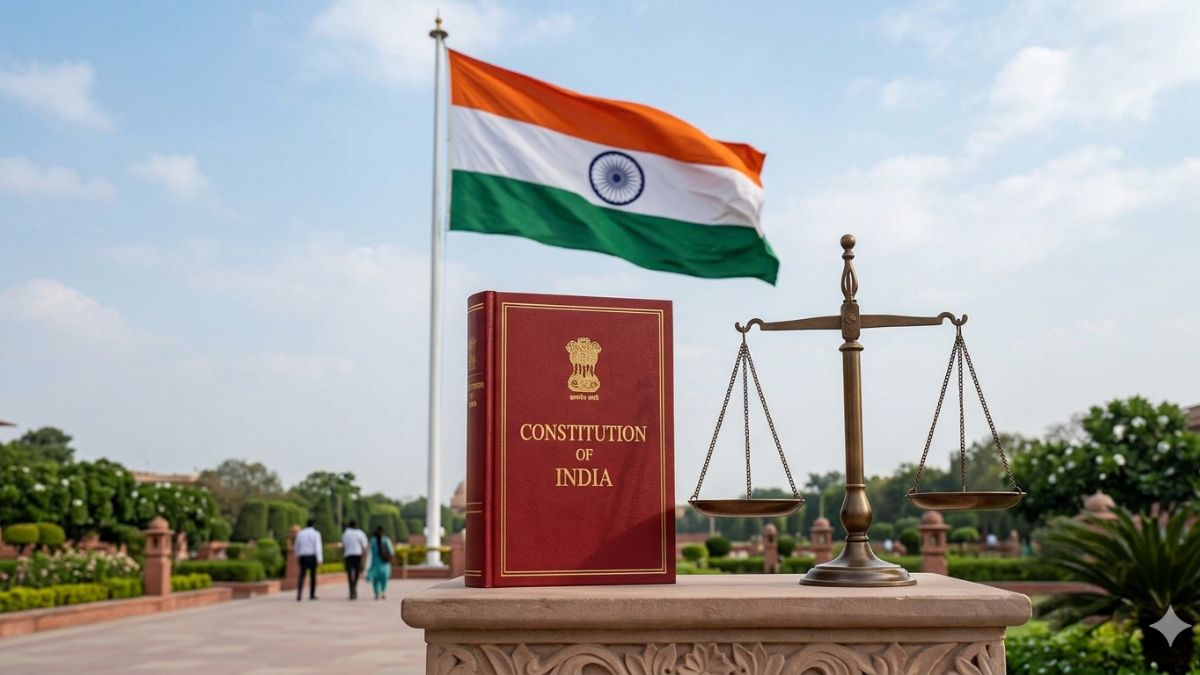
In a series of landmark observations and rulings, the Supreme Court of India has further refined the complex legal interface between religious faith and affirmative action. By reinforcing the religious boundaries of Scheduled Caste (SC) status while simultaneously protecting the cultural continuity of Scheduled Tribe (ST) status, the judiciary has highlighted a profound constitutional dichotomy: one identity is defined by the creed one professes, while the other is anchored in the customs one practices.
The fundamental bedrock of the recent judicial discourse remains the Constitution (Scheduled Castes) Order, 1950. As reaffirmed by the Supreme Court, SC status is explicitly linked to specific religious affiliations. Currently, only individuals professing Hinduism, Sikhism, or Buddhism are eligible for SC benefits.
The rationale provided by the courts stems from the historical sociological argument that “untouchability” is a practice unique to the Hindu fold and its offshoots. The 1956 amendment included Sikhs, and the 1990 amendment included Buddhists, under the logic that these religions emerged from the social fabric of India and retained the social vestiges of the caste system.
However, for Dalits who convert to Christianity or Islam, the law remains rigid. The Court has maintained that since these religions do not theoretically recognize the caste system, the “disability” of untouchability ceases to exist upon conversion. This “legal fiction” has long been a point of contention for activists who argue that social prejudice persists regardless of a change in prayer.
In a nuanced twist to the SC status debate, the Supreme Court has clarified the path for those who return to their original faith. According to recent interpretations, a person who was originally a member of a Scheduled Caste and converted to a religion like Christianity, but later reconverts to Hinduism, Sikhism, or Buddhism, may reclaim their SC status.
This reclamation is not automatic but is contingent upon two factors: the person’s acceptance by the community and the evidence of their original caste roots. This creates a unique legal scenario where SC status is seen as suspended during the period of conversion to Abrahamic faiths, rather than being permanently extinguished.
A starkly different legal logic applies to Scheduled Tribes. In a significant clarification, the Supreme Court noted that conversion to another religion, be it Christianity, Islam, or any other faith, does not automatically lead to the loss of ST status.
The constitutional distinction here is vital. While SC status is a remedy for the historical social stigma of untouchability (often tied to religious doctrine), ST status is a recognition of primitive traits, geographical isolation, and a distinct culture.
The Court’s recent observations emphasize that an ST individual loses their status only if they renounce their tribal customs, rituals, and way of life. If a tribal person converts to Christianity but continues to follow the traditional marriage rites, funeral customs, and community festivals of their tribe, their identity as a Scheduled Tribe remains legally intact. This establishes a Culture Test rather than a Religion Test for India’s indigenous populations.
The divergence between the SC and ST legal frameworks creates several points of analytical friction. For Scheduled Castes, identity is viewed through a theological lens. The state presumes that the stigma of caste is soluble in certain religious waters but not others. For Scheduled Tribes, identity is viewed through an ethnographic lens, where faith is merely one component of a broader communal lifestyle; so, the very basis of the nature of of the two groups identities differ. When it comes to the burden of proof, in the case of SC reconversion, the burden lies on the individual to prove they have returned to the eligible fold. In the case of ST conversion, the burden is often on the challenger to prove that the individual has completely severed ties with their tribal heritage. Both of these points culminate into one ultimate question, the question of social reality. Critics argue that this creates a paradox. A Dalit Christian may face the same social exclusion as a Dalit Hindu in a rural village, yet only the latter receives state protection. Conversely, a tribal person may move to an urban center and adopt a globalized lifestyle via a new religion, yet still retain ST benefits because they haven’t explicitly “renounced” their customs.
These rulings come at a time when the Union Government has appointed a commission (the Justice K.G. Balakrishnan Commission) to examine whether SC status should be extended to Dalits who have converted to religions other than Hinduism, Buddhism, or Sikhism.
The Supreme Court’s firm stance on the current religious boundaries of SC status suggests that any change will likely have to come from Parliament rather than judicial activism. Meanwhile, the protection of ST status despite conversion remains a vital safeguard for tribal communities in North-East India and Central India, where religious conversion has been widespread but tribal identity remains the primary social marker.
In conclusion, the Indian judiciary continues to walk a tightrope. It is attempting to honor the historical intent of the Constitution-makers, who saw caste as a specific malady of the Indic religious social order, while also acknowledging the fluid, multifaceted nature of tribal identity. As the social landscape of India evolves, the tension between faith-based eligibility and culture-based identity will likely remain one of the most debated chapters of Indian jurisprudence.