

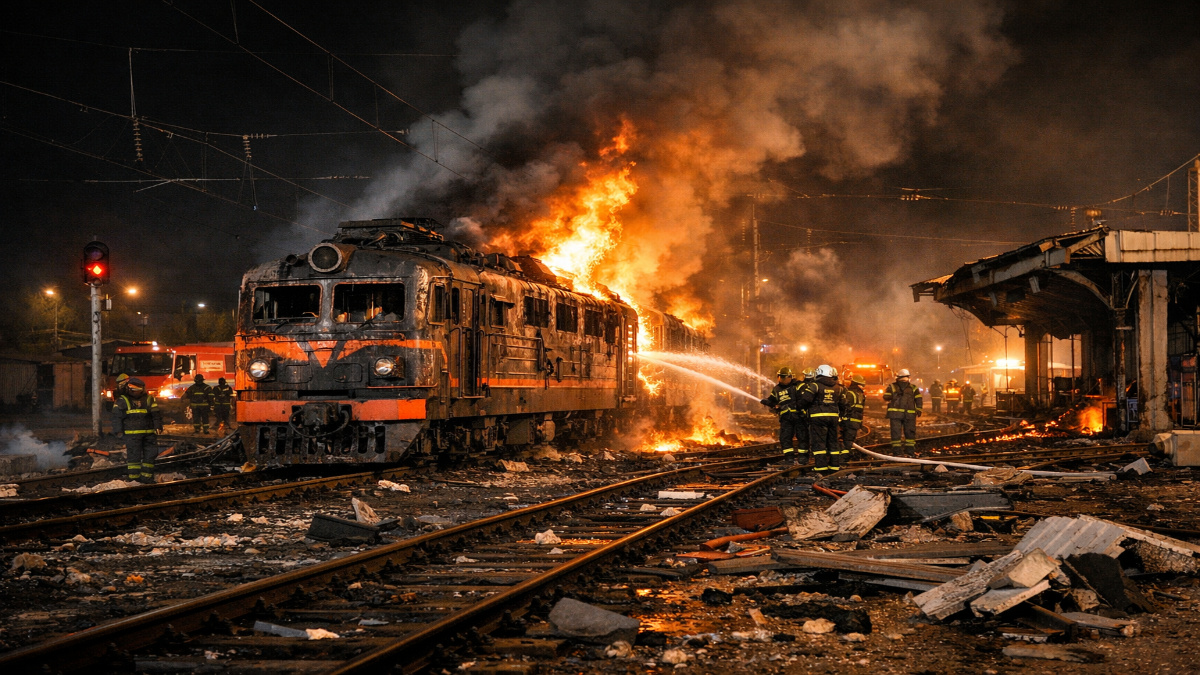
According to Ukrainian officials, Russian forces conducted a nighttime drone attack, which targeted a railway station in Dnipropetrovsk region in Ukraine, injuring an electric locomotive driver and damaging infrastructure.
Oleksii Kuleba, the Deputy Prime Minister of Restoration and Minister of Communities and Territories Development of Ukraine, confirmed that unmanned aerial vehicles were used against railroads, hitting an electric locomotive in the station. The driver was not seriously injured and he obtained immediate medical care. His condition has been reported to be stable by the authorities.
The impact caused a fire which was triggered by the strike. Emergency services responded promptly to curb the fire and the territory. Clean up operations and damage assessment are already in process to determine the extent of the overall effects of the impact on the railway infrastructure.
Ukrainian officials described the attack as part of the continuing attacks on transportation infrastructure, which is a critical part of civilian logistics, evacuations, and transportation of essential supplies across the country. The railway networks have been an essential component of the mobility in Ukraine during the war as they have enabled the humanitarian efforts as well as the economic viability amidst the continued hostilities.
Although the strike has caused a lot of destruction, the officials have affirmed that the level of train traffic across the area is stable and still running according to schedules. Since the beginning of the conflict, railway services have continuously faced interruptions but operators have made efforts to ensure that their services remain operational even with the prevailing security threats.
Transportation hubs, in particular, have taken center stage in the overall conflict between Russia and Ukraine as each party tries to disrupt supply chains and strategic mobility. The latest strike stresses the constant weakness of civilian-related infrastructure in conflict areas and emphasizes the challenges of maintaining the key services during the long-term war.
Authorities are still silent regarding the nature of the damage to the station or to the surrounding facilities, and the inquiries into the complete impact of the attack are still unfinished.