

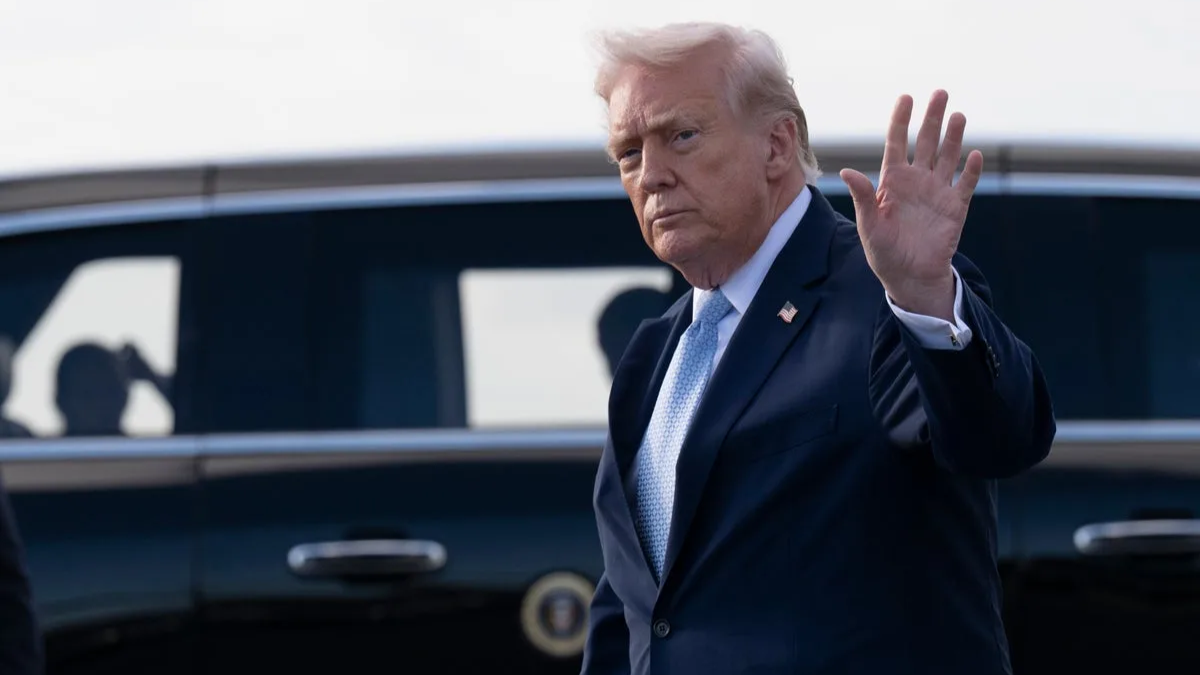
President Donald Trump has announced that the United States will postpone planned strikes against Iranian energy sites for five days, following a Truth Social post in which he said he had very good and productive conversations with the Iranian government. The pause comes just hours after Trump’s 48-hour ultimatum threatening to hit and obliterate Iranian power plants if the Strait of Hormuz was not reopened, and after Iran vowed to keep the waterway closed and to strike Gulf energy and desalination facilities. The five-day delay adds a short-term diplomatic window to a conflict that has already shut the Strait, spiked global oil prices, and involved missile strikes on Gulf targets by both sides.
Diplomatic and legal implications of the five-day pause
The postponement creates what amounts to an informal time-out in the ongoing war, but one framed through social media rather than through formal UN or multilateral channels. Under international law, the legality and proportionality of attacks on energy infrastructure depend on the immediacy of the threat and the existence of a genuine chance to de-escalate, and a short-term stand-down agreed by the two sides, even if announced unilaterally, can be used to argue that the US is not acting in a purely reckless or indiscriminate manner. At the same time, because the commitment is unilateral and not codified in a treaty or UN-mediated text, its legal weight is weak: neither side is bound before neutral institutions, and either the US or Iran can resume the 48-hour dynamic at any time. This raises the risk that the five-day window will be treated as a tactical deferral, not a verified de-escalation, and that the legal moral cost of future infrastructure strikes will be no less severe, even if they are launched a few days later.
Strategic signalling and deterrence chess
Trump’s announcement performs multiple strategic roles. By claiming very good and productive conversations with Tehran, he seeks to portray himself as both a hardliner willing to threaten Iranian power plants and a pragmatic president capable of calming the crisis at the last minute, which helps manage domestic political and market reactions to the earlier 48-hour threat. For European and Asian economies, the brief reprieve offers a short breathing space in an environment where the Strait of Hormuz’s closure and the prospect of a full-scale energy infrastructure war have already driven up oil and gas prices and raised fears of stagflation. Iran, in turn, can use the extension to reposition its messaging, insisting that the US is backing down while it consolidates its own military posture in the Gulf and continues attacks on energy and desalination-linked targets in neighbouring states. The five days, therefore, look less like a negotiated ceasefire and more like a brief interval in which both sides recalibrate threat levels, force deployment, and legal risk calculations around further strikes on energy infrastructure and regional shipping lanes.
Stability, escalation risks and regional markets
If the pause lasts and is followed by genuine talks, it could start to ease the most extreme scenarios of a prolonged energy infrastructure war. Yet if the window simply becomes a pause and re-escalation pattern, the strategic and legal risks intensify, especially as attacks on power plants, desalination facilities, and refineries would have disproportionate impacts on civilian life in the Gulf, potentially triggering international legal challenges and reputational blowback even in the context of an ongoing armed conflict. For global markets, the five-day deferral may slow the pace of the shock but does not remove the underlying vulnerability: the Strait remains contested, war-driven volatility in energy prices persists, and the precedent of explicitly targeting civilian supporting energy infrastructure now hangs over whatever happens next in the Iran war.