

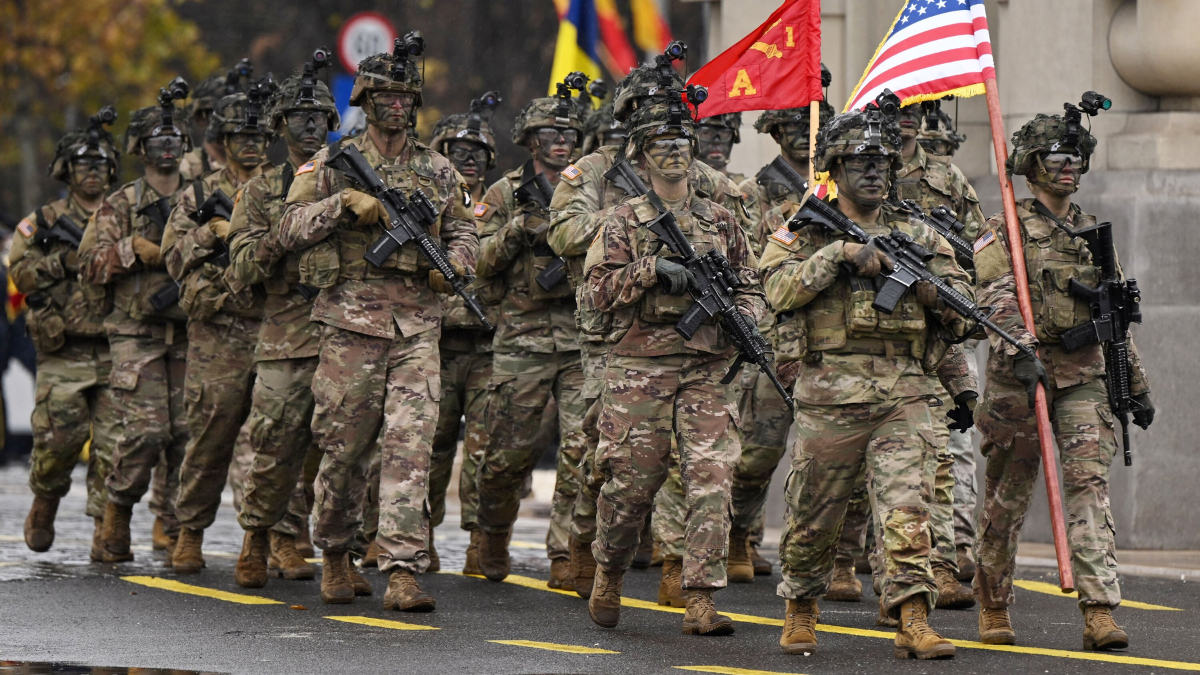
The deployment of elements of the 82nd Airborne Division, including the 1st Brigade Combat Team, as part of the United States Immediate Response Force to the Middle East represents a decisive escalation in military readiness amid rising regional tensions. While such deployments are often framed as precautionary or defensive, they carry significant legal implications under both domestic constitutional law and international legal regimes governing the use of force. This development must be analysed not merely as a tactical adjustment but as a strategic signal embedded within a complex legal architecture.
Domestic legal authority and executive war powers
The authority to deploy United States forces abroad is primarily vested in the executive branch, with the President acting as Commander in Chief. However, this authority is not absolute and is subject to statutory constraints, most notably the War Powers Resolution. Under this framework, the executive may deploy forces into hostilities or situations where hostilities are imminent, but must notify Congress and seek authorisation for sustained engagements. The deployment of rapid response units such as the 82nd Airborne often occurs within this legal grey zone, where the distinction between deterrence and active involvement is deliberately maintained. The legal question, therefore, centres on whether the deployment constitutes preparation for hostilities or the initiation of armed conflict.
International law and the threshold of use of force
From an international law perspective, the mere deployment of troops does not in itself constitute a use of force prohibited under the United Nations Charter. However, it may be interpreted as a threat of force, particularly when accompanied by explicit or implicit signals of potential military action. Article two of the Charter prohibits not only the use of force but also threats that undermine the sovereignty or political independence of states. The legal characterisation of the deployment, therefore, depends on its context, intent and accompanying rhetoric. If framed as a defensive measure aimed at protecting personnel and assets, it may fall within permissible bounds. If perceived as coercive, it risks breaching established norms.
Deterrence doctrine and anticipatory self-defence
The deployment of an Immediate Response Force is closely linked to the doctrine of deterrence, which seeks to prevent hostile actions by demonstrating credible military capability. In certain circumstances, states may invoke anticipatory self-defence, arguing that the presence of imminent threats justifies preemptive measures. This doctrine remains controversial, as it expands the traditional interpretation of self-defence under Article fifty one of the United Nations Charter. The legality of such measures depends on the existence of a clear and imminent threat, as well as the necessity and proportionality of the response. The positioning of elite rapid deployment units signals readiness to act swiftly, thereby reinforcing deterrence while simultaneously raising questions about escalation.
Host state consent and regional legal dynamics
The legality of deploying forces to foreign territory also depends on the consent of the host state. Where such consent is granted, the presence of foreign troops is generally lawful under international law. In the absence of consent, deployment may constitute a violation of sovereignty unless justified by self-defence or authorised by the Security Council. The Middle East presents a complex legal landscape, with multiple overlapping agreements, alliances and conflicts. The presence of United States forces in the region is often governed by bilateral arrangements, yet these do not eliminate the broader legal and political sensitivities. The perception of legitimacy is therefore as important as the formal legal basis.
Strategic implications and escalation risks
From an international relations perspective, the deployment of the 82nd Airborne Division serves as both a deterrent and a signal of intent. It communicates readiness to respond to threats while also shaping the calculations of adversaries and allies. However, such deployments carry inherent risks, including the possibility of miscalculation or unintended escalation. The proximity of forces increases the likelihood of incidents that could trigger broader conflict, particularly in a region characterised by multiple fault lines. The balance between deterrence and provocation is delicate and requires careful management.
Impact on alliance structures and global perception
The movement of the United States rapid response forces also has implications for alliance dynamics. Allies may view the deployment as a reassurance of commitment, while others may perceive it as an escalation that complicates diplomatic efforts. The global perception of such actions influences the legitimacy of the United States’ role in the international system. Maintaining credibility requires adherence to both legal norms and strategic consistency.
Conclusion: legality and strategy converge in rapid deployment decisions
The deployment of the 82nd Airborne Division to the Middle East encapsulates the intricate interplay between law and strategy in contemporary military operations. While the action may be legally defensible under certain conditions, it operates within a narrow margin where misinterpretation or overreach could have significant consequences. The episode highlights the importance of transparency, proportionality and adherence to international norms in maintaining both legality and legitimacy. As tensions evolve, the role of law in guiding military decisions remains indispensable.