

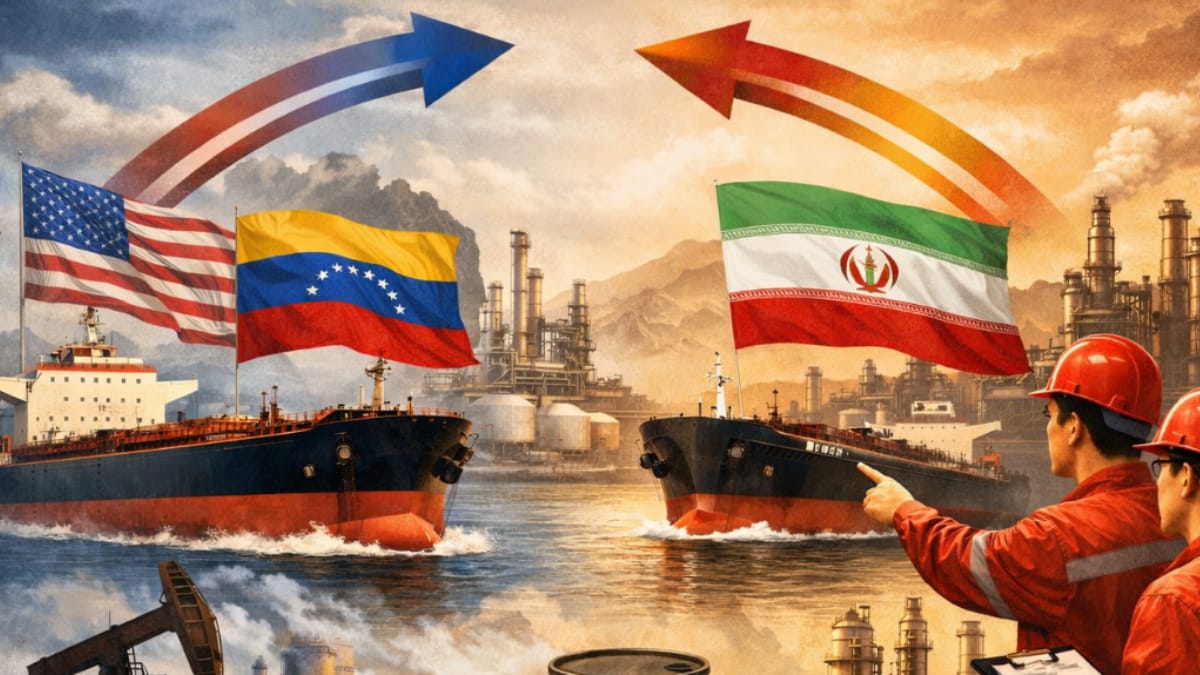
Chinese independent refiners, known as teapots, are preparing to boost imports of Iranian heavy crude to plug a looming shortfall after a US arrangement to divert Venezuelan oil to American markets effectively shut Asian buyers out of new loadings.
The shift follows Washington’s announcement on 6 January that up to 50 million barrels of Venezuelan crude would be redirected to US refineries, a move that came after the dramatic arrest of Venezuelan president Nicolás Maduro on drug‑trafficking charges. The deal has halted offers of Venezuelan crude for Asia since the start of the year, leaving Chinese teapots, which took about 389,000 barrels per day from Venezuela in 2025, roughly 4% of China’s seaborne crude imports, scrambling for alternatives. Venezuelan grades such as Merey are prized for their heavy, sour profile and high asphalt yields, making them valuable feedstock for certain refinery configurations.
Traders and analysts say Iranian Heavy, produced in Persian Gulf fields including Soroosh and Nowrooz, is the most accessible substitute. Its medium‑sour characteristics (API 26–28°; sulphur 1.8–2.24%) and a typical discount of about $10 a barrel to Brent make it attractive for diesel, bitumen, and heavy fuel oil production. Yet Iranian crude yields far less asphalt, around 10–13% versus Merey’s roughly 60%, which could complicate economics for refineries that rely on high asphalt output. Other potential sources include Russian heavy grades, Canadian TMX low‑TAN crudes, and Iraqi Basrah Heavy, but sanctions‑aware teapots view Iranian barrels as the quickest option.
Markets reacted swiftly: global crude prices fell about 1% on the news, while discounts for some Canadian heavy crudes widened by more than $2 this week. For Chinese refiners, the switch may squeeze margins and force reduced runs or early maintenance if alternatives prove uneconomical. Analysts caution, however, that ample Iranian and Russian feedstocks should blunt the worst impacts and prevent frantic bidding for pricier, unsanctioned barrels.
Beijing has strongly criticised the US action as a “brazen violation of international law”, with the foreign ministry decrying unilateralism and warning of harm to Venezuelan sovereignty. Moscow has dispatched vessels to escort tankers amid the blockade, while Washington is urging interim Venezuelan authorities to remove foreign advisers from China, Russia, Iran and Cuba.
With an estimated 12–30 million barrels of Venezuelan crude still in transit or storage, teapots have a short cushion through February. The episode highlights how geopolitical manoeuvres are reshaping global heavy‑oil flows and could benefit some refiners while putting pressure on producers elsewhere.