

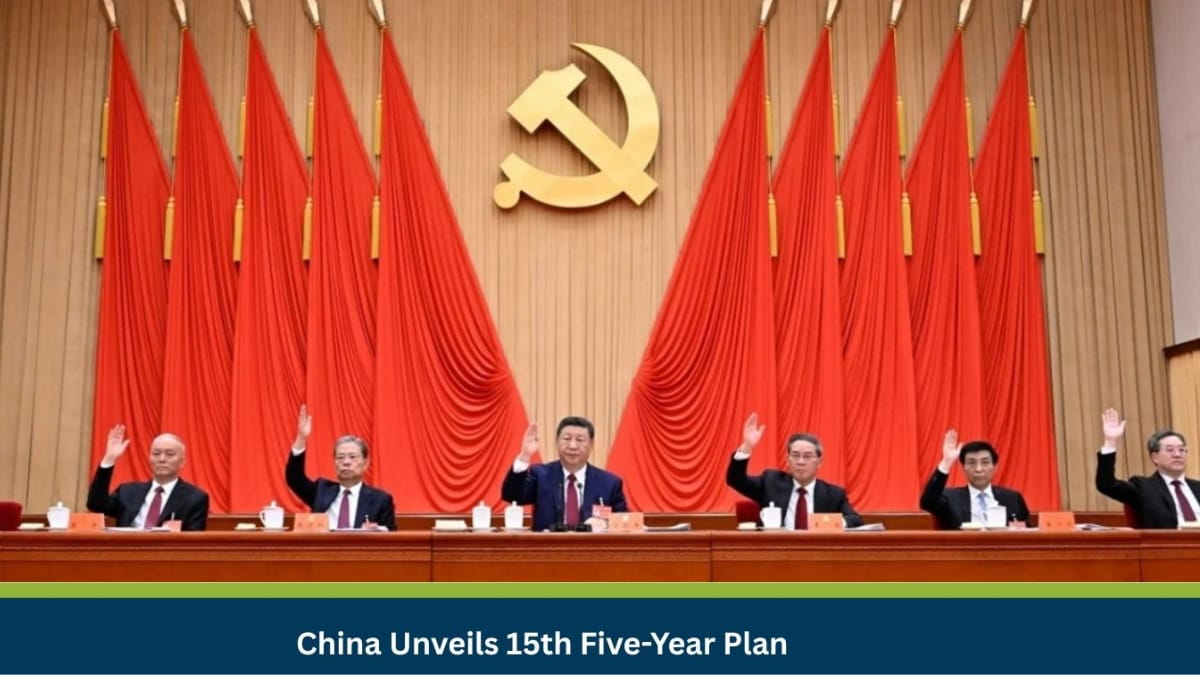
China’s State Council of the People’s Republic of China convened a plenary meeting on Friday to review the draft government work report and a draft outline of the 15th Five-Year Plan (2026–2030) for national economic and social development, according to the official Xinhua News Agency.
The meeting was presided over by Li Qiang, who emphasised the importance of ensuring that both documents accurately reflect China’s strategic priorities, respond to public expectations, and provide clear guidance for policymaking in the coming years. The drafts will be submitted for deliberation at the annual session of the National People’s Congress (NPC), scheduled to take place in March.
Preparing the policy roadmap for the next phase
The government work report is a central annual document outlining economic performance, policy achievements and key tasks for the year ahead. The 15th Five-Year Plan draft, meanwhile, will serve as a medium-term blueprint shaping China’s development strategy from 2026 to 2030, guiding policy across sectors ranging from industry and innovation to social welfare and environmental protection.
At the meeting, Li Qiang stressed the need to fully embody the concept of high-quality development, a core policy objective that prioritises efficiency, innovation, sustainability and balanced growth over sheer economic expansion. He said the documents should clearly articulate how China intends to address structural challenges, manage risks and maintain steady economic momentum amid a complex domestic and international environment.
Emphasis on public concerns and policy refinement
Li also called for the drafts to respond earnestly to public concerns, highlighting issues such as employment, income growth, education, healthcare and elderly care. He urged further revisions to ensure that policy measures are practical, targeted and aligned with people’s expectations for improved living standards.
The plenary meeting reflects a key stage in China’s policymaking process, in which draft documents are refined through internal government consultation before being presented to the legislature. While the State Council leads the drafting and coordination, implementation of the Five-Year Plan typically involves multiple ministries and local governments under the overall guidance of the central leadership.
Broader significance
Analysts view the discussion as an early signal of policy continuity combined with recalibration. As China transitions into the period covered by the 15th Five-Year Plan, the leadership appears focused on consolidating gains from previous reforms while adapting to slower growth, technological competition and demographic pressures.
The outcomes of the NPC deliberations in March are expected to provide clearer insight into China’s economic targets, reform priorities and social policy direction for both 2026 and the next five-year cycle, setting the tone for governance and development in the years ahead.