

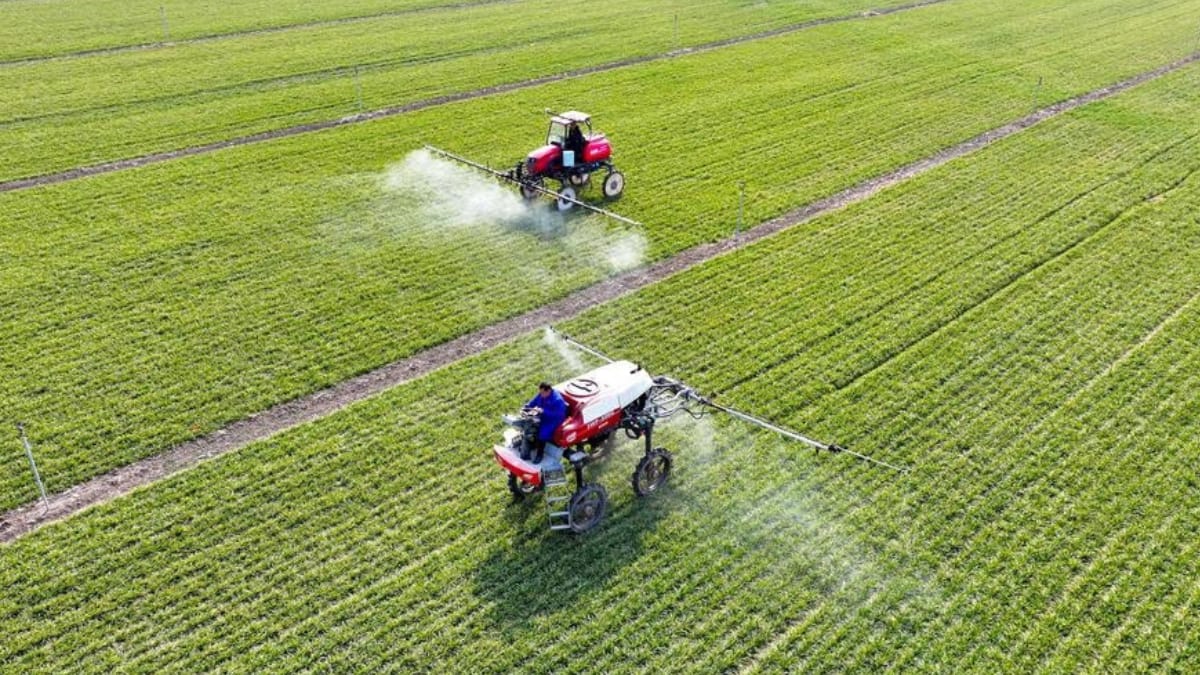
China has intensified the construction of high-standard farmland in 2025 as part of a sustained national drive to modernise agriculture and reinforce long term food security. Official data released by the Ministry of Agriculture and Rural Affairs indicate steady progress in upgrading arable land across major grain-producing provinces, aligning with targets set under the 14th Five-Year Plan covering 2021 to 2025. The policy objective remains clear, To ensure stable grain output amid rising climate volatility and global supply chain uncertainty.
High-standard farmland is defined by integrated infrastructure improvements, including efficient irrigation and drainage systems, soil enhancement, land levelling, and road networks that facilitate large-scale mechanised farming. By the end of 2023, China had reportedly completed more than 1 billion mu of such farmland, forming a cornerstone of the country’s agricultural base. The 2025 expansion builds on this foundation, with provincial governments accelerating project approvals and construction timelines.
Addressing structural constraints in rural production
The conceptual roots of the programme trace back to the post 1978 rural reforms that introduced the Household Responsibility System. While those reforms boosted productivity, they also left land fragmented into small plots, limiting economies of scale and constraining mechanisation. Over time, uneven irrigation coverage and soil degradation further restricted efficiency gains. The high-standard farmland initiative seeks to resolve these structural bottlenecks by consolidating parcels and standardising infrastructure, thereby enabling advanced machinery use and digital farm management.
Regions such as Henan, Heilongjiang, and Anhui, which play a pivotal role in wheat, rice, and maize production, have reported measurable increases in irrigated acreage and mechanisation rates. Enhanced water management systems are designed not only to improve yields but also to mitigate the impact of droughts and floods that have intensified in recent years.
Integrating technology with rural revitalisation
The upgraded farmland framework also supports the adoption of smart agriculture tools, including drone based crop monitoring, satellite mapping and precision fertiliser application. Officials emphasise that these technological integrations are essential to sustaining output while reducing environmental pressure.
Beijing continues to underscore that safeguarding grain self sufficiency remains a strategic priority. As China advances agricultural modernization in 2025, the expansion of high standard farmland stands as a critical infrastructural measure aimed at stabilising rural incomes, securing national food supplies and reinforcing economic resilience.