

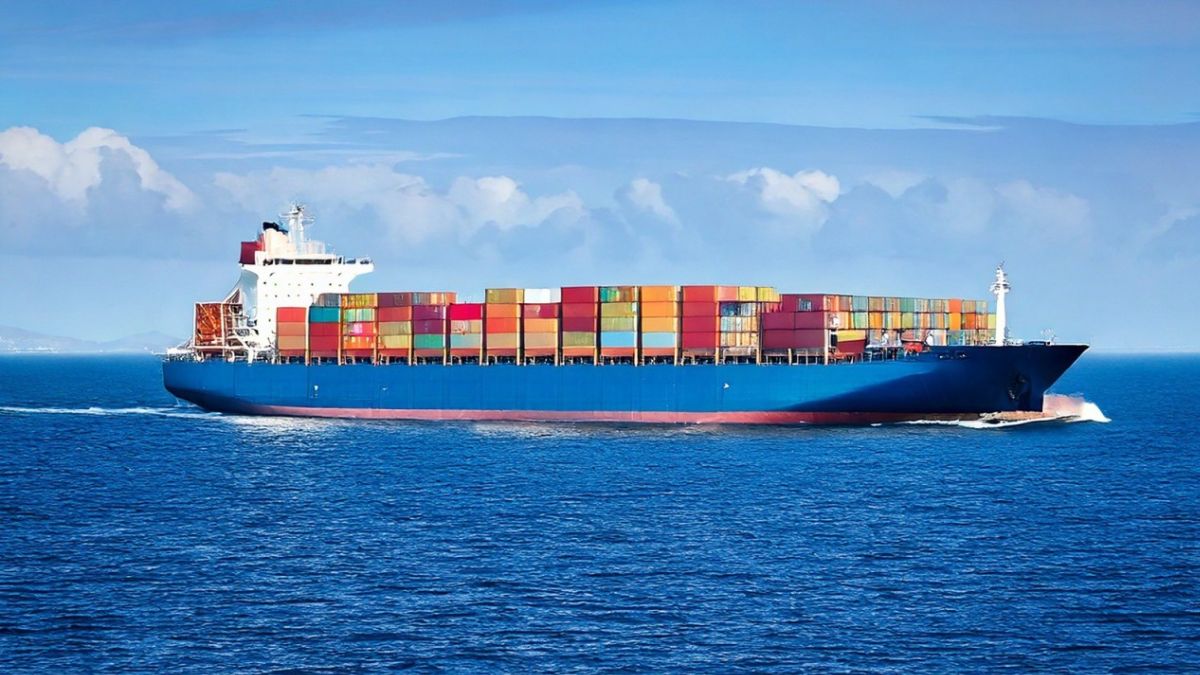
India’s exports continued to show resilience amid global uncertainties, reaching $714.73 billion during April–January of FY 2025–26, according to official data presented in Parliament. The growth reflects a steady expansion of the country’s trade ecosystem, supported by policy reforms, digital infrastructure, and targeted export promotion initiatives.
Minister of State for Commerce and Industry Jitin Prasada informed the Lok Sabha that total exports of goods and services increased by 5.26% compared to the same period last fiscal, rising from $679.02 billion to $714.73 billion. Over the longer term, India’s exports have maintained consistent growth, recording a compound annual growth rate (CAGR) of 6.9% between FY 2020–21 and FY 2024–25, when exports reached $828.25 billion.
Officials said the performance highlights India’s ability to sustain diversified export growth despite challenges such as geopolitical tensions, supply chain disruptions, and volatile commodity prices. The government is now focusing on strengthening the export ecosystem to expand India’s footprint in global trade.
At the core of this strategy is the Foreign Trade Policy 2023, which has been designed as a flexible framework to adapt to shifting global conditions. The policy focuses on four key pillars—trade facilitation, export promotion, state-level partnerships, and digital integration—to improve competitiveness and ease of doing business for exporters.
A major component of the export push is the RoDTEP Scheme, which helps neutralize embedded taxes on exports and ensures that Indian products remain competitive in international markets. The government has also strengthened financial and institutional support mechanisms to improve export readiness, particularly for micro, small and medium enterprises (MSMEs).
The recently launched Export Promotion Mission (EPM) is central to this effort. With a budgetary outlay of ₹25,060 crore for the period FY 2025–26 to FY 2030–31, the mission aims to enhance both financial and non-financial support for exporters. It operates through two pillars—Niryat Protsahan, which focuses on improving access to trade finance and credit, and Niryat Disha, which targets logistics, quality standards, branding, and market access.
In response to rising geopolitical risks, the government has also introduced a time-bound “RELIEF” scheme to support exporters affected by disruptions in key trade routes, particularly in the Gulf and West Asia. Implemented through the Export Credit Guarantee Corporation of India, the scheme is designed to provide risk mitigation and ensure continuity of export operations in volatile conditions.
Infrastructure development remains another key focus area. Initiatives such as the Trade Infrastructure for Export Scheme (TIES) are being used to build export-linked facilities across the country, improving logistics efficiency and reducing costs for exporters.
Alongside policy and financial measures, India is accelerating the adoption of technology in trade governance. Digital platforms such as the Trade Intelligence and Analytics system, the Common Digital Platform for Certificates of Origin, and the Trade e-Connect portal are transforming how exporters interact with government systems. These platforms enable real-time approvals, online certifications, and access to market intelligence, making the export process faster and more transparent.
Trade diplomacy is also playing a critical role in expanding market access. India currently has 19 free trade agreements and has intensified efforts since 2021 to negotiate new deals. Key agreements under negotiation or progress include partnerships with the European Union, the United Kingdom, New Zealand, and Oman. The India-EFTA Trade and Economic Partnership Agreement is particularly significant as it includes provisions aimed at boosting foreign investment alongside trade.
Ongoing negotiations with countries such as Israel, Canada, Chile, and Peru, as well as with the Gulf Cooperation Council, are expected to open new trade corridors and enhance India’s integration into global value chains.
Officials emphasized that India’s export strategy reflects a comprehensive, whole-of-government approach that combines policy support, financial incentives, digital transformation, and international engagement. The focus is on building a resilient and future-ready export ecosystem that can withstand global shocks while continuing to grow.
With exports playing a crucial role in economic growth and employment generation, the government aims to further strengthen competitiveness across sectors and regions. The continued expansion of India’s trade ecosystem is expected to support its long-term goal of becoming a leading player in global commerce.