

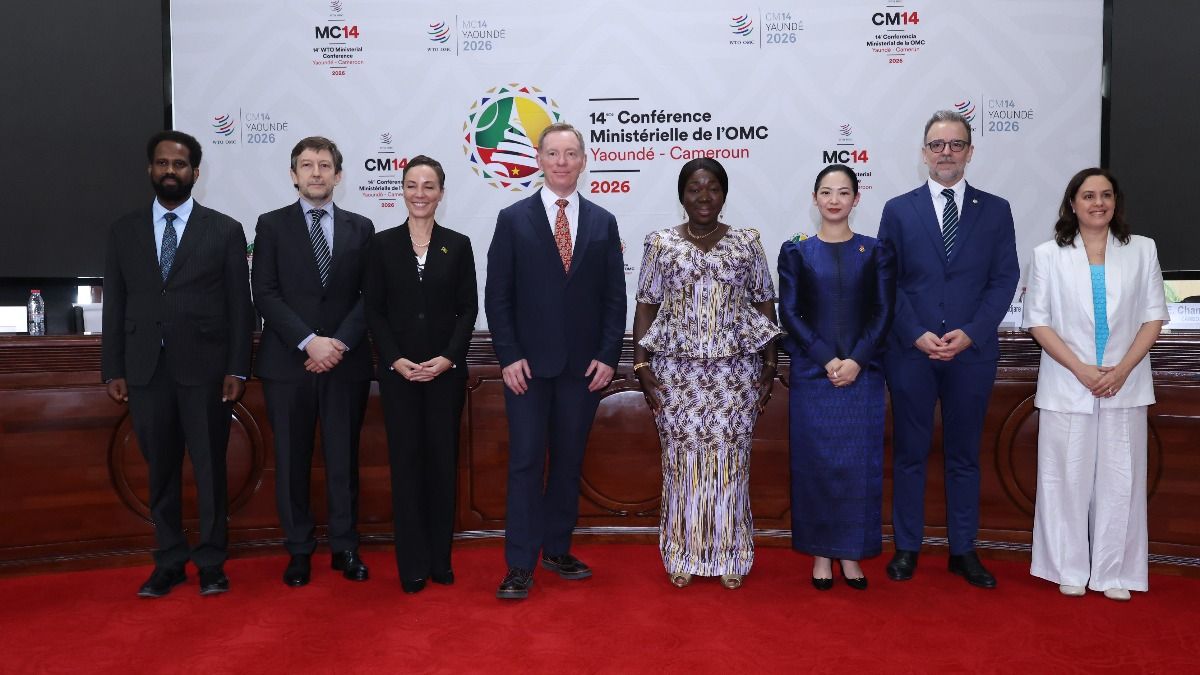
On the eve of the WTO Ministerial Conference MC14, ministers from developing nations called for urgent global support to boost services trade, positioning it as a key driver of economic growth and export expansion.
The meeting, led by Ngozi Okonjo-Iweala, brought together representatives from Ghana, Jamaica, Cambodia, and Rwanda, who emphasized that services are no longer just contributors to GDP but are becoming central to trade strategies for developing economies.
At the core of discussions was the Trade in Services for Development (TS4D) initiative, launched in September 2024 by the WTO and the World Bank. The programme aims to help developing countries overcome structural barriers that prevent them from accessing the global services market, currently valued at over $6 trillion.
Developing nations lag in services trade
Despite services accounting for more than 50% of economic activity in most countries, least developed countries (LDCs) capture less than 1% of global services exports. Ministers highlighted that regulatory complexity, lack of reliable data, and weak integration of services into national policies continue to limit their participation.
DG Okonjo-Iweala pointed out that many developing economies struggle with outdated regulatory systems and insufficient trade data, making it difficult to identify opportunities and design effective export strategies.
New tools to bridge the gap
To address these challenges, TS4D has introduced a Services Trade Competitiveness Diagnostic Dashboard a digital tool designed to help countries identify sector-specific strengths and policy gaps. The platform provides data-driven insights to guide reforms and improve competitiveness. Ministers welcomed the tool as a practical step toward evidence-based policymaking. Ghana highlighted its role in supporting economic transformation and job creation, while Jamaica stressed the growing importance of cultural industries such as entertainment and fashion as export sectors.
Cambodia called for stronger capacity-building efforts to help LDCs become active participants in global trade rather than passive rule-takers. Rwanda, meanwhile, underlined the importance of services such as logistics and digital innovation in driving future growth.
Global support and funding commitments
In a show of international backing, UK Minister Sir Chris Bryant announced a contribution of £500,000 to the WTO Global Trust Fund, specifically earmarked for TS4D implementation. The funding will support capacity building, regulatory reforms, and rollout of diagnostic tools in developing economies. The World Bank also pledged to expand its support through financial instruments and technical assistance, while UNCTAD highlighted the need to identify sectors where LDCs can gain a competitive advantage.
Digital services offer new opportunities
A major focus of the initiative is on digital services, including fintech, remote professional services, and logistics platforms. These sectors are seen as areas where developing countries can compete globally without heavy infrastructure requirements. Officials noted that better regulation and improved digital readiness could unlock significant export potential, especially as global demand for services continues to grow at over 5% annually.
Reform agenda and trade impact
The TS4D initiative aims to reduce regulatory barriers that currently limit 30–40% of services trade potential in developing countries. Planned interventions include simplifying licensing systems, easing foreign investment restrictions, and improving recognition of professional qualifications.
The programme targets measurable outcomes, including:
- 15% growth in services exports among participating countries
- 20% reduction in regulatory barriers
- Up to $50 billion in cumulative trade gains by 2030
More than 50 countries are expected to benefit from the initiative through tailored policy support and implementation assistance.
Services trade gains importance at MC14
The push for services development comes as WTO members prepare to negotiate key issues such as dispute settlement reform, fisheries subsidies, and agriculture at MC14. With progress in traditional trade areas often slow, services are emerging as a practical and impactful area for cooperation. Ministers stressed that strengthening services trade can support economic diversification, job creation, and resilience, particularly for developing economies seeking to reduce dependence on goods exports.
As global trade dynamics evolve, the TS4D initiative is being positioned as a critical tool to ensure that developing countries are not left behind in the fast-growing services economy.